Rat Enrichment Ideas: Observe, Adjust and Compare
If your rat seems restless or switched off, watch the pattern before you buy another toy. Then fix the setup one change at a time: foraging with part of their normal food, clear routes to climb and move, and more than one covered place to retreat. Keep the familiar layout nearby, and watch what each rat actually uses.
At a glance
- Watch first: when it happens, what they can reach, who is nearby.
- Forage with part of their normal daily food, not extra food.
- Give more than one route between levels.
- Offer retreats as well as activities.
- Change one thing at a time, then watch.
Is my rat bored? Watch before you change anything
Boredom is a prompt to look at the cage, not a label to pin on one behaviour. Bar-chewing, pacing, repeating one route, staying in one spot or ignoring an item can each have different causes.
Note when it happens, what your rat can reach, who else is nearby, and what changes when you open the cage or move an item. A few days of notes tell you which change has a clear job.
Start with food-based foraging
Use part of the normal daily food ration for searching and handling. Do not add extra food just to make the setup look busier.
- Scatter pieces through an area they can reach easily.
- Fold food into a paper parcel.
- Tuck it inside a clean cardboard tube they can open.
- Fill a shallow tray with paper or bedding to dig through.
Keep every item dry, clean and free of staples, tape and loose plastic, and remove it once it is damaged.
Make the first version easy. If your rat cannot reach the food, has to pull apart a tight knot, or gives up quickly, simplify the parcel or move it nearer a familiar route. The aim is an activity they can choose and finish.
Our Mushroom Rat Foraging Cups come as a pair, for hiding part of the daily food.
Open up routes for climbing and moving
Look at the cage from your rat's level. Can they move between levels by more than one route? Place shelves, ledges, bridges, ropes and hammocks so that one awkward leap is never the only way forward.
Keep routes clear of loose fabric, unstable pieces and blocked entrances. Put each new item where you can still reach in for daily care and cleaning.
Add one movement change, then watch how the rats travel around it. Move, lower or remove a piece if it blocks access or goes unused. Take out anything worn, sharp, loose or hard to clean, and offer another route in its place.
Our Dragon Rat Shelf Set adds shelves to climb between, for a cage that needs more levels.
Offer places to retreat, not just things to do
Enrichment includes being able to rest, hide and watch. Give the group more than one covered place where you can, with different entrance positions or textures.
Keep entrances visible, and leave room for a rat to go in, turn round and come out without being squeezed into a busy route. A character-shaped hide such as our Teapot Rat Hide can sit alongside a plain cardboard box, paper nesting material or a fabric piece, as long as each is kept clean and easy to check.
Change the setup gently
Keep something familiar whenever you change something. Move one piece, add one foraging task or alter one route, then give the rats time to investigate.
Watch who uses it, who avoids it, and whether one rat now guards a path the others need. If the layout gets confusing or crowded, go back to the last arrangement that worked and try a smaller change. Let what you see set the pace, not a fixed timetable.
Make time with you part of the routine
Short, calm sessions with you add another kind of choice. Let your rat come to you, reward a simple behaviour with part of their normal ration, and stop while it is still easy.
One rat may like following a hand, another stepping onto a platform or exploring a new object. Let them say no and try again later. The goal is willing company, not a performance.
How to tell if the change helped
Look for practical signs:
- they explore a wider route
- they come back to forage
- they use a retreat
- they investigate a new surface
- they settle after activity
Keep a short note of what changed and what each rat chose. If interest stays low, change one thing at a time: the location, how the food is presented, the height, the texture or the amount of cover.
Questions
What are the signs of a bored rat?
Bar-chewing, pacing, repeating one route, staying in one spot or ignoring items can all point to a cage that needs a change, but each can have other causes. Watch the pattern first, and speak to your vet if behaviour changes or your rat seems stressed or afraid.
Should I give extra treats for enrichment?
No. Use part of their normal daily food for foraging, so the activity adds work, not extra food.
Sources
Related guides
Compare foraging toys and puzzles, ledges and climbing pieces or hides and cabins, see all rat care guides, or browse the rat care range.
Compare rat hides and houses

Fairy Mushroom Rat Hide
About 25 cm high × 23 cm wide × 18 cm deep
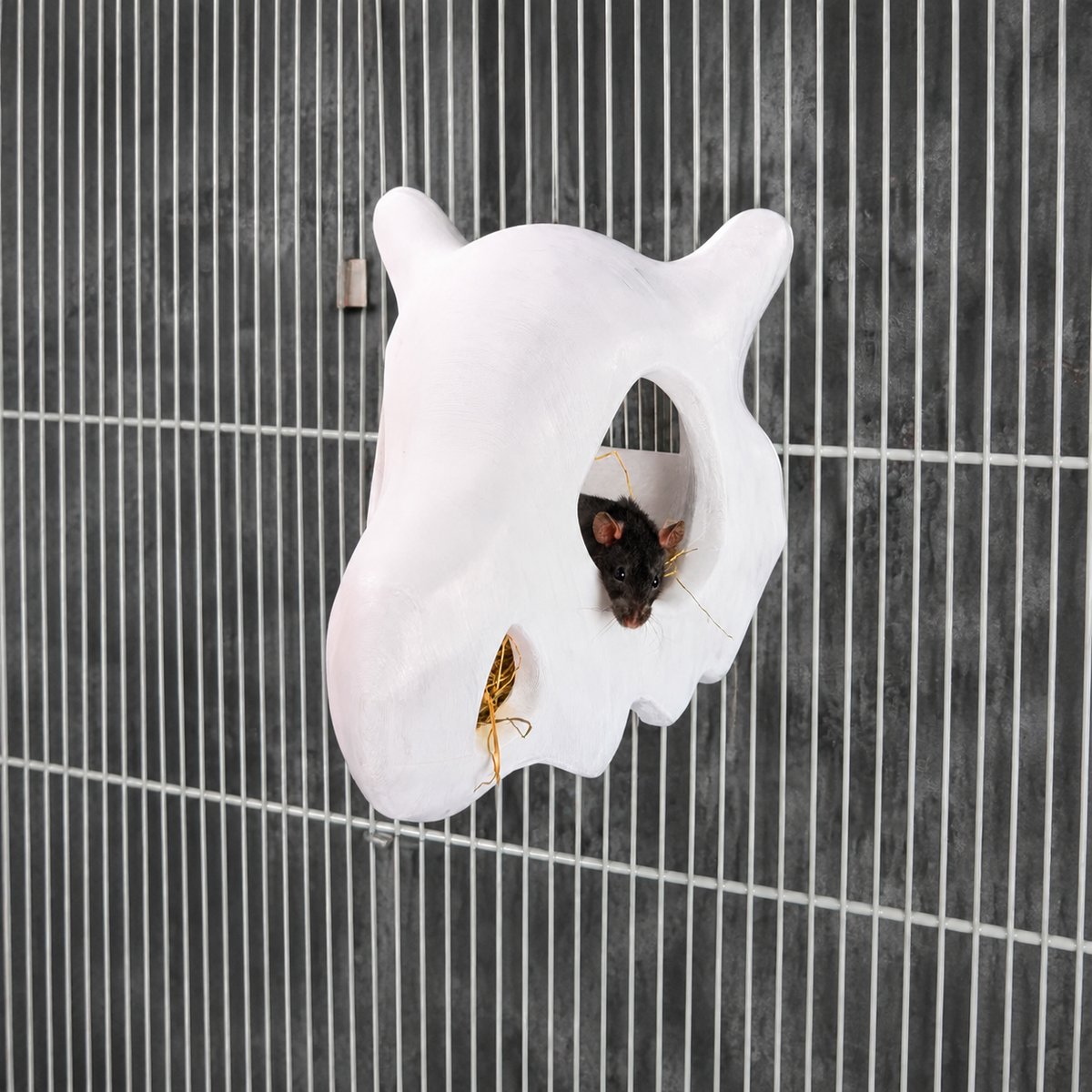
Gothic Skull Rat Hide & Hanging Nest
About 25 cm high × 22 cm wide

Strawberry Rat Hide
About 26 cm high × 26 cm wide

Hot Air Balloon Rat Hide – Hanging Cage Basket
Balloon about 23 cm across and 25 cm tall
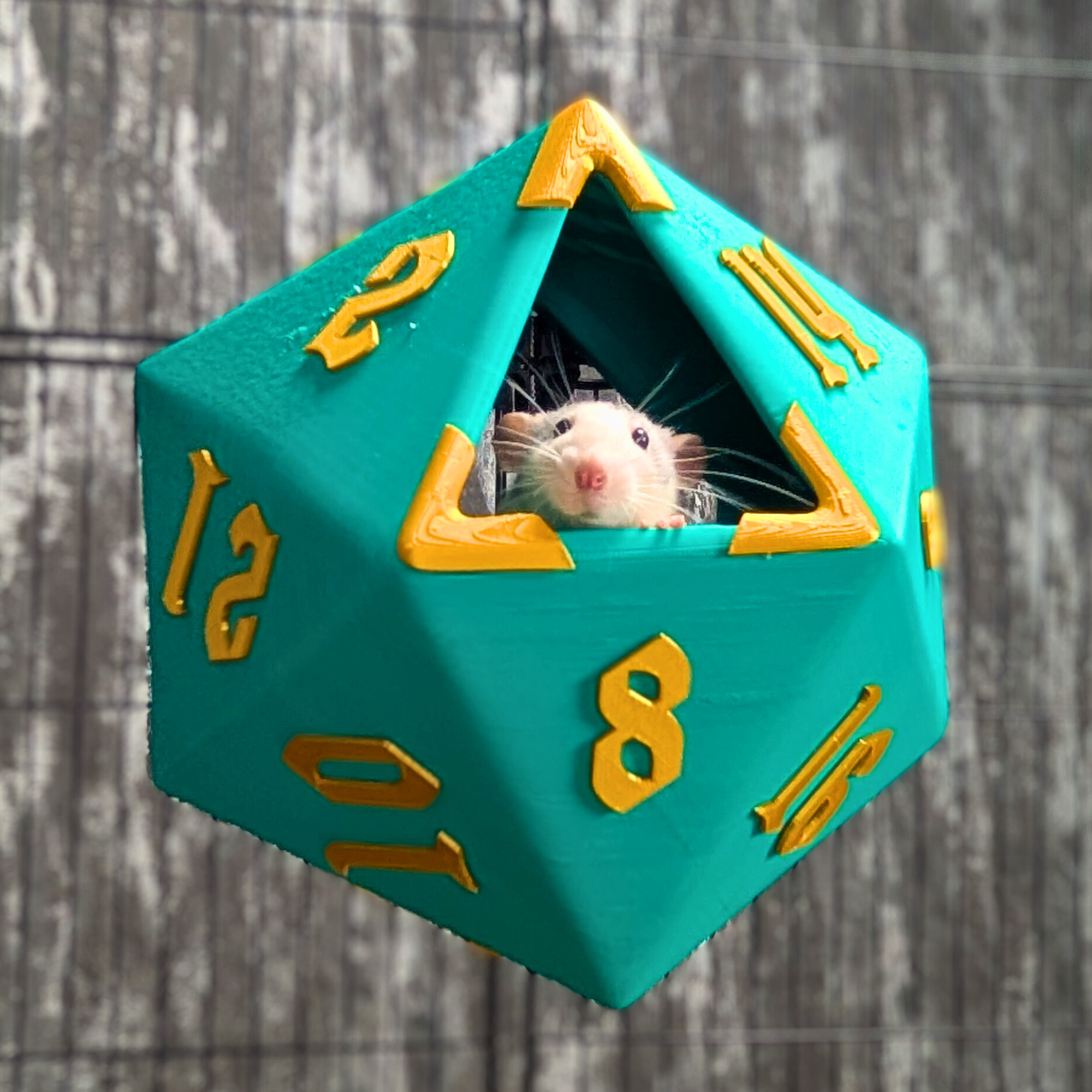
D20 Dice Rat Hide
About 25 cm wide × 25 cm high × 20 cm deep

Pink Gummy Bear Rat Hide
About 25 cm high × 19 cm wide × 15 cm deep