Guide8 min read
The Complete First-Time Rat Owner Guide
Before you bring rats home, plan for two or more same-sex rats, a tall wire cage with a solid floor, one hide per rat plus one spare, a complete rat food, at least an hour of supervised time out of the cage each day, and a vet who treats rats. Pet rats usually live two to three years. Set the cage up fully before they arrive.
At a glance
- Get at least two rats of the same sex.
- Blue Cross recommends at least 90 × 60 × 120 cm of living space for two to five rats.
- Keep the cage indoors at 19 to 23°C, the RSPCA's ideal range.
- Find a vet who sees rats before you need one.
- Pet rats usually live two to three years.
Are rats the right pet for you?
Rats are clever, affectionate and very social, but they are not low-effort pets. They want to be out, with you, and involved. Before you commit, check six things:
- Company. Room and budget for at least two rats.
- Space. A large cage, and somewhere safe for free roam.
- Time. An hour or more a day for checks, handling and play.
- Cleaning. Spot-cleaning most days and a fuller clean regularly.
- A vet. A practice that treats rats, within reach.
- Budget. The cage, food, bedding, enrichment, and vet bills you cannot plan for.
Pet rats usually live two to three years. Plan for their care through changes in work, travel and home life, not just the first few weeks.
Your legal duty of care
In England and Wales, the Animal Welfare Act 2006 makes anyone responsible for an animal take reasonable steps to meet its needs. Section 9 names five:
- a suitable environment
- a suitable diet
- to be able to show normal behaviour
- to be housed with, or apart from, other animals
- to be protected from pain, suffering, injury and disease
For rats, that means a large enough cage, the right food, room to climb, dig and forage, the company of other rats, and a vet when something is wrong. Not meeting these needs is an offence, and causing an animal unnecessary suffering can bring up to five years in prison. Scotland and Northern Ireland have their own animal welfare laws with a similar duty.
How many rats to get
Rats should live with other rats. The RSPCA, Blue Cross and the National Fancy Rat Society all advise keeping them in groups. Do not keep a rat alone unless a vet advises it for that rat. Two is the minimum; many experienced keepers prefer three, because if one dies, a trio becomes a pair rather than a lone rat.
Keep same-sex groups. Get your rats from a rescue or a reputable breeder rather than a pet shop, and ask about each rat's sex, age, health and social history. If you add rats later, quarantine the newcomers first: the National Fancy Rat Society's basic quarantine is at least two weeks with no signs of illness, kept where they do not share air with your rats. Then introduce them slowly with our carrier method guide, and see our quarantine cage guide for the setup.
If one of your rats dies, our lone rat guide helps you decide what to do for the one left behind.
Choosing and placing the cage
Choose a large, secure, well-ventilated wire cage with a solid floor. Glass tanks are not suitable: they trap ammonia from urine and leave nothing to climb. Blue Cross recommends at least 90 × 60 × 120 cm of living space for two to five rats; larger groups need more. Height matters: a fully grown rat stands 26 to 30 cm tall on its hind legs.
- Bars. Gaps must be too small for the smallest rat to put its head through.
- Temperature. 19 to 23°C. Keep the cage indoors, away from direct sun, radiators, draughts, smoke and kitchen fumes.
- Noise. Away from speakers, TVs and other loud sound.
- Bedding. Paper-based. Avoid cedar and pine shavings, which are harmful to rats, and cotton wool, which can wrap around toes and cause blockages if eaten.
Our rat cage setup guide covers cage types and layouts in depth.
What to put in the cage
Give each piece a job. Look at the cage from your rats' point of view: where they sleep, where they eat, where they climb, and where they can get away from each other.
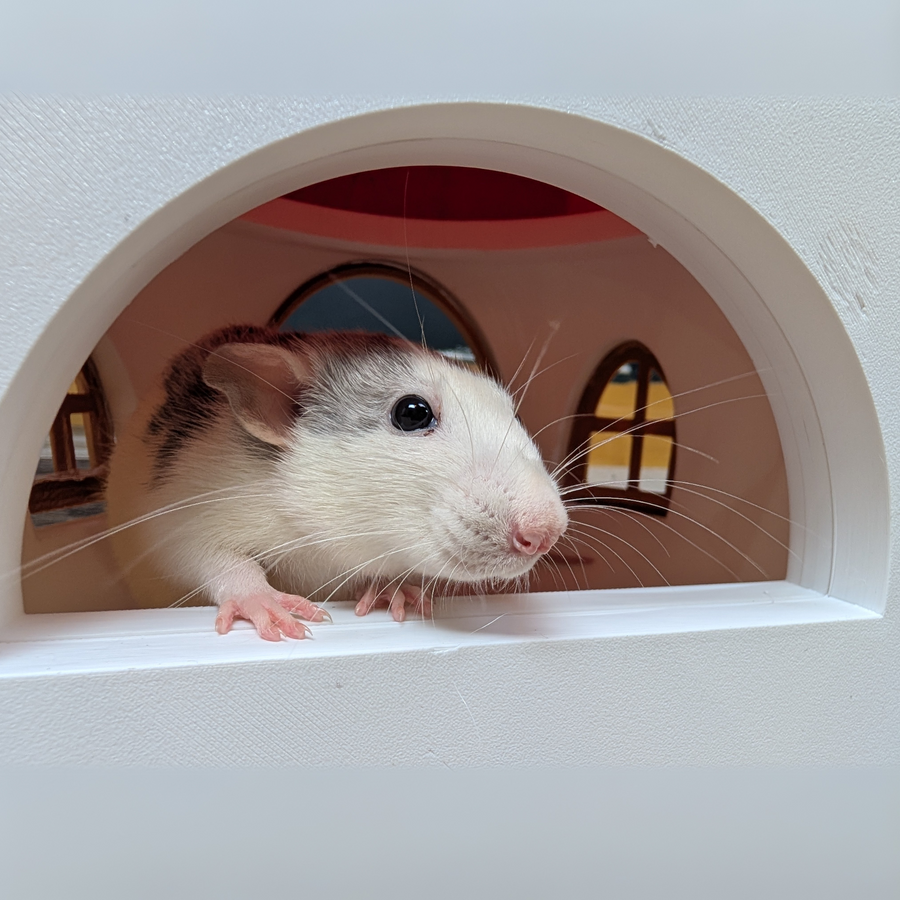
- Hides. One per rat, plus one spare, so no rat can guard the only retreat. Choose enclosed hides for rest, not just decoration.
- Levels. Shelves, ledges and hammocks at different heights, so they can climb and rest up high.
- Food and water. A water bottle and a food bowl or scatter-feeding spot.
- Toilet. A litter tray in the corner they choose. Keep food, water and toilet areas easy to clean.
- Foraging. Add it slowly, so the cage stays usable.
Leave a clear path between water, food and sleeping spots. Put heavier pieces where they will not block the doors. Our rat cage accessories guide builds the setup step by step. See our guide to rat toys.
Our Fairy Mushroom rat cage kit puts a hide, shelves and foraging cups in one matching set.
Food, water and daily care
Feed a complete rat food, ideally nuggets rather than a muesli-style mix: rats pick the sweet, fatty pieces out of a mix and leave the rest. Add small amounts of fresh vegetables each day, and keep fresh water available at all times. If you are unsure about a food, check the RSPCA diet guidance, our rat diet guide, or ask your vet.
Feeding through the life stages
- Young rats, up to about 10 weeks. The National Fancy Rat Society advises extra food with more protein and fat while they grow.
- Adults. A complete rat food in the amount the packet suggests. Weigh it out: rats put on weight easily, and obesity can shorten their lives.
- Older, pregnant or unwell rats. Ask a vet who treats rats before you change their diet. Softer food can help if their teeth start to cause trouble.
Never feed onion, citrus fruit, walnuts, rhubarb, grapes, raisins or chocolate (RSPCA). Keep sugary and fatty foods, including dairy, for small treats.
Every day:
- check food and water
- spot-clean droppings and soiled bedding
- watch each rat's breathing, posture, coat, appetite and energy
- give at least an hour of supervised time out of the cage, in a space with other pets shut out and hazards removed
Use a pet-safe cleaner, and keep a little clean, familiar nesting material when you change the bedding. Our cage cleaning guide sets out a daily, weekly and deep-clean routine.
Each week, check the cage for chewed plastic, loose fittings and sharp edges, and move or swap a few pieces so there is something new to explore.
Health and finding a vet
Find a vet before your rats arrive, not after. Not every practice sees rats, so ask whether they do, and how out-of-hours care works. RCVS Find a Vet is a good place to start.
Learn what is normal for each rat. Weigh them regularly in the same way and write it down: sudden weight loss is often the first sign of illness. Contact a vet promptly if something is new, persistent or getting worse.
Sneezing can have different causes, so do not diagnose it from a guide. A little sneezing in the first few days in a new home can be settling in. Sneezing with discharge, wheezing, weight loss, low energy or a hunched posture needs a vet. Our respiratory guide explains what to record.
Other problems to know about include lumps and tumours, overgrown or broken teeth, scabs, abscesses, and weight loss. See a vet as soon as you suspect something is wrong: a delay can make a small problem serious.
Your first week
- Day 1. Have the cage fully set up before they arrive: hides, water, food and quiet places to retreat.
- Days 2 to 3. Sit near the cage and talk quietly. Let them come forward in their own time.
- Days 4 to 5. Open the cage door and rest your hand inside, without chasing or grabbing.
- Days 6 to 7. If they are settling well, try a short free-roam session in a small, rat-proofed area.
Watch how they use the cage over that week. The best pieces are the ones your rats actually use. Our first 30 days guide carries on from here.
Building a budget
Price the cage, food, bedding, enrichment, carrier and regular replacements before you commit. Ask nearby practices that treat rats for their consultation and out-of-hours prices, and set a little aside each month for vet bills. Separate the essentials from the nice extras: a secure cage, places to hide, safe feeding points, easy cleaning and enough to keep the group busy come first. Decorative pieces can follow once that works.
Questions
How many rats should I get?
At least two of the same sex. Many keepers prefer three, so that no rat is left alone if one dies.
How big should a rat cage be?
Blue Cross recommends at least 90 × 60 × 120 cm of living space for two to five rats, with more for larger groups. Height matters as much as floor space.
What does the law say about keeping rats?
In England and Wales, the Animal Welfare Act 2006 requires you to meet a rat's needs for a suitable home, a suitable diet, normal behaviour, company and protection from pain, injury and disease.
How long do pet rats live?
Usually two to three years.
Sources
- RSPCA: creating a good home for rats
- RSPCA: rat health and welfare
- PDSA: rats as pets
- Blue Cross: caring for your rat
- NFRS: keeping rats as pets
- NFRS: rat shows, risks and quarantine
- RSPCA: rat diet
- Animal Welfare Act 2006, section 9
- CPS: offences involving domestic and captive animals
- RCVS Find a Vet
This guide is general rat care information, not a substitute for advice from your vet.
Related guides
Compare hides and cabins, foraging toys or the whole rat care range.