
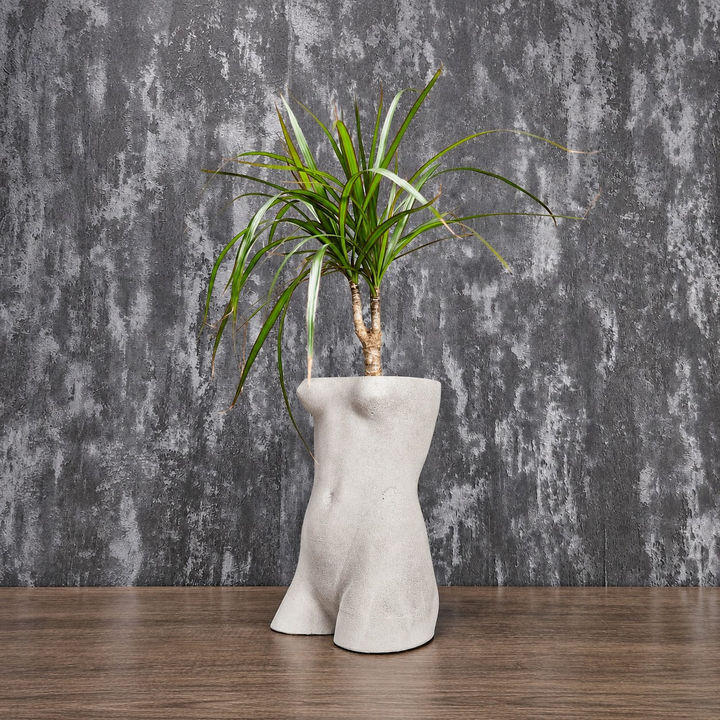
David and Venus Torso Planters | Cast Stone Pots
From £39.94
View product: David and Venus Torso Planters | Cast Stone PotsQuick read: Choose a cast stone or concrete planter by the exact material, finish, drainage, weight, plant compatibility, position and maker's outdoor guidance. A product label does not create one universal lifespan or frost rule.
Looking for a planter rather than advice? See our David and Venus torso planters, cast stone and made to order.
New to Ripleys Nest? Join the list for 10% off your first order.
Decide whether the planter will sit indoors, in a sheltered spot or fully exposed outdoors. Check the product's guidance for that use, then consider wind, rain, freezing, sunlight, access and the surface below. A planter that suits one position may need different care in another.
Use the actual product weight and allow for compost, water and the plant. Confirm the load limit of a shelf, balcony, roof or raised surface before filling the planter. Heavier pieces can be more stable, but weight is not proof of density, frost performance or quality. If a lightweight concrete or GFRC option is being considered, ask for the actual product specification.
Cementitious materials can affect the growing medium while a new surface settles. Ask the maker whether the piece is ready for planting, whether a liner is recommended and whether your plant choice needs special care. Do not substitute a generic soaking period, vinegar recipe or interior coating for the exact product guidance.
Freeze-thaw risk depends on saturation, pore structure, shape, drainage, surface condition and exposure. Standing water and blocked drainage can increase risk, but no generic frost threshold decides whether a planter is suitable. Follow the maker's placement guidance and move or protect the piece only as that guidance recommends.
For routine cleaning, use the maker's instructions and the cleaning checklist: soft brush, warm water, mild soap where compatible, clean rinse and natural drying. Avoid pressure washing and acidic cleaners unless the maker confirms compatibility. Check the planter after severe weather for pooling water, blocked drainage, deepening cracks, loose fragments or a changing finish.
| Question | Why it matters |
|---|---|
| What is the exact material and finish? | Terms such as concrete, cast stone, resin and fibrestone can cover different mixes and finishes. |
| Where is it approved for use? | Indoor, sheltered and exposed positions create different water, wind and freezing conditions. |
| How does water leave the planter? | Drainage affects roots, standing water and the condition of the base. |
| What is the actual filled load? | The surface, shelf or balcony must support the planter, growing medium, water and plant. |
| What care and coating instructions apply? | Use the maker's guidance for cleaning, winter placement and any treatment instead of a generic rule. |
From £39.94
View product: David and Venus Torso Planters | Cast Stone Pots

20 x 15 x 13 cm or 25 x 19 x 16 cm


22 cm long × 15 cm wide × 24 cm high

About 25 cm high × 20 cm deep × 17 cm long

About 22 cm high × 19 cm wide × 17 cm deep


