
Winter Care for Garden Ornaments: A Practical Checklist
Quick read: Winter care starts with the exact product guidance, a dry and stable position, clear drainage and a condition check after severe weather. Freeze-thaw risk depends on saturation, material, shape, finish and exposure; there is no universal frost rule for every ornament.
How frost can damage an ornament
Freeze-thaw damage can occur when water in a pore freezes while the material is saturated and the pressure exceeds its local strength. Risk varies with the mix, pore structure, shape, drainage, surface condition and exposure. Standing water and blocked drainage can increase risk, but the mechanism does not make every dense or hand-cast ornament frost-proof.
Frost patterns depend on the position
Outdoor exposure varies by location and by the exact spot. Shelter, wetness, drainage, salt, wind, sunlight and freezing all matter. A regional weather table cannot predict the performance of a particular piece. Use the maker's outdoor, sheltered and winter-placement guidance.
What “frost-resistant” should mean to you
Treat “frost-resistant” as a product-specific statement that needs context. Ask what material, finish, exposure and test or care conditions the maker is referring to. A label does not establish that every finish, shape or installation can remain outdoors through every winter.
Before severe weather
- Read the exact product's winter and outdoor-use guidance.
- Clear leaves and debris so drainage remains open.
- Check that the base is stable and that water cannot collect around it.
- Move or shelter the piece only if the maker recommends it for that position.
- Record the finish and inspect for existing cracks or loose fragments so changes are easier to spot.
Protection methods that match the product
Good drainage and a stable, suitable position are more useful starting points than a universal distance from the ground or a generic cover. If a cover, pad, liner or coating is being considered, use the maker's instructions and allow the surface to breathe where the product requires it. Do not trap moisture against an ornament with an unverified covering.
What to avoid
- Do not leave water pooling in a planter, recess or around the base.
- Do not pressure-wash, abrade or use acidic cleaners on an unknown finish.
- Do not apply a sealer to a damp, frozen or contaminated surface.
- Do not borrow a cure period, temperature window or frost claim from another product.
- Do not assume a making location or material name is evidence of a frost test.
After winter
Check for pooling water, blocked drainage, deepening cracks, loose fragments, spalling or a finish that is lifting or changing. Clean gently with the maker-approved method and let the piece dry naturally. If damage is unclear, stop before cleaning, coating or moving it and ask the maker what to do.
New to Ripleys Nest? Join the list for 10% off your first order.
Related guidance
Pieces from this guide
- Balloon Dog Garden Ornament
- Professor Grumbletoad Wizard Frog Garden Ornament
- The Little Critic Owl Garden Ornament
Read next
Explore garden ornaments

Capybara Garden Ornament with Orange
About 24 cm high × 12 cm wide × 19 cm deep

Cast Stone Crocodile Garden Ornament
About 14 cm high × 20 cm wide × 24 cm deep
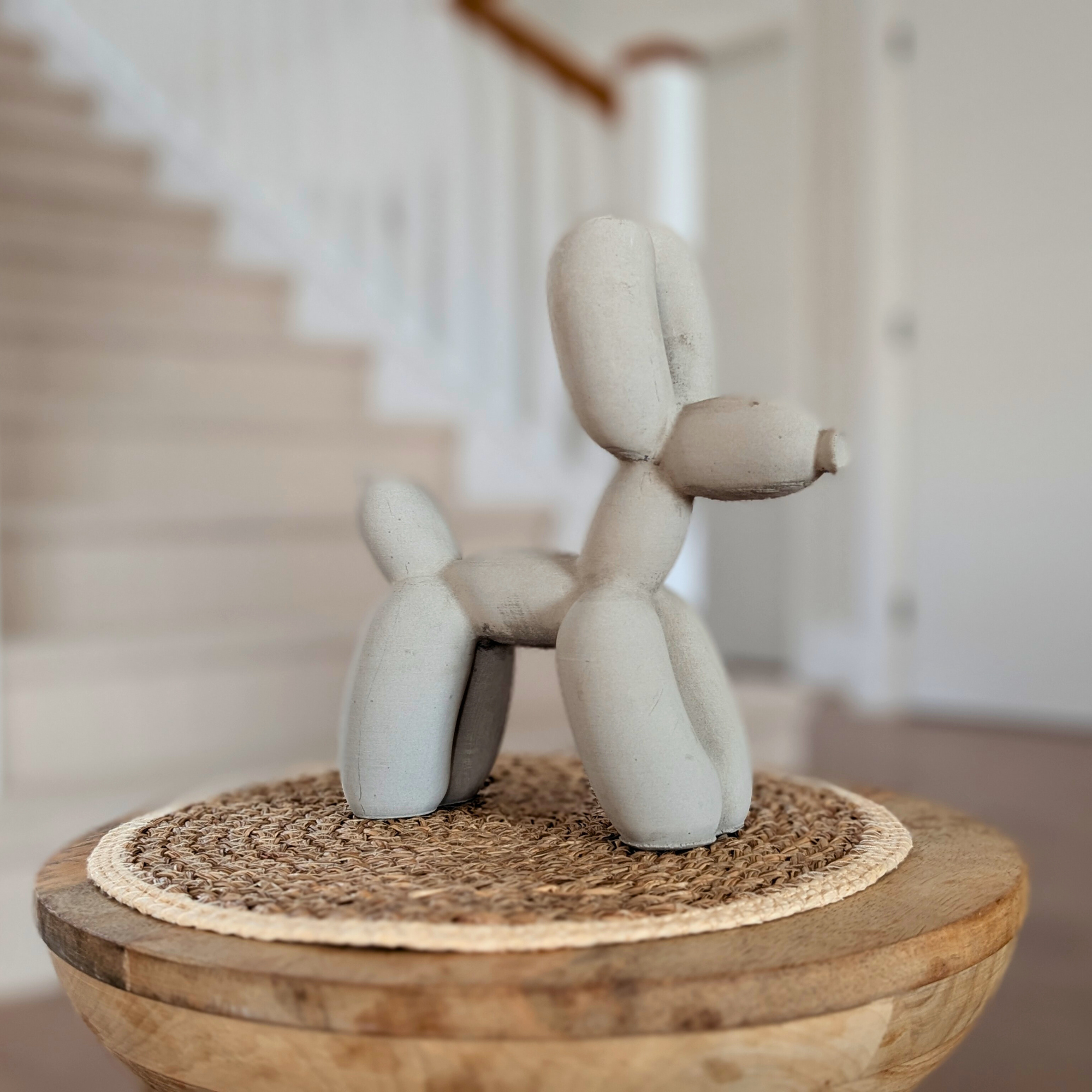
Balloon Dog Garden Ornament
About 23 cm high × 9 cm wide × 22 cm deep

Corgi Garden Ornament
About 24 cm high × 11 cm wide × 19 cm deep

Honey Bear Garden Ornament
About 24 cm high x 16 cm wide x 16 cm deep

The Little Critic Owl Garden Ornament
17 cm high × 18 cm wide × 18 cm deep

Mushroom Frog Garden Ornament
About 20 cm high x 16 cm wide x 16 cm deep

Professor Grumbletoad Wizard Frog Garden Ornament
18 cm H × 18 cm W × 17 cm D


