Garden Ornaments Guide
Cast Stone vs Resin Garden Ornaments: An Honest Comparison
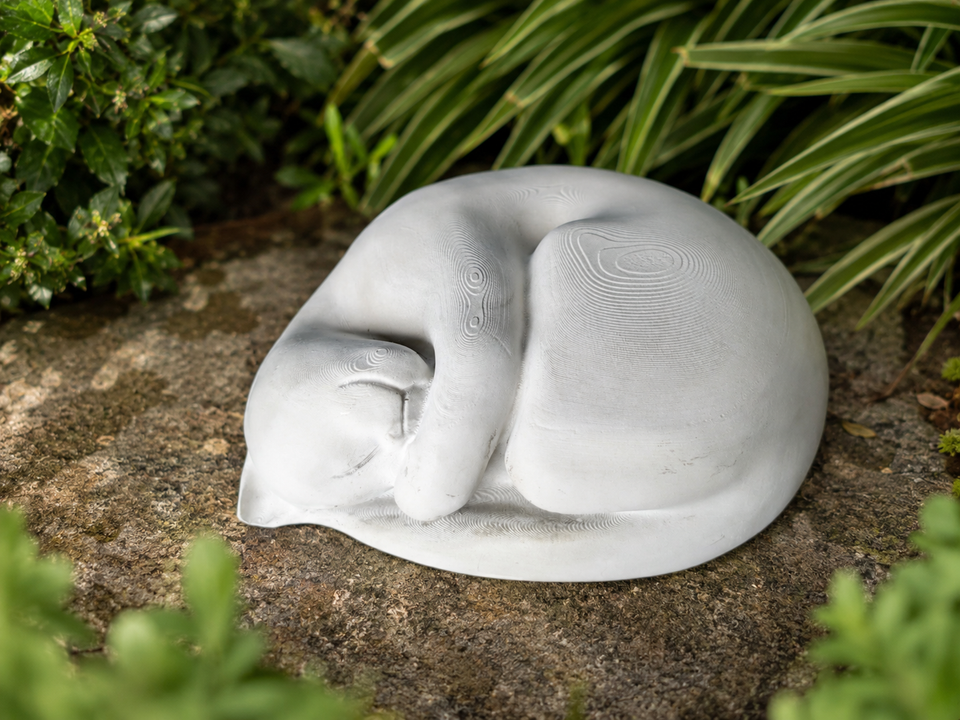
Garden Ornaments
Quick scan
- Check placement, cleaning and weather notes before choosing an outdoor piece.
- Use the care sections to keep cast stone looking intentional through the seasons.
- Follow the Garden Ornaments links for pieces that fit the style or care advice.
Helpful next step
If this guide is helping you choose or care for an outdoor piece, compare the garden routes that fit the spot you have in mind.
Quick read: Quick Summary Cast stone garden ornaments are more expensive than resin alternatives but offer genuine material advantages over a 5-10 year ownership period: they do not
Quick Summary
Cast stone garden ornaments are more expensive than resin alternatives but offer genuine material advantages over a 5-10 year ownership period: they do not fade, crack, or yellow in UV; they develop a natural patina that adds rather than subtracts from their appearance; and they have the weight and density that gives outdoor sculptures genuine physical presence. Resin ornaments are lighter, cheaper, and available in more colours but deteriorate significantly in UK outdoor conditions within 3-5 years. This honest comparison covers both materials fairly.
Choosing after the material comparison
If you are comparing cast stone with resin before buying, start with the garden ornaments collection For planter-led options, browse planters and home decor, compare African head planters, or use the head planter guide to choose the right scale and style.
- Frost-resistant indefinitely
- Develops authentic patina
- UV stable , never fades
- Weight gives physical presence
- UK climate suits it
- Yellows under UV within 3-5 years
- Cracks in hard frost cycles
- Lightweight , can blow over
- Colours fade and chalk
- Cheaper upfront only
Last updated: March 2026 | Written by: Ripleys Nest | Read time: 11 min
Quick summary: Cast stone and resin are the two most common materials for garden ornaments in the UK. They look similar on a shelf, but they behave very differently in a garden. Cast stone gets better with age. Resin does not. This guide compares them honestly across weight, weathering, durability, price, and environmental impact, and explains why we chose cast stone for our workshop.
Heavy cast stone ornaments resist tipping in exposed positions and feel visually anchored , lightweight resin cannot replicate this quality.
In this guide:
- The basics: what they actually are
- Weight and feel
- Weathering and aging
- Durability and lifespan
- Price comparison
- Environmental impact
- Why we chose cast stone
- Which is right for you?
The Basics: What They Actually Are
Key takeaway: Cast stone is a mineral material that behaves like natural stone. Resin is a synthetic polymer that imitates stone's appearance.
Cast stone (also called reconstituted stone or reconstructed stone) is made from crushed limestone or other natural aggregates bound with cement. It is mixed wet, poured into a form, and cured. The result is a dense, heavy material with properties similar to natural stone: it is porous, it absorbs moisture, and its surface develops a patina over time. High-quality cast stone has a density of approximately 2,200 kg per cubic metre.
The patina a cast stone ornament develops over decades is part of what you are buying , it cannot be faked, and it cannot be reversed.
Resin (typically polyresin or polyester resin) is a synthetic compound that is cast in form and often finished with a stone-effect paint or coating. It is lightweight, non-porous, and resistant to moisture absorption. Some resin ornaments include fillers like calcium carbonate or powdered stone to add weight and texture, but the base material is still plastic.
Both materials can be formed into similar shapes. On day one, in a shop or on a screen, they can look remarkably similar. The differences reveal themselves outdoors, over time.
Weight and Feel
Key takeaway: Cast stone feels like stone because it is stone. Resin feels like plastic pretending to be stone.
| Property | Cast Stone | Resin |
|---|---|---|
| Weight | Heavy (a 20cm ornament typically weighs 2 to 5kg) | Light (same size ornament might weigh 200 to 500g) |
| Surface temperature | Cool to the touch, like natural stone | Room temperature, like plastic |
| Sound when tapped | Solid thud, like tapping a wall | Hollow or plastic-sounding |
| Texture | Granular, slightly rough, natural variation | Smooth, uniform, painted texture |
Weight matters in a garden. A light ornament blows over in wind, tips off a wall, or gets knocked by a cat. Cast stone stays put. A small cast stone planter on a shelf does not need fixing down. A resin one does.
There is a tactile quality to cast stone that is difficult to describe in text but obvious in person. Pick up a cast stone ornament and you know you are holding something substantial. The coolness, the weight, the texture all communicate "real material." Resin, however well made, always feels like a reproduction. Your hands know the difference even if your eyes are fooled.
Weathering and Aging
Key takeaway: Cast stone develops character. Resin deteriorates. This is the most important difference between the two materials.
Cast stone: it gets better
Cast stone is porous. It absorbs moisture, and that moisture creates a microenvironment on the surface where biological growth takes hold. Within a single season outdoors in a UK garden, you will start to see:
- Moss settling into crevices and recessed details
- Lichen forming pale green or grey crusts on exposed surfaces
- Algae creating a soft green wash, particularly on north-facing surfaces
- Natural patina as the surface tone shifts from fresh grey to a mottled, weathered stone appearance
This is not damage. Heritage organisations including Historic England and The Gardens Trust consider biological growth on stone to be "an integral part of their appearance" and actively advise against removing it. The RHS takes a similar position. Chilstone, one of the UK's most established cast stone manufacturers (70+ years), reports that their vintage pieces covered in moss are "the most sought after" by collectors.
A cast stone ornament looks good on day one. After two seasons it looks like it has been there for decades. After five years it looks like it belongs. That is the appeal.
If you want to accelerate the process: brush natural yogurt (past its sell-by date works best) over the surface and place the ornament in a partially shaded spot. The Lactobacillus bacteria in the yogurt modify the surface pH and encourage rapid colonisation. Chilstone's own experiments showed visible lichen growth within 6 weeks using this method. We cover this in detail in our five methods for aging cast stone guide
Resin: it gets worse
Resin does not weather. It degrades.
Ultraviolet light breaks down polymer chains in resin over time. The visible signs are:
- Colour fading: Painted stone-effect finishes bleach in sunlight, often unevenly
- Yellowing: Clear or light-coloured resin develops a yellow tint
- Surface crazing: Hairline cracks appear across the surface as the material becomes brittle
- Paint peeling: The stone-effect coating lifts and flakes, exposing the base plastic underneath
- Brittleness: Resin becomes increasingly fragile over several years, prone to cracking on impact
UV-stabilised resin lasts longer, but all resin degrades eventually. A typical resin garden ornament in a UK garden starts showing visible deterioration within 3 to 5 years. By 8 to 10 years, most look tired. Resin does not develop a patina. Moss struggles to colonise a non-porous surface. Instead of gaining character, it just looks old.
Avoid resin in exposed south-facing positions , direct summer sun accelerates UV degradation. Chalking resin cannot be restored; cast stone improves in the same conditions.
Durability and Lifespan
Key takeaway: Cast stone lasts decades with basic care. Resin lasts years before needing replacement.
Long-term ValueTwo or three resin replacements vs one cast stone purchase over 20 years usually inverts the price comparison.
| Factor | Cast Stone | Resin |
|---|---|---|
| Expected lifespan | 25 to 50+ years (with minimal care) | 5 to 15 years (depending on UV exposure) |
| Frost resistance | Good. Dense cast stone absorbs little moisture. Apply breathable sealant before winter for extra protection. | Not relevant. Non-porous material does not absorb water. |
| Impact resistance | Moderate. Drops from height can chip or crack it. | Low to moderate when new. Poor when aged (becomes brittle). |
| Repairability | Chips and cracks can be filled with stone filler or matching cement mix. | Difficult. Broken resin rarely looks right after repair. Paint touch-ups never match the original finish. |
| Cleaning | Soft brush and water. No chemicals needed. | Soapy water and a cloth. Avoid abrasives (scratches the paint layer). |
Frost is the one thing to manage with cast stone in the UK. Water trapped in the stone's pores can freeze and expand by approximately 9 percent, which over many cycles can cause surface flaking. The solution is simple: apply a breathable stone sealant before October each year. "Breathable" is the key word. Standard waterproof sealant traps moisture already inside the stone and makes frost damage worse. We cover seasonal care in detail in our cast stone cleaning and care guide
Small cast stone pieces (under 1kg) are best brought indoors during hard frost. Larger, denser pieces are far more resilient. A 4kg cast stone ornament sitting on a stable base will handle a typical UK winter with no trouble.
Price Comparison
Key takeaway: Cast stone costs more upfront. Over a lifetime, it costs less because you buy it once.
| Price Band | Cast Stone | Resin |
|---|---|---|
| Small ornament (10 to 15cm) | 15 to 35 GBP | 8 to 15 GBP |
| Medium ornament (20 to 30cm) | 30 to 75 GBP | 12 to 30 GBP |
| Large ornament (40cm+) | 60 to 200 GBP | 25 to 60 GBP |
| Replacement cycle | Once (25 to 50+ years) | Every 5 to 10 years |
The price gap shrinks when you factor in longevity. A 25 GBP resin ornament replaced three times over 30 years costs 75 GBP. A 50 GBP cast stone ornament bought once costs 50 GBP and looks better every year.
There is also a resale and gifting factor. Cast stone ornaments hold their value and can be passed on. Aged cast stone with a natural patina is actively desirable. Aged resin is not.
Environmental Impact
Key takeaway: Neither material is perfect, but cast stone has the edge on longevity, repairability, and end-of-life impact.
Cast stone is made from mineral ingredients: crushed limestone, cement, sand, and water. The cement production process does generate carbon emissions. However, cast stone undergoes a process called carbonation over its lifetime, where it slowly reabsorbs CO2 from the atmosphere. A UK government study on carbonation emissions modelling confirmed that concrete and cement products act as a partial carbon sink over their service life. Cast stone is also inert at end of life. It can be crushed and used as aggregate, returned to the ground, or left to weather naturally.
Resin is a petroleum-derived plastic. It does not biodegrade. At end of life, most resin ornaments go to landfill. Recycling options for polyresin are extremely limited in the UK. The stone-effect paint coatings add further chemical complexity.
| Environmental Factor | Cast Stone | Resin |
|---|---|---|
| Raw materials | Mineral (limestone, cement, sand) | Petroleum-derived polymer |
| Carbon in production | Moderate (cement process) | Moderate (petrochemical process) |
| Carbon over lifetime | Partially offset by carbonation | No offset |
| Biodegradable | Yes (mineral, returns to aggregate) | No (plastic, persists in landfill) |
| Recyclable | Yes (crushed for aggregate) | Very limited |
| Replacement frequency | Low (decades of use) | High (5 to 10 year cycle) |
| Repairability | High | Low |
Longevity is the biggest environmental factor. An ornament that lasts 50 years has one-fifth the manufacturing impact of one that needs replacing every 10 years.
Why We Chose Cast Stone
Key takeaway: We make things we want to last. Cast stone is the material that lets us do that honestly.
We work with cast stone in our Cumbria workshop for three reasons.
First, it is honest. Cast stone is stone. It looks like stone because it is made from stone. We do not need paint effects or surface coatings to make it appear to be something it is not. What you see is what it is.
Second, it improves with time. Every piece we cast looks its best not on day one, but after a year or two in a garden. The surface develops character that we could never manufacture. Each piece ages differently depending on where it is placed, which direction it faces, and what microclimate surrounds it. Your ornament becomes unique in a way that is genuinely unrepeatable.
Third, it is a material we can work with by hand. Cast stone responds to handcraft. Every casting picks up subtle variations from the process: fine grain texture, small air marks, slight surface irregularities that separate something handmade from something machined. We hand-finish every piece. That finishing is visible and permanent, not a coat of paint that peels after three summers.
We could make our products from resin. It would be cheaper, lighter, and easier to deliver. But it would not last. It would not weather. And it would not be something we would want to put our name on.
Which Is Right for You?
Choose cast stone if:
- You want an ornament that lasts decades and improves with age
- You value weight, substance, and natural materials
- You are happy with basic seasonal care (brush and sealant once a year)
- You prefer buying once rather than replacing
Choose resin if:
- Weight is a genuine constraint (balcony with weight limits, elderly person who cannot lift heavy objects)
- The ornament is for indoor use only (resin performs better without UV exposure)
- Budget is tight and you need something affordable now
- You want something temporary or seasonal
There is no shame in choosing resin for the right reasons. But if you are buying something for your garden that you want to still be there in 20 years, looking better than the day you bought it, cast stone is the material that delivers on that promise.
Sources
Professional and Heritage Organisations
- Historic England. "Control of Biological Growth on Masonry." historicengland.org.uk
- The Gardens Trust. "Caring for Historic Graveyard and Cemetery Monuments."
- RHS. Position on lichen and biological growth on garden stone.
- Chilstone. "Garden Project: Weathering Cast Stone Using Yogurt." chilstone.com
- Chilstone. "Top Ten Tips for Antiquing and Personalising Your Cast Stone." chilstone.com
Technical and Environmental
- UK NAEI. "UK GHG Inventory Improvement: Carbonation of Concrete Emissions Sink Modelling." naei.energysecurity.gov.uk
- gardenornaments.com. "The Ultimate Guide to Choosing Stone Garden Ornaments for UK Gardens." gardenornaments.com
- gardenornaments.com. "How to Care for and Maintain Stone Garden Ornaments." gardenornaments.com
Further Reading
- How to care for cast stone garden ornaments
- Five methods for aging cast stone
- How to photograph your garden ornaments
This guide was written by Ripleys Nest based on daily experience casting and finishing stone in our Cumbria workshop. Last reviewed: March 2026. We update our guides every 6 months.
// CH.03 · GARDEN
Choose the outdoor piece
Use the guide to decide what belongs in the space, then compare cast-stone pieces by size, weight, finish and where they will sit.


Save the seasonal care reminder
Get a simple outdoor care note for cleaning, frost checks and choosing a cast-stone piece for the right spot.
The guide stays open. Use the links below when you are ready; your email is only for useful guide follow-up.