
Journal11 min read
How to Photograph Your Garden Ornaments (Smartphone Guide)

Helpful next step
If this guide is helping you choose or care for an outdoor piece, compare the garden routes that fit the spot you have in mind.
Quick Summary
Smartphone cameras are capable of producing gallery-quality garden ornament photography with the right technique - the limiting factors are almost always lighting, angle, and background rather than camera quality. The best garden ornament photos use overcast natural light (eliminating harsh shadows), low shooting angles (giving pieces visual weight and drama), and clean or complementary backgrounds. This step-by-step smartphone guide covers the full process from choosing the time of day to editing the final image.
Last updated March 2026. Tested on iPhone and Android. The limiting factor is almost always lighting and angle, not camera quality.
Handmade in Cumbria. Every piece is one of a kind.
Quick summary: You do not need a professional camera to take great photos of your garden ornaments. A smartphone, the right light, and a few composition principles will get you 90 percent of the way there. This guide covers when to shoot, how to frame the shot, seasonal ideas, and basic editing, all using the phone in your pocket.
In this guide:
- Why lighting matters more than your camera
- The best time of day to shoot
- Composition: framing the shot
- Background and context
- Seasonal photography ideas
- Simple editing on your phone
- Sharing your photos
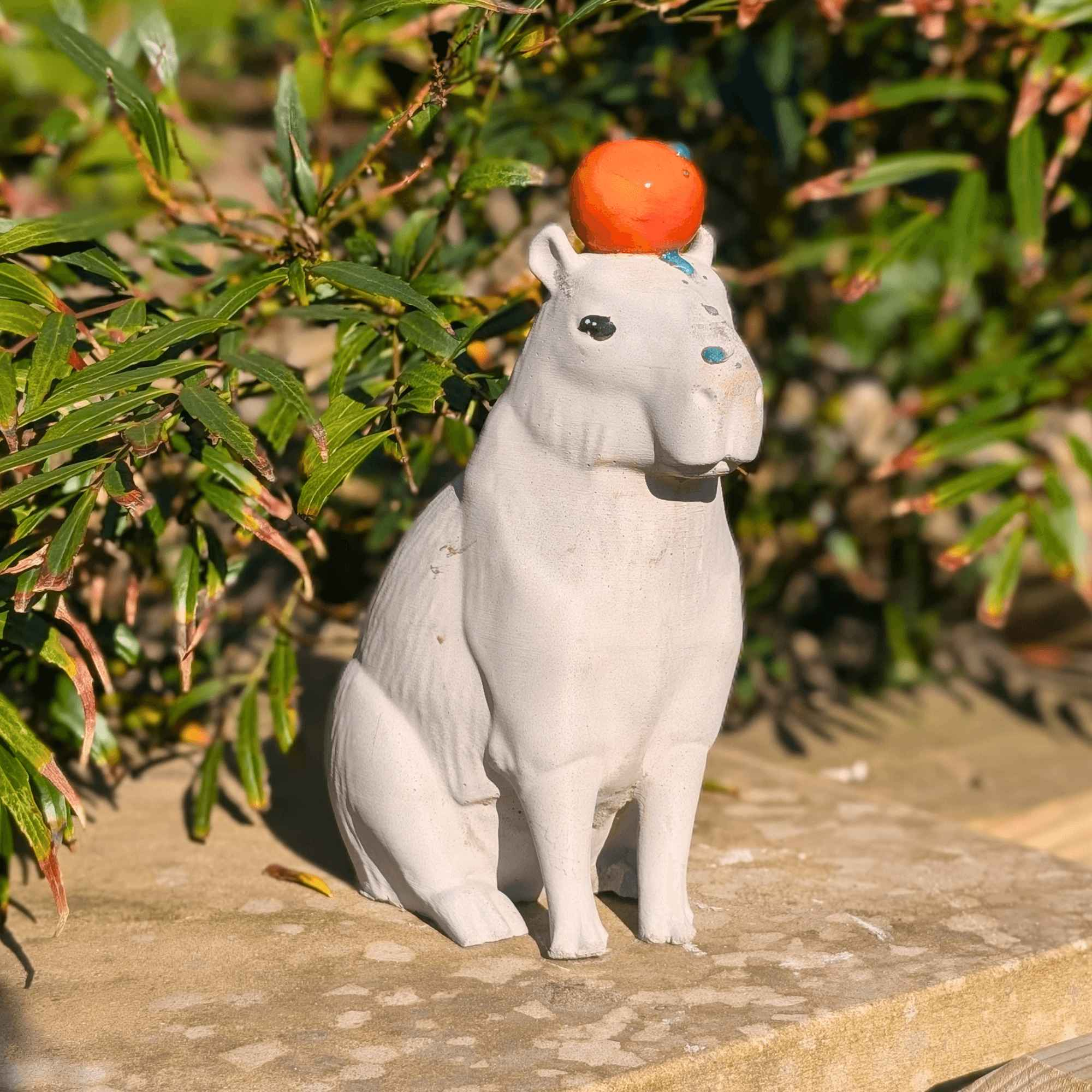
Direct sunlight creates harsh shadows and blown-out highlights on pale stone. Overcast days or open shade give softer, more flattering light , the difference is dramatic.
Why Lighting Matters More Than Your Camera
Key takeaway: Light is the single biggest factor in a good photo. A cheap phone in perfect light beats an expensive camera in bad light, every time.
Modern smartphones have remarkably good cameras. The latest iPhones and Samsung Galaxy phones shoot at resolutions that would have required professional equipment ten years ago. The sensor quality is not the limitation. The light is.
Cast stone responds beautifully to natural light. The surface texture, the grain, the patina, the moss and lichen, all of these come alive when light rakes across them at an angle. In flat, overhead light (midday sun, overcast but bright), the same ornament looks flat and dull. The texture disappears. The colour washes out.
Understanding this one principle transforms your garden photos. You do not need filters, editing apps, or photography courses. You need to shoot at the right time of day.
The Best Time of Day to Shoot
Key takeaway: Golden hour (the hour after sunrise and before sunset) produces the best garden photos. Overcast days are your second-best option.
Golden hour
The hour after sunrise and the hour before sunset are called "golden hour" by photographers for good reason. The sun is low in the sky, casting warm, directional light that rakes across surfaces at an angle. This creates:
- Long shadows that add depth and drama
- Warm colour tones that make stone glow
- Texture revelation as light catches every ridge, crack, and detail on the surface
- Soft, diffused edges rather than harsh shadow lines
In the UK, golden hour timing shifts significantly across the year. In midsummer, the evening golden hour starts around 8pm. In midwinter, it can begin as early as 3pm. Check a sunrise/sunset app for your location.
Overcast days
A uniformly overcast sky acts like a giant diffuser. The light is soft, even, and shadow-free. This is excellent for:
- Detail shots where you want to see the ornament clearly without harsh shadows
- Colour accuracy (overcast light does not skew warm or cool)
- Photographing multiple ornaments in a single session without waiting for shadows to shift
Overcast light lacks the drama of golden hour, but it is reliable and forgiving. If you are photographing a collection of ornaments for a listing or a social media post, an overcast afternoon is your most consistent option.
What to avoid
- Midday sun in summer. Overhead light creates harsh shadows under ledges and details, washes out colour, and makes everything look flat.
- Direct flash. Phone flash flattens texture and creates an ugly, unnatural look. Always shoot with natural light.
- Deep shade. Photos taken in heavy shade come out noisy (grainy) because the phone cranks up the sensor sensitivity to compensate for low light.
Composition: Framing the Shot
Key takeaway: Three simple principles cover 90 percent of composition: rule of thirds, get low, and fill the frame.
Rule of thirds
Turn on the grid overlay in your phone's camera settings. This places two horizontal and two vertical lines across the screen, dividing it into nine equal sections. Place your ornament at one of the four points where lines intersect, rather than dead centre. This creates a more natural, balanced composition.
The exception: symmetrical ornaments (busts, urns, matching pairs) can look powerful placed dead centre. The rule of thirds is a starting point, not a law.
Get low
Most people photograph garden ornaments from standing height. This creates a downward angle that makes ornaments look small and diminished. Instead, crouch or kneel so your camera is at the ornament's eye level (or the level of its most interesting feature).
For ground-level ornaments like planters, toads, or low busts, getting the camera right down to ground level creates a dramatic perspective that makes the ornament feel monumental.
Fill the frame
Move closer. Then move closer again. New photographers almost always shoot too wide. The ornament ends up small in the centre of the frame, surrounded by distracting garden clutter. Fill at least two-thirds of the frame with the ornament itself.
If you want to show context (the ornament in its garden setting), take a separate wide shot. For the hero image, fill the frame.
Angle variety
Take more shots than you think you need. For every ornament, try:
| Shot Type | What It Shows | How to Frame It |
|---|---|---|
| Hero shot | The ornament at its best | Eye level, rule of thirds, golden hour light |
| Detail shot | Texture, patina, a specific feature | Close-up, fill the frame, overcast light |
| Context shot | The ornament in its garden setting | Wider angle, show surrounding plants and setting |
| Profile shot | Side angle showing depth and dimension | 45 degrees to one side, low angle |
| Top-down shot | For planters, dishes, or flat-topped pieces | Directly overhead, flat even light |
Background and Context
Key takeaway: The background should support the ornament, not compete with it. Simple backgrounds work best.
Natural backgrounds
The best backgrounds for garden ornaments are the things already in your garden:
- Green foliage: A hedge, shrub, or border planting behind the ornament creates a clean, natural backdrop. Dark green works particularly well against pale stone.
- Brick or stone walls: These complement cast stone ornaments and suggest an established garden.
- Gravel or paving: Clean, simple surfaces that do not distract from the ornament.
- A single focal plant: A striking flower or architectural plant beside (not behind) the ornament adds colour without clutter.
What to avoid in the background
- Wheelie bins, garden hoses, plastic chairs, or anything that breaks the mood
- Bright colours that pull the eye away from the ornament
- Cluttered borders where the ornament gets lost in the planting
- Fences in poor condition (surprisingly common in garden photos)
Quick fix: If the background is messy and you cannot move the ornament, use portrait mode on your phone. This blurs the background (bokeh effect) and keeps the ornament sharp. It works well for isolating a single piece.
Telling a story
The most engaging garden photos show the ornament as part of a lived-in garden, not sitting on a bare surface in isolation. A gargoyle peering through ivy. A planter spilling over with herbs. A bust half-hidden among ferns. These compositions suggest a garden with personality, which is exactly what your ornament adds to the space.
Seasonal Photography Ideas
Key takeaway: Every season offers a different mood. Photograph your ornaments throughout the year to show how they change and how your garden changes around them.
Spring
- Shoots and bulbs emerging around the base of an ornament
- Morning dew on the stone surface (close-up detail shot)
- Fresh green growth contrasting against weathered grey stone
- The ornament re-emerging after winter (clean off winter grime first)
Summer
- Golden hour shots with warm evening light
- The ornament framed by flowers in full bloom
- Shadow patterns cast by surrounding plants falling across the stone
- A bird perched on a bust or birdbath (patience required)
Autumn
- Fallen leaves scattered around or resting on the ornament
- Warm amber tones of the dying garden against cool grey stone
- Morning mist with the ornament as a focal point (shoot early)
- Berries and seed heads providing colour accents
Winter
- Frost on the stone surface (shoot at first light before it melts)
- Snow settled on ledges and details
- Bare branches framing the ornament against a winter sky
- Evergreen planting providing year-round structure around the piece
Cast stone looks exceptional in winter light. The low sun angle that is standard in UK winters (October through February) creates exactly the kind of raking directional light that reveals texture. Many of the best stone photography opportunities happen in the months people least expect.
Simple Editing on Your Phone
Key takeaway: Small adjustments make a big difference. Do not over-edit. Three tweaks are usually enough.
The three essential adjustments
Open your photo in the built-in editor (Photos on iPhone, Gallery on Samsung) or a free app like Snapseed. Make these three adjustments:
1. Brightness and exposure. If the photo is too dark (common in early morning or late evening), increase brightness by 10 to 20 percent. If the stone is washed out, bring exposure down slightly.
2. Contrast. A small boost in contrast (10 to 15 percent) makes the stone texture more defined and the colours more distinct. Do not overdo it. Heavy contrast makes photos look artificial.
3. Crop and straighten. Straighten the horizon line. Crop out distracting elements at the edges. Tighten the composition. This is the single most impactful edit and it takes five seconds.
What not to do
- Do not use heavy filters. Instagram-style filters with strong colour casts (warm, cool, vintage) misrepresent the stone's actual colour. Keep it natural.
- Do not oversaturate. Pushing saturation makes the green of plants look radioactive and the stone look unnaturally warm.
- Do not use the "HDR" effect. HDR photos with the slider cranked up look surreal and processed. Natural is better.
- Do not sharpen excessively. A tiny amount of sharpening helps. Too much creates a crunchy, over-processed look.
Before and after comparison
A good edit should be invisible. If someone looks at your photo and says "nice edit," you have gone too far. If they say "nice garden," you have got it right.
Sharing Your Photos
Key takeaway: We love seeing our ornaments in your gardens. Tag us and use #MyGardenGuardian so we can find and share your photos.
If you have photographed one of our ornaments in your garden, we would genuinely love to see it. Every piece leaves our Cumbria workshop and goes to a garden we will never visit. Seeing where they end up, what grows around them, and how they weather over time is one of the best parts of what we do.
Where to share:
- Instagram: Tag @ripleysnestco and use #MyGardenGuardian
- Facebook: Post to our Ripleys Nest page
- Pinterest: Pin your garden photos and tag Ripleys Nest
We feature our favourite customer photos on our social media and website (with your permission). If your photo shows our work in its best light, we will reach out.
Photo review tip
Before sharing, ask yourself: does this photo make the ornament look as good as it does in person? If the answer is yes, share it. If the photo does not do it justice, try again at golden hour with the tips in this guide. The difference will surprise you.
Quick Reference Card
| What | Do This |
|---|---|
| Best light | Golden hour (1 hour after sunrise, 1 hour before sunset) |
| Second best | Overcast afternoon |
| Avoid | Midday sun, flash, deep shade |
| Angle | Eye level with the ornament, not looking down |
| Distance | Fill at least two-thirds of the frame |
| Background | Green foliage, brick, stone, or blurred with portrait mode |
| Editing | Brightness, contrast, crop. Nothing more. |
| Sharing | Tag @ripleysnestco and #MyGardenGuardian |
Sources
Photography and Garden Presentation
- RHS. Garden photography guidance and best practices.
- Chilstone. Cast stone ornament styling and presentation. chilstone.com
- gardenornaments.com. "The Ultimate Guide to Choosing Stone Garden Ornaments for UK Gardens." gardenornaments.com
Stone and Weathering
- Historic England. "Control of Biological Growth on Masonry." historicengland.org.uk
- gardenornaments.com. "How to Care for and Maintain Stone Garden Ornaments." gardenornaments.com
Further Reading
- Cast stone vs resin: an honest comparison
- How to care for cast stone garden ornaments
- Five methods for aging cast stone
This guide was written by Ripleys Nest. We photograph our own products daily in our Cumbria workshop and garden, and these tips come from what actually works for us. Last reviewed: March 2026. We update our guides every 6 months.
Every piece is handmade in our Cumbria studio. Small variations in texture and finish are evidence of the handmade process, not defects.
GARDEN
Choose the outdoor piece
Use the guide to decide what belongs in the space, then compare cast-stone pieces by size, weight, finish and where they will sit.
New to Ripleys Nest? Join the list for 10% off your first order.


Pieces from this guide
- Professor Grumbletoad Wizard Frog Garden Ornament
- The Little Critic Owl Garden Ornament
- Balloon Dog Garden Ornament


