Quick Summary
Rats are intelligent, social animals that make active use of enrichment when it is genuinely interesting to them - not just when it is present. The difference between a cage your rats explore continuously and one they ignore is usually the quality and variety of the enrichment rather than the quantity. This post covers what rats actually engage with, what the welfare research says about enrichment requirements, and how to choose pieces that serve both function and aesthetics.
Rats are not satisfied with a single level and a wheel. A cage with two surfaces is the equivalent of a studio flat with no furniture , technically habitable, not actually adequate.
Not sure your cage is big enough? Try our rat cage size and fit calculator.
There is a thing that happens when you first get rats. You buy the cage. You add a water bottle, a food bowl, and maybe a hammock from a pet shop. You consider it done. The rats disagree.
Fancy rats are not hamsters. They are not satisfied with a single level and a wheel. They are social, intelligent, spatially curious animals that spend a significant portion of their waking hours navigating, climbing, perching, and investigating their environment. A cage with two surfaces is the equivalent of a studio flat with no furniture. Technically habitable. Not actually adequate.
This is where cage furniture stops being an optional extra and starts being enrichment , which is to say, it stops being about aesthetics and starts being about welfare.

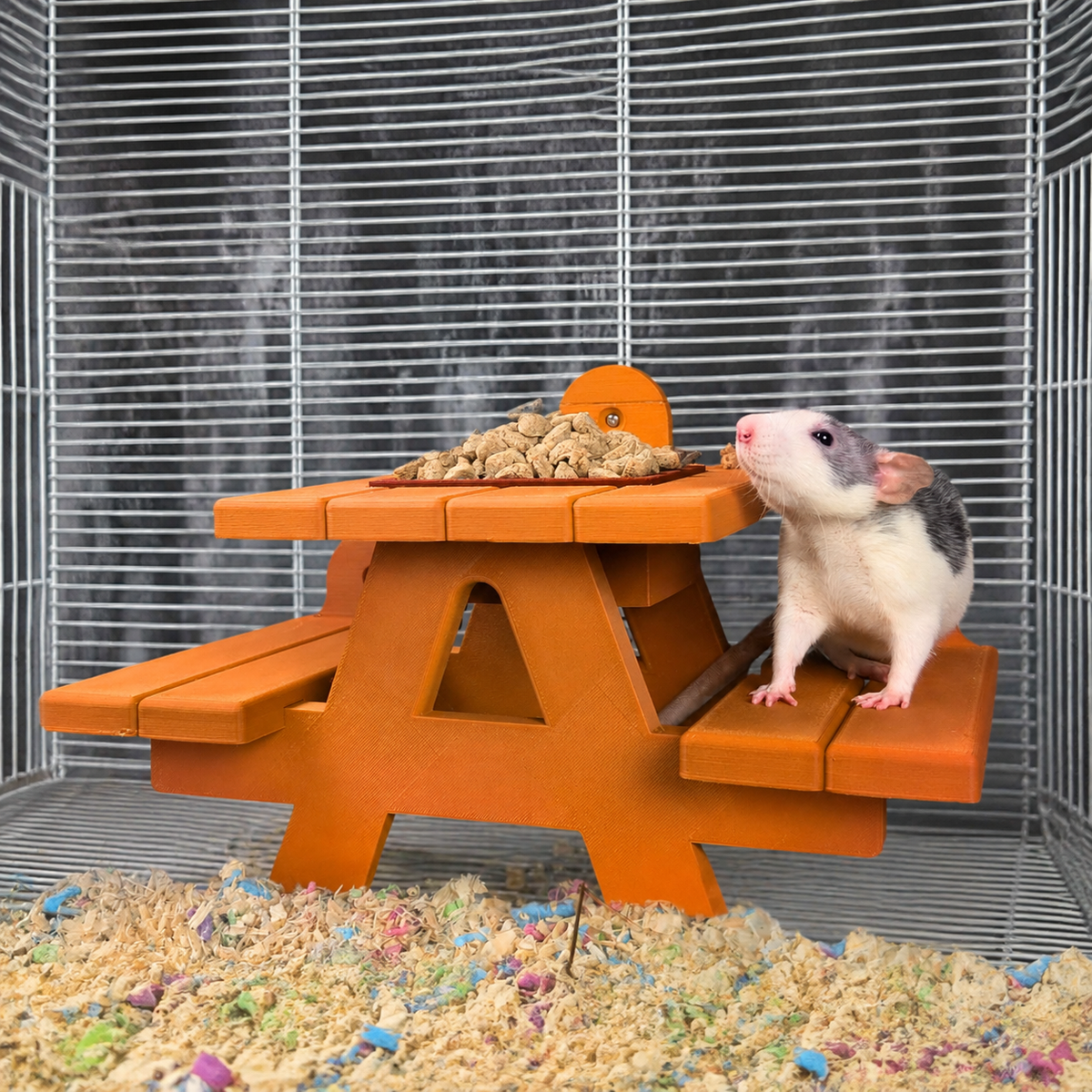
Enrichment (foraging toys, puzzle feeders) stimulates cognition. Furniture (shelves, ledges, hides) defines the spatial quality of the cage. Both matter , furniture creates the foundation enrichment sits within.
Enrichment vs Furniture: Why the Distinction Matters
The rat keeper community often uses enrichment as a catch-all term. But there is a useful distinction to maintain between enrichment (foraging, sensory stimulation, problem-solving objects) and furniture (perching, resting, navigation infrastructure). Both matter. They serve different needs.
Foraging enrichment , scatter feeding, puzzle feeders, forage cups , engages a rat's food-seeking behaviour. It is cognitively stimulating and slows eating, which reduces competition between cage mates. The research on this is solid: enriched environments reduce stereotypic behaviour in small mammals.
Cage furniture is different. It is about the spatial quality of the cage itself. Rats are arboreal in their preferences: they prefer to be at height, to have options, to move between levels. A cage with a single floor-level and a top hammock is asking rats to make a binary choice. A cage with three or four levels at different heights, with shelves and ledges connecting them, allows something closer to natural movement patterns.
The practical upshot: enrichment can be rotated weekly and improvised. Cage furniture is infrastructure. You would not rotate your stairs out every Thursday.
What Multi-Level Actually Means for Rat Welfare
The welfare literature on rats is largely drawn from laboratory animal care, but the findings translate to companion rat keeping in consistent ways. The single most significant welfare improvement in cage design is vertical space utilised, not vertical space available. A tall cage with nothing to climb to or rest on at height is not better than a shorter cage with good furniture. The height is irrelevant if there is nothing to do with it.
UK rat keepers who have moved from generic pet-shop setups to purpose-built multi-level configurations consistently report the same observation: rats spend more time active, more time at height, and show fewer stress indicators (over-grooming, hiding, aggression) when the cage has adequate navigation infrastructure.
This is not complicated to achieve. It requires shelves at different heights, at least one hide with elevated entrance, and ideally some way to move between levels other than a single rope. That is what a good shelf set addresses: it gives you the navigation infrastructure without having to design the whole thing from scratch.

Loose fabric threads, soft foam, and untreated wire mesh all pose ingestion or injury risks. Avoid anything that frays, splinters, or has gaps a rat could get a limb caught in.
Why Theme Matters in the Rat Community
There is something worth understanding about the UK fancy rat community: it is a hobby community, not just a pet-keeping community. That distinction has real commercial implications.
Hobbyists build setups. They photograph them. They share them. They join groups specifically to show their cage arrangements and get feedback. The National Fancy Rat Society has active forum culture. Facebook groups for rat keepers run to tens of thousands of members. Instagram rat accounts command audiences that dwarf equivalent dog or cat accounts relative to the community size.
In a hobby community, visual appeal is not separate from function , it is part of the value. A dragon-themed shelf set is purchased by the rat owner who wants their cage to look like something, not just to have perching space. The theme is part of why they chose this specific piece over a plain wooden board.
This is not vanity. It is how communities around specialist hobbies work. The keeper invests care and creativity into the setup. The setup reflects something about who they are. A well-made, thematic piece participates in that project in a way that an unmarked plywood ledge does not.
This is also why generic pet shop cage furniture underperforms in community contexts. It has no identity. It does not photograph well. It does not start a conversation. Thematic, handmade pieces do all three, which is why they spread through community sharing in a way that mass-produced alternatives do not.
Rats habituate quickly. Rotating hides and furniture every 1-2 weeks , even just swapping positions , reactivates exploratory behaviour without buying new pieces.
The Problem With Most Cage Shelves
Most cage shelves available in UK pet retail are solving a different problem than the one rat keepers actually have. They are designed for hamster or gerbil cages: small platforms intended to create a second level in a small enclosure. Scaled up to a rat cage, they are undersized, poorly mounted, and made from materials that do not tolerate rat chewing or cage cleaning.
Rat owners learn this quickly. The shelf from the pet shop gets ignored because it is too small to sleep on. Or it is chewed apart within two weeks. Or it cannot attach to the cage bar spacing that most UK rat cages use.
The solution the community has arrived at, consistently, is handmade. Either DIY (a time investment most keepers are not interested in) or specialist handmade pieces that were designed for rats from the beginning, rather than adapted from another context.

The Dragon Rat Shelf Set: What It Is and What It Does
The Dragon Rat Shelf Set is a handmade cage shelf set made in Cumbria. The set provides multiple shelving pieces designed to add navigation levels, resting space, and visual identity to a standard rat cage.
The pieces attach to cage bars without tools. The surface area is sized for a rat to actually rest on , not just briefly perch. The dragon theme is executed in the form of the shelves themselves, making the cage recognisably themed without requiring a complete accessory overhaul.
At £24.88 £33.17 for the full set, it is priced as furniture rather than consumable enrichment. It is expected to last significantly longer than cardboard, fabric, or lower-quality wood alternatives. Rats will investigate it, climb it, and sleep on it. That is the intended use.
For rat owners building a themed setup or looking to add coherent cage infrastructure without the DIY effort, it does the job it is designed to do.
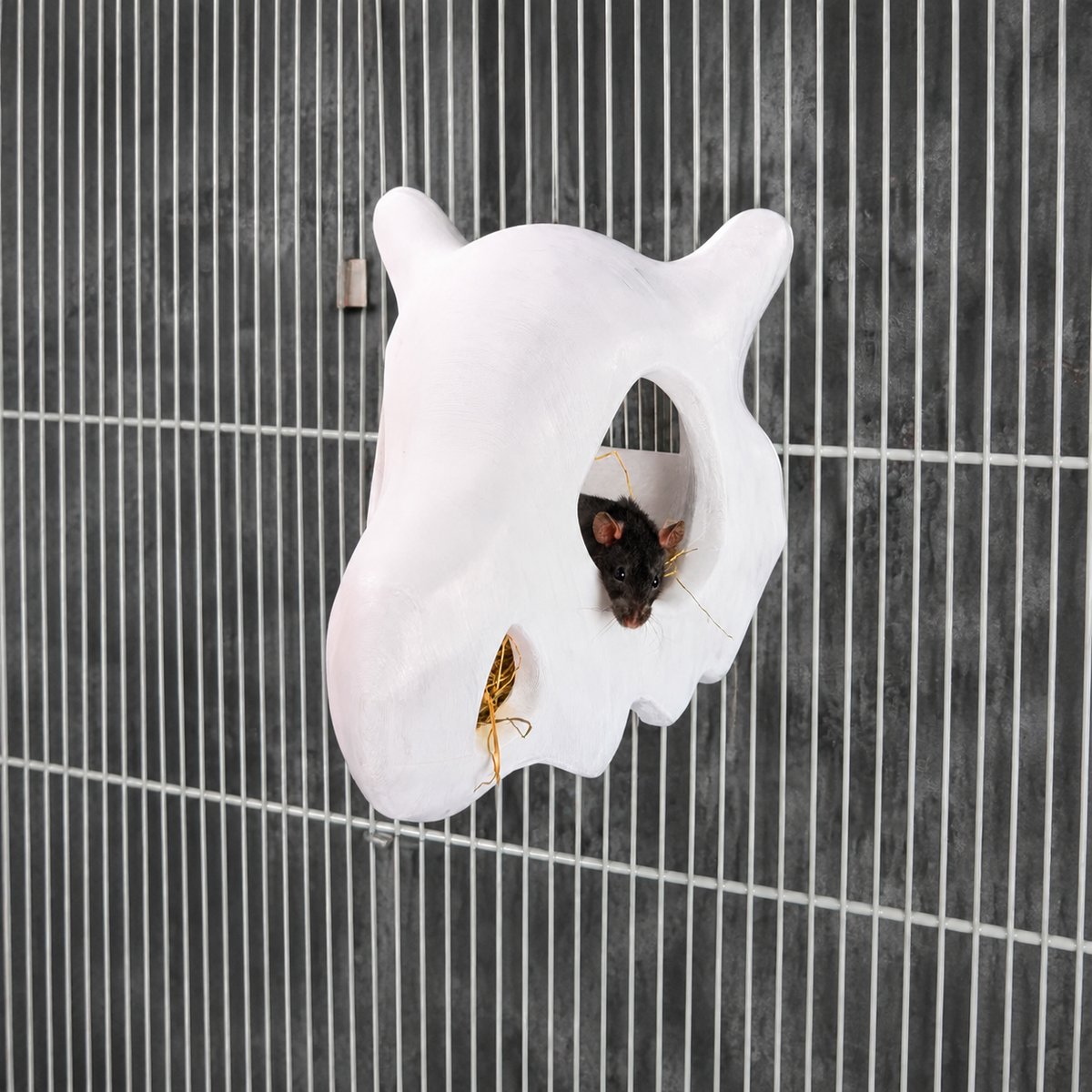
If you are building a more complete dragon-themed setup, the shelf set pairs well with the Dragon Skull Rat Hide for the kind of thematically consistent cage that photographs well and tends to circulate in the community spaces where rat keepers share setups.

Building the Right Cage: A Practical Framework
If you are starting from a bare cage or doing a significant upgrade, here is the framework that rat keepers who have thought about this carefully tend to use.
Start with navigation infrastructure. Your rats need to be able to move from the bottom third of the cage to the top third without a single jump of more than 15cm. That means shelves, ledges, or ramps at regular vertical intervals. This is the non-negotiable. Everything else is secondary.
Add resting surfaces at height. Hammocks handle this, but so do shelves wide enough to curl up on. Rats spend a significant portion of their sleep time at height if the option exists. If the only elevated resting option is the top hammock, that creates competition between cage mates.
Add at least one hide at height. Rats feel safest in enclosed spaces. A hide at floor level is good. A hide at the upper-middle zone of the cage is better. One at each level is ideal for a group of three or more rats.
Then add enrichment on rotation: foraging toys, puzzle feeders, forage cups, items to shred and carry. These change weekly. The furniture does not.
The Dragon Rat Shelf Set addresses the first two points in the framework: navigation infrastructure and elevated resting surfaces. If your cage currently has a single floor level and a hammock, adding this set is the most direct welfare improvement available.
Further reading: PDSA rat care advice | National Fancy Rat Society
RAT CARE
Choose the next cage piece
If the guide helped, head to the practical range next. Start with the hub, then compare hides, shelves and foraging pieces by the problem you are trying to solve.