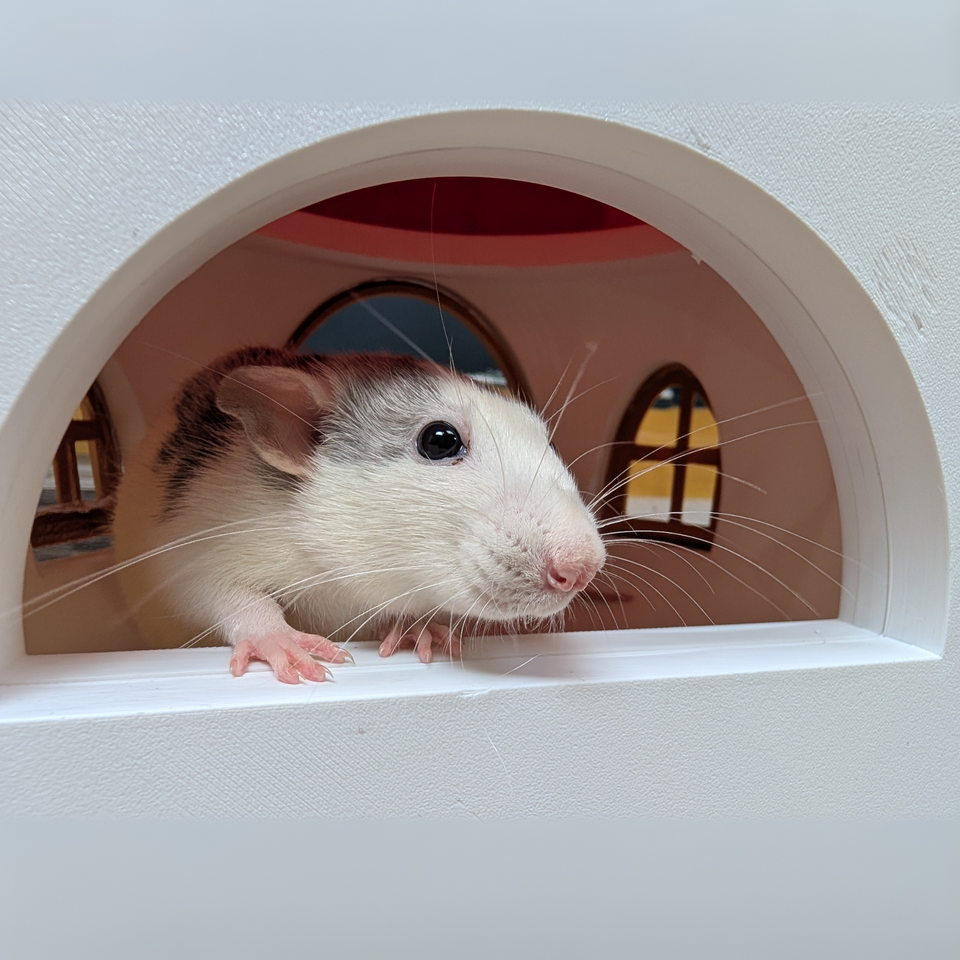
The carrier method works because it forces rats into shared stress — bonding through mild adversity is the fastest route to social acceptance in a species that forms permanent group alliances.
Quick Summary
The carrier method for rat introduction works by neutralising territorial behaviour - placing rats together in a transport carrier after a car journey creates a shared stress situation that overrides established hierarchy. It is faster and lower-stress than alternative methods but requires careful observation during the first 30 minutes. This guide covers the step-by-step process, how to read the interaction, when to separate, and what success looks like.
Last updated: March 2026 | Written by: Ripleys Nest | Read time: 11 min
Quick summary: Rats are social animals that need companionship, but throwing strangers together is dangerous. The carrier method is the most widely recommended introduction technique in the UK rat community. It works by gradually building tolerance in a small, neutral space before moving to the main cage. Expect the process to take 2 to 4 weeks.
In this guide:
- Why introductions matter
- Before you start: preparation checklist
- The four stages of the carrier method
- Timeline expectations
- Normal behaviours vs warning signs
- When to separate
- After the introduction: settling in
Why Introductions Matter
Rats form complex social hierarchies. Skipping introductions risks serious injury, chronic stress, and failed bonding that can take months to repair.
Rats are obligately social animals. Research into rat brain development shows that social interaction, particularly play during the juvenile period (roughly 3 to 6 weeks of age), is essential for healthy prefrontal cortex development. Rats deprived of social contact show permanent changes in brain structure, increased aggression, and heightened fearfulness.
The RSPCA, Blue Cross, and NFRS all recommend keeping rats in groups of three or more. A trio is more stable than a pair because if one rat dies, the survivor is not left alone. But adding a new rat to an established group requires careful management. Rats are territorial. They have established scent markers, sleeping spots, and pecking orders. A new arrival disrupts all of that.
The carrier method works because it removes territory from the equation. By starting in a small, neutral space where no rat has an established claim, you level the playing field. The confined space also prevents full-speed chases, which reduces the risk of injury during the critical first encounters.
Before You Start
Preparation makes the difference between a smooth introduction and a stressful one. Get everything ready before the rats ever meet.
Health check
Never introduce a sick rat to a healthy group. New rats should be quarantined for a minimum of two to three weeks before any introduction begins. This is NFRS standard practice. During quarantine, watch for:
- Sneezing, wheezing, or laboured breathing
- Porphyrin staining (red-brown discharge around eyes or nose)
- Lethargy, weight loss, or poor coat condition
- Diarrhoea or unusual droppings
- Scratching or visible parasites
If any of these appear during quarantine, consult an exotics vet before proceeding.
Equipment you will need
- [ ] A clean pet carrier (hard-sided, roughly 30cm x 40cm, with ventilation holes)
- [ ] Neutral bedding (paper-based, nothing from either rat's existing cage)
- [ ] Water bottle that attaches to the carrier
- [ ] A small amount of food (dry pellets are fine)
- [ ] Antibacterial spray (for cleaning between sessions if needed)
- [ ] A towel or thick gloves (in case you need to separate rats quickly)
- [ ] A neutral playpen or bathtub (for Stage 3 free roam sessions)
The golden rule
The carrier and all equipment must smell of neither group. Clean everything with unscented antibacterial spray and let it dry completely. If the carrier smells like one group's territory, you have already biased the introduction.
The Four Stages
Stage 1: Side by Side (Days 1 to 3)
Purpose: Let the rats become aware of each other's scent and sounds without any physical contact.
Place the existing group's cage and the new rat's quarantine cage side by side, close enough that they can see and smell each other but not touch. Swap small items between cages daily: a hammock, a piece of fleece, a cardboard tube. This lets each group get used to the other's scent in a non-threatening context.
What you are looking for: Curiosity. Rats sniffing at the bars, standing up to look at the other cage, or sleeping near the shared wall. These are all positive signs.
What to watch for: Persistent puffing up, loud teeth chattering, or aggressive lunging at the bars. Some initial wariness is normal, but sustained aggression at this stage suggests you should extend Stage 1 by a few extra days.
Stage 2: The Carrier (Days 3 to 10)
Purpose: First physical contact in a small, neutral space where neither group has territorial advantage.
Place all rats into the clean carrier together. Stay close and watch constantly. The confined space prevents full chases and forces proximity, which actually helps rats establish hierarchy faster than a large space would.
Session timing:
- First session: 15 to 30 minutes. Stay within arm's reach.
- Second day: 30 minutes to 1 hour if the first session went well.
- Days 3 to 5: Gradually extend to 2 to 4 hours.
- Days 5 to 10: If all is going well, try overnight sessions in the carrier.
Tip: Feed all rats together in the carrier. Eating together is a bonding behaviour. Scatter a few dry pellets so everyone forages at the same time.
What you are looking for: Grooming each other (allogrooming), sleeping in contact, eating together, and relaxed body language. Some power grooming (one rat pinning another and grooming them vigorously) is normal hierarchy establishment, not aggression.
Stage 3: Neutral Territory (Days 7 to 14)
Purpose: Expand the shared space gradually while maintaining neutral ground.
Once the rats are comfortable in the carrier (sleeping together, no fights), move them to a larger neutral space. A bathtub works well because it is easy to clean, has no scent markers, and the smooth sides prevent escape. A playpen on a tiled floor is another option.
Add simple enrichment to the neutral space: tubes, a hammock hung from a frame, some scattered food. Avoid enclosed hides at this stage, as they create defensible territory.
Session length: Start at 30 minutes and extend to several hours. Watch for any regression in behaviour when the space increases. Some rats that were fine in the carrier get more territorial with more room to manoeuvre.
Stage 4: The Clean Cage (Days 14 to 21)
Purpose: Move everyone into the permanent cage, stripped of all existing scent markers.
Deep clean the main cage. Remove everything. Wash every surface, every shelf, every accessory. Replace all bedding. Rearrange the layout so it does not match the old configuration. You want the existing rats to walk into their cage and not recognise it as "theirs."
Put all rats in together. Stay nearby for the first few hours. The first night in the shared cage is often the most tense. Sleep in the same room if you can, so you can intervene if things escalate.
Over the following week:
- Watch for food guarding, sleeping spot hoarding, or persistent chasing
- Make sure all rats are eating and drinking
- Check for injuries during daily handling (bites often happen at the base of the tail or on the rump)
Timeline Expectations
Most introductions take 2 to 4 weeks. Rushing it is the most common cause of failure.
| Scenario | Typical Timeline |
|---|---|
| Kittens (under 8 weeks) to adults | 3 to 7 days (kittens are usually accepted quickly) |
| Young rats (8 to 16 weeks) to established group | 1 to 2 weeks |
| Adult to adult (same sex) | 2 to 4 weeks |
| Adult to adult (previously solo rat) | 3 to 6 weeks (solo rats may have lost social skills) |
| Large group merger (4+ rats per side) | 3 to 4 weeks |
Factors that slow things down: Previously aggressive rats, rats that have lived alone for a long time, significant size differences, and rats recovering from illness. There is no shortcut. If you rush Stage 2, you will likely need to restart from scratch.
AvoidPinning, chasing, and some squeaking are normal — do not separate at this point unless there is drawn blood, wounds, or a rat that cannot escape. Premature intervention resets the introduction clock and can make things worse.
Normal vs Concerning Behaviours
Pinning, chasing, and some squeaking are normal — do not separate at this point unless there is drawn blood, wounds, or a rat that cannot escape. Premature intervention resets the introduction clock and can make things worse.
One of the hardest parts of introductions is knowing what is normal hierarchy establishment and what is genuine aggression. This distinction matters.
Normal (do not intervene)
- Power grooming: One rat pins another and grooms them forcefully. The groomed rat may squeak. This is dominance behaviour, not fighting.
- Side-shoving: Rats pushing each other sideways. A mild dominance display.
- Chasing (low intensity): Short bursts of chasing followed by both rats going back to normal activity.
- Mounting: Dominance mounting happens in same-sex groups. It is not sexual. It is hierarchy.
- Squeaking during grooming: Brief squeaks during power grooming are protests, not pain.
- Puffed-up fur: Brief puffing up when first meeting. Should settle within minutes.
Concerning (monitor closely)
- Persistent chasing that does not stop after 30 seconds and leaves one rat panting or hiding
- Sidling (walking sideways with arched back toward another rat). This is pre-fight posturing.
- Loud, prolonged teeth chattering while staring at another rat
- Defensive boxing (both rats standing on hind legs, shoving each other)
- One rat refusing to eat, drink, or move due to intimidation
Emergency (separate immediately)
- Biting that draws blood. Any wound that bleeds means the introduction has failed at this stage. Separate, treat the wound, and restart from Stage 1 after a cooling-off period of at least 48 hours.
- "Ball fighting" (rats locked together in a rolling ball, biting). This is a genuine fight. Throw a towel over them to break it up. Do not use bare hands.
- One rat becomes completely immobile with fear. Freezing and not moving even when touched is a severe stress response.
Warning: Rat bites can become infected quickly. Clean any wound (on a rat or on you) with saline solution. If a rat bite on a person shows signs of swelling, redness, or warmth, see a GP. Rat bites on other rats that are deep or near the face should be seen by a vet.
When to Separate
Not all introductions succeed first time. That is fine. Separating and trying again later is better than pushing through and causing injury.
Separate if:
- Blood has been drawn (restart after 48 hours minimum)
- One rat has stopped eating or drinking due to stress
- Aggression is escalating across sessions rather than decreasing
- You have been at Stage 2 for more than 10 days with no progress
After separating:
- Treat any injuries
- Give both groups at least 48 hours to decompress
- Resume scent swapping (Stage 1)
- Try shorter carrier sessions with closer supervision
- Consider changing the carrier to one neither group has been in before
Some rats need multiple attempts. Older males that have lived alone can be particularly challenging. If repeated attempts fail over several weeks, consult experienced rat owners in communities like the NFRS or UK rat care groups. In rare cases, some rats are genuinely incompatible and need to live in separate (but adjacent) cages so they can still socialise through the bars.
After the Introduction: Settling In
Once all rats are living together in the shared cage, the first two weeks are a settling period. The hierarchy is still being established, and minor scuffles are normal.
During this period:
- Feed scattered, not in a bowl. Scatter feeding prevents food guarding and encourages natural foraging.
- Provide more sleeping spots than rats. If you have four rats, provide at least six hammocks and hides. Choice reduces conflict.
- Handle all rats together. Group handling and group free roam time reinforces that they are one unit.
- Watch weights. Weigh each rat weekly. A rat losing weight in a new group may be getting bullied away from food.
After two weeks of stable cohabitation with no injuries, you can consider the introduction complete. Continue to monitor during weekly health checks, but you can relax your watchfulness.
Sources
Veterinary and Academic
- Makowska, I.J. and Weary, D.M. "The importance of burrowing, climbing and standing upright for laboratory rats." Royal Society Open Science, 2016.
- University of Bristol. "Pet rat welfare in the United Kingdom: the good, the bad, and the ugly." 2021.
- PMC. "Environmental Enrichment for Rats and Mice: A Metareview." 2022.
Professional Organisations
- RSPCA. "Rats: Good practice for housing and care." rspca.org.uk
- Blue Cross. "Caring for your rat." bluecross.org.uk
- NFRS. "Keeping Rats as Pets." nfrs.org
- Woodgreen Pets Charity. "Rat care guide." woodgreen.org.uk
Community Resources
- National Fancy Rat Society forums and show regulations. nfrs.org
Further Reading
- The complete rat cage setup guide
- Your first 30 days with pet rats
- Rat enrichment ideas that actually work
This guide was written by Ripleys Nest based on years of keeping and introducing pet rats. It is not a substitute for professional veterinary advice. Last reviewed: March 2026. We update our guides every 6 months.
My rats fought during introduction — is it over?
Not necessarily. A single fight does not end the process. Separate, give 24 hours, and try again on neutral territory with extra open space. Most rats need multiple sessions.
How long does a successful introduction take?
Anywhere from 30 minutes to 7 days of repeated sessions. Older rats and males introducing to established females typically take longer. Patience is the most important variable.
Can I introduce rats of different ages?
Yes — young rats (4–12 weeks) are generally accepted more easily by established groups because they do not register as a social threat. Adult male-to-male introductions are the most challenging.