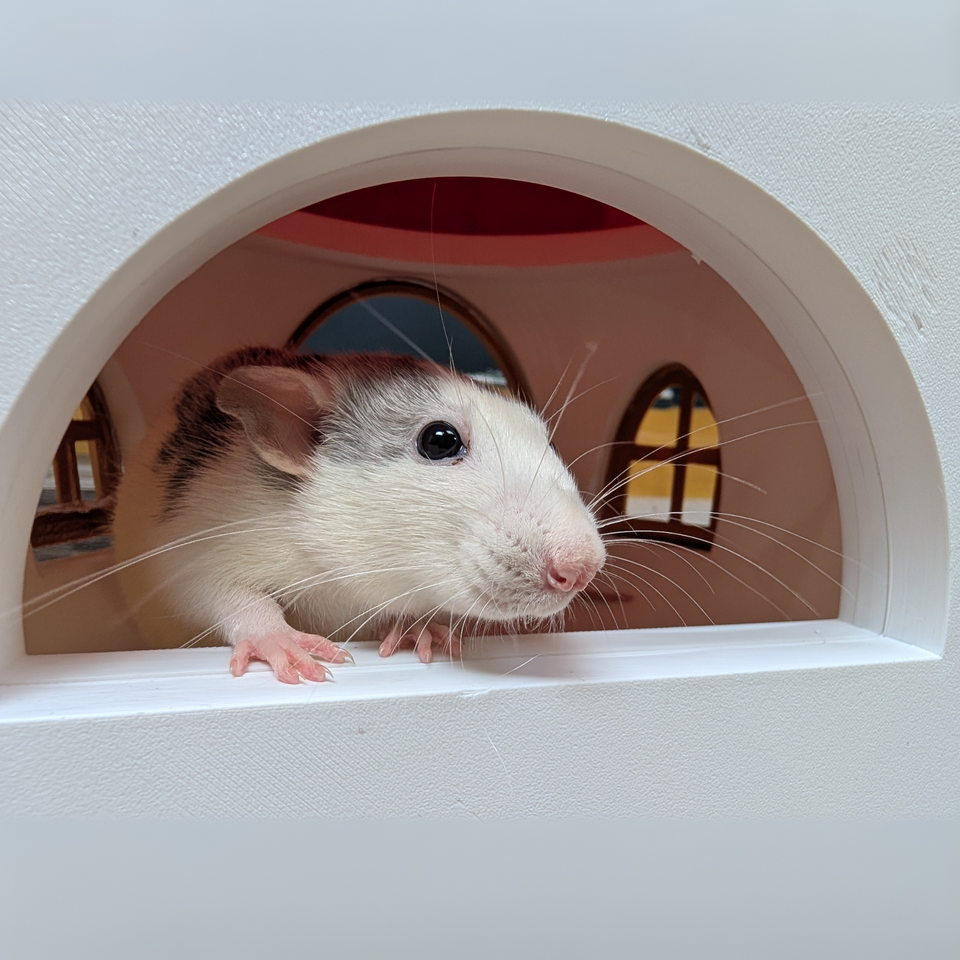
Rat Care
Quick scan
- Use the headings to jump between setup, care, behaviour and safety points.
- Watch for the practical checks before you choose cage accessories or change a routine.
- Follow the Rat Care links when you are ready to compare products or read the next guide.
Quick read: Start a rat cage setup by checking space, ventilation, bedding, hides, climbing routes, water, food and cleaning access. A good layout gives rats places to climb, forage, sleep and move away from each other without turning the cage into a crowded shelf display.
For practical next steps, browse the Rat Care hub or compare rat cage accessories, then use this guide to check the layout.
A strong cage setup balances movement, rest and enrichment. Plan the zones first, then choose accessories that solve a real job inside the cage.
Quick Summary
A proper setup starts with a roomy, well-ventilated cage and then builds in bedding, hides, climbing routes, food, water and easy cleaning access. Use the dimension table below as a starting point, then make sure each accessory has a job: sleeping, climbing, chewing, foraging or helping rats move confidently through the space.
Last updated: March 2026 | Written by: Ripleys Nest | Read time: 12 min
Quick summary: A proper cage setup is the single biggest factor in your rats' health and happiness. This guide covers minimum dimensions, bar spacing, bedding choices, accessories, and layout, all backed by UK welfare standards and real ownership experience.
In this guide:
- How big does a rat cage need to be?
- Bar spacing: getting it right
- Choosing the right bedding
- Essential accessories checklist
- First setup order
- Cage layout: zones that work
- Common mistakes to avoid
- Tools and resources
// FIRST SETUP
First rat cage setup order
If you are working out how to set up a rat cage, choose the cage pieces in the order they make the space easier to use. Start with the cage size and bedding, then add covered rest spots, movement routes, food and water points, and one foraging job before adding themed pieces.
- Use the rat cage accessories guide when you know which job is missing from the cage.
- Use the rat enrichment toys guide when the cage needs more foraging, climbing or rotation ideas.
- Use the Rat Care hub when you are ready to compare hides, shelves, feeders and themed accessories together.
How Big Does a Rat Cage Need to Be?
Bigger is always better, but there are firm minimums. A cage that's too small causes stress, illness, and behavioural problems that no amount of free roam time can fix.
Rats are active, social animals that need space to climb, explore, and get away from each other when they want to. In the UK, the Animal Welfare Act 2006 places a legal duty of care on pet owners to provide a suitable environment. That means a cage that meets your rats' physical and psychological needs, not just one that fits in the corner of your room.
Minimum dimensions
| Number of Rats | Minimum Cage Size | Notes |
|---|---|---|
| 2-3 | 80cm x 50cm x 80cm | Woodgreen Pets Charity baseline |
| 2-5 | 90cm x 60cm x 120cm | Blue Cross recommendation |
| 6-10 | 93cm x 63cm x 123cm | Woodgreen guidance for larger groups |
The NFRS (National Fancy Rat Society) states a minimum of 2ft x 1ft x 1ft for a pair, though most experienced keepers consider this a bare minimum suitable only for temporary housing. Rescue standards recommend 6 cubic feet minimum for a pair, with an additional 2 cubic feet per extra rat.
Height matters more than you might think. Research published in Royal Society Open Science found that rats can reach a standing height of 26 to 30cm when fully grown. Standard laboratory cages at 18cm height force rats into compensatory lateral stretching, a recognised indicator of welfare problems. UK welfare organisations recommend a minimum cage height of 120cm to allow proper climbing and rearing behaviour.
Wire cage vs glass tank
Always choose a wire-sided cage over a glass tank or plastic vivarium. This is not optional.
Glass tanks rely on vertical air convection, which is too weak to clear ammonia gas that settles at floor level. Wire cages allow multi-directional airflow, which keeps waste gases diluted and humidity in check. Ammonia from urine starts damaging your rats' respiratory systems at concentrations above 20 parts per million. In poorly ventilated enclosures, ammonia can exceed that threshold within 9 to 11 days of a cleaning cycle.
Tip: If you can smell anything when you put your nose at cage level, your rats have been breathing it for days. Clean more frequently or improve ventilation.
Volume calculators
Several free cage calculators exist online. Plug in your cage dimensions and number of rats to check whether you meet the recommended volume. The key figure to aim for is 2 cubic feet per rat minimum, with at least 5 square feet of flat, solid floor space for a pair.
Bar Spacing: Getting It Right
Bar spacing of 1cm (roughly half an inch) is the safe standard. Anything wider and young rats, small females, and dwarf varieties can squeeze through.
| Rat Type | Maximum Bar Spacing |
|---|---|
| Adult males | 2.5cm (1 inch) |
| Adult females | 1.5cm (just over half an inch) |
| Kittens (under 12 weeks) | 1cm (half an inch) |
| Dwarf rats | 1cm (half an inch) |
The safest approach is to buy a cage with 1cm bar spacing from the start. It works for all ages and sizes, and you will not need to replace or modify the cage as your rats grow.
If your cage has wider spacing and you are housing young rats, you can temporarily attach mesh panels to the inside using cable ties. Check every join. Rats are persistent and surprisingly flexible. If their skull fits through a gap, the rest of their body will follow.
Horizontal vs vertical bars
Horizontal bars are better for climbing. Rats grip horizontal bars naturally and use them as ladders to navigate the cage. Vertical bars are harder to grip and offer less enrichment. Most purpose-built rat cages use horizontal bars for this reason.
Wire-floor cages cause bumblefoot, a painful and chronic foot infection. Always cover wire floors with solid panels, fleece, or deep bedding substrate.
Choosing the Right Bedding
Your bedding choice directly affects your rats' respiratory health. Get this wrong and you are setting them up for chronic illness.
Virtually all pet rats carry Mycoplasma pulmonis, a lifelong respiratory pathogen. You cannot cure it. You can only manage it. The biggest environmental trigger for flare-ups is ammonia from urine, and your bedding is the first line of defence.
Bedding comparison
| Bedding Type | Ammonia Control | Respiratory Safety | Notes |
|---|---|---|---|
| Paper-based pellets/shreds | Good | Excellent | Low dust, low allergenicity. Best all-round choice for UK keepers. |
| Recycled newspaper bedding | Good | Good | Effective for weekly cleaning cycles. No phenol risk. |
| Aspen wood chip | Moderate | Good (if dust-extracted) | The only wood shaving considered safe. Must be kiln-dried and dust-free. |
| Corncob | Excellent | Excellent | Outstanding ammonia suppression. Can maintain safe levels for up to 14 days in ventilated cages. |
| Fleece liners | Poor (needs daily maintenance) | Good (no dust) | Popular but demanding. Urine sits on the surface unless wicked away. Requires daily spot cleaning and twice-weekly full washes. |
| Softwood shavings (cedar, pine) | Poor | Dangerous | Contains aromatic phenols that irritate lungs and alter liver enzymes. Never use these. |
| Sawdust | Poor | Dangerous | Too dusty. Particulates act as mechanical irritants to the respiratory tract. |
The Royal Veterinary College and PDSA explicitly warn against dusty substrates including sawdust and untreated wood shavings. The RSPCA recommends paper-based bedding as the safest option.
Warning: Cedar and pine shavings are still sold in pet shops for small animals. Do not use them for rats. The aromatic hydrocarbons they release cause respiratory damage even in rats that appear healthy.
Substrate depth
Provide at least 2cm of substrate across the cage base, and ideally a dedicated dig box with 15 to 20cm of depth. Burrowing is what researchers call an "inelastic" behaviour in rats. They need to do it regardless of age. A dig box filled with soil, coco coir, or shredded paper satisfies this drive without making the whole cage difficult to clean.
Every rat cage should have: a minimum of two hides, at least two hammocks at different heights, a litter corner, a water station with backup bottle, and at least one foraging opportunity. These are necessities, not extras.
Essential Accessories Checklist
Every cage needs sleeping spots, food and water stations, climbing opportunities, and enrichment. Here is what to prioritise.
The non-negotiables
- [ ] Water bottle (minimum one per 3 rats, check daily for blockages)
- [ ] Food bowl (heavy ceramic or attached to bars so it cannot be tipped)
- [ ] Hammocks (at least 2, rats sleep in groups and like choice)
- [ ] Enclosed hide (at least one per 2-3 rats, for sleeping and feeling safe)
- [ ] Litter tray (corner tray with paper-based litter, most rats litter train easily)
- [ ] Solid shelves or platforms (wire shelves must be covered to prevent bumblefoot)
Climbing and enrichment
- [ ] Ropes and ladders (natural fibre or safe plastic)
- [ ] Tubes and tunnels (large diameter, at least 8cm, so adult rats fit comfortably)
- [ ] Foraging toys (scatter feeding dishes, treat puzzles, paper bags to shred)
- [ ] Dig box (deep container filled with soil, coco coir, or shredded paper)
- [ ] Branches (apple or willow wood, untreated, safe to chew)
What to avoid
- Exercise wheels under 30cm diameter. Smaller wheels force the rat's spine into an unnatural curve. If you provide a wheel, it must be at least 30cm (12 inches) across, with a solid running surface (no rungs or mesh).
- Cotton wool or fluffy bedding. Fibres wrap around toes and can cause circulation loss. Use paper-based nesting material instead.
- Anything with small removable parts. Rats chew everything. If a piece can come off and be swallowed, remove it.
Cage Layout: Zones That Work
Think of the cage in four zones: sleeping, eating, climbing, and toileting. Separating these makes the cage easier to clean and more comfortable for your rats.
The four-zone layout
Top level: sleeping zone. Rats prefer to sleep high up where they feel safe. Place hammocks and enclosed hides on the upper shelves. This is where they will spend most of their resting hours. Keep this area away from direct light and draughts.
Middle level: climbing and enrichment zone. Ropes, ladders, branches, and tubes go here. This is the active area of the cage, where your rats will play, explore, and exercise. Rotate items weekly to keep things interesting.
Lower level: eating and foraging zone. Place food bowls and scatter feeding areas here. Keeping food low prevents crumbs from falling onto sleeping areas and encourages natural foraging behaviour (rats naturally forage at ground level).
Base: substrate and toileting zone. Most rats naturally choose one or two corners for toileting. Place litter trays in those corners. The rest of the base provides substrate for burrowing and exploring.
Layout tips from experience
Space hides apart. If all the sleeping spots are in one area, dominant rats can guard them. Spread hides across different levels so every rat has somewhere to retreat.
Cover wire shelves and ramps. Bare wire underfoot causes bumblefoot (pododermatitis), a painful infection of the foot pads. Cover with fleece, lino offcuts, or self-adhesive shelf liner. Secure the edges so rats cannot pull them up and nest with them.
Create sight breaks. Rats sometimes need to be out of each other's line of sight. Use hides, tubes, and hammocks to create visual barriers within the cage. This reduces stress in groups, especially during introductions.
Position the cage carefully in the room. Keep the cage out of direct sunlight and away from radiators, draughty windows, and speakers. The ideal temperature range for rats is 19 to 23 degrees Celsius, with humidity between 45 and 55 percent. Low humidity (below 30%) can cause ringtail, a condition where the tail develops necrotic constrictions.
Common Mistakes to Avoid
Buying a cage that is "big enough for now." Rats grow fast. A cage that fits two kittens at 6 weeks will feel cramped by 12 weeks. Buy for adult size from the start.
Relying on free roam to compensate for a small cage. Free roam time is brilliant for enrichment and bonding, but rats spend the majority of their lives inside their cage. An hour of free roam does not undo 23 hours in a cramped space.
Placing the cage on the floor. Rats are prey animals. Being at ground level with foot traffic, pets, and sudden movements overhead causes chronic stress. Elevate the cage to table or counter height.
Deep cleaning too aggressively. Scrubbing every surface with disinfectant every week strips the cage of your rats' scent markers. This can cause territorial anxiety and increased scent-marking (more urine). Spot clean daily, full clean weekly, and leave a small piece of used bedding in the cage after cleaning so it still smells like home.
Skipping quarantine for new accessories. Second-hand cages and accessories from unknown sources should be thoroughly cleaned and disinfected before use. The NFRS recommends a minimum three-week quarantine protocol when introducing rats from unknown health backgrounds.
Tools and Resources
Cage calculators: Search for "rat cage calculator" to check whether your cage meets the recommended volume per rat. Input your cage dimensions and number of rats.
Recommended reading:
- RSPCA: Creating a good home for rats
- Blue Cross: Caring for your rat
- NC3Rs: Housing and husbandry for rats
- NFRS: Keeping rats as pets
Related Ripleys Nest guides:
- Your first 30 days with pet rats
- Rat enrichment ideas that actually work
- Understanding rat respiratory health
Sources
Veterinary and Academic
- NC3Rs. "Housing and husbandry: Rat." nc3rs.org.uk
- Makowska, I.J. and Weary, D.M. "The importance of burrowing, climbing and standing upright for laboratory rats." Royal Society Open Science, 2016. royalsocietypublishing.org
- PMC. "Intracage Ammonia Levels on 4 Bedding Substrates." Journal of the American Association for Laboratory Animal Science, 2014. pmc.ncbi.nlm.nih.gov
- Royal Veterinary College. "Rat Care." rvc.ac.uk
Professional Organisations
- RSPCA. "Creating a good home for rats." rspca.org.uk
- Blue Cross. "Caring for your rat." bluecross.org.uk
- Woodgreen Pets Charity. "Rat care guide." woodgreen.org.uk
- PDSA. "Rats as pets." pdsa.org.uk
- NFRS. "Keeping Rats as Pets." nfrs.org
Legislation
- Animal Welfare Act 2006. legislation.gov.uk
Further Reading
This guide was written by Ripleys Nest based on years of keeping and making products for pet rats. It is not a substitute for professional veterinary advice. Last reviewed: March 2026. We update our guides every 6 months.
Save the cage checklist
Get a printable cage check for hides, shelves, foraging and cleaning, with links back to the rat care routes when you need them.
The guide stays open. Use the links below when you are ready; your email is only for useful guide follow-up.
// CH.01 · RAT CARE
Choose the next cage piece
If the guide helped, head to the practical range next. Start with the hub, then compare hides, shelves and foraging pieces by the problem you are trying to solve.


Rat care routes
If you are planning a cage, start with the setup guide, then use the accessories and enrichment pages to choose the pieces that suit your rats.
Save the cage checklist
Get a printable cage check for hides, shelves, foraging and cleaning, with links back to the rat care routes when you need them.
The guide stays open. Use the links below when you are ready; your email is only for useful guide follow-up.