Fairy Mushroom Rat Cage Accessory Kit | Hide, Shelves & Foraging Cups
Now £65.88
Was £87.84
Rat care guide
The best rat cage ideas are not just decoration. They give your rats useful places to hide, climb, perch, forage and feed, while keeping the cage easy enough to clean.
Pick the jobs the cage needs first: sleep, climb, eat, forage and settle.
Choose a theme once the useful routes are covered.
One strong setup is better than a crowded cage full of awkward pieces.
Think in layers. A good indoor rat cage gives shelter low down, climbing routes through the middle, perches higher up, and food or foraging points that make daily care easy. The cage can still have a strong style, but the pieces need a real job.
Start with an enclosed place to sleep or settle, especially in a busy room.
Add shelves or ledges so the cage has routes, not empty vertical space.
Keep the food point clear, reachable and simple to clean around.
Small foraging points add interest without needing a complete cage rebuild.
These are practical starting points for different cage ideas. Use the complete kit if you want one clear route, or build from hides, shelves and food points if you already know what the cage is missing.
 Complete setup
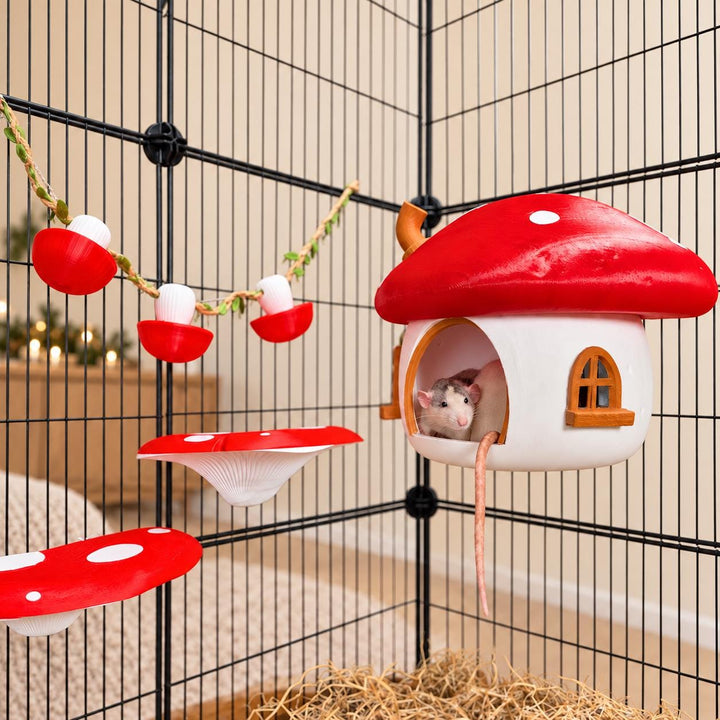
Fairy Mushroom Rat Cage Accessory Kit | Hide, Shelves & Foraging Cups
A clear first route when you want a matching hide, shelves and foraging points.
Complete setup
Fairy Mushroom Rat Cage Accessory Kit | Hide, Shelves & Foraging Cups
A clear first route when you want a matching hide, shelves and foraging points.
 Hide plus perch
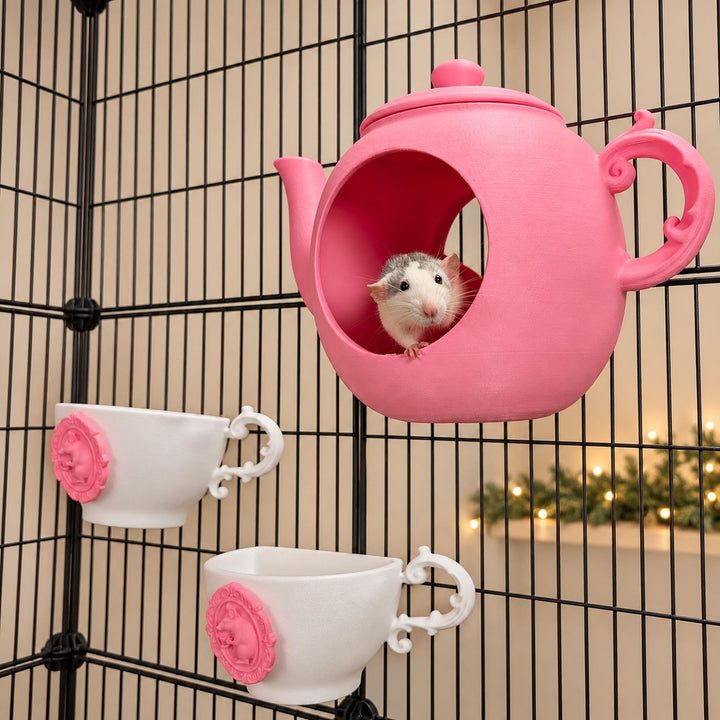
Teapot Rat Hide & Shelf Set
A themed setup piece for a cage corner with a hide and shelf route.
Hide plus perch
Teapot Rat Hide & Shelf Set
A themed setup piece for a cage corner with a hide and shelf route.
 Climbing route
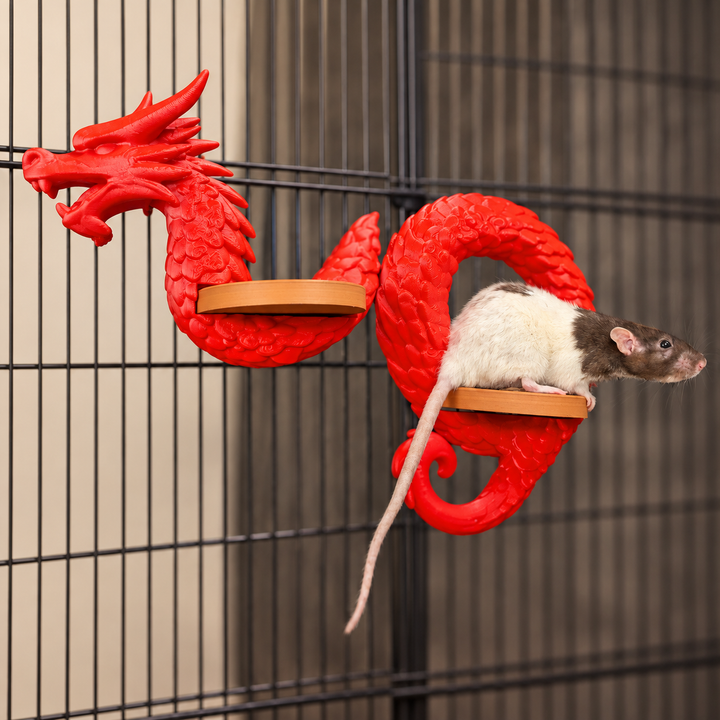
Dragon Rat Shelf Set
Use shelves to turn unused height into a route your rats can actually use.
Climbing route
Dragon Rat Shelf Set
Use shelves to turn unused height into a route your rats can actually use.
 Food point
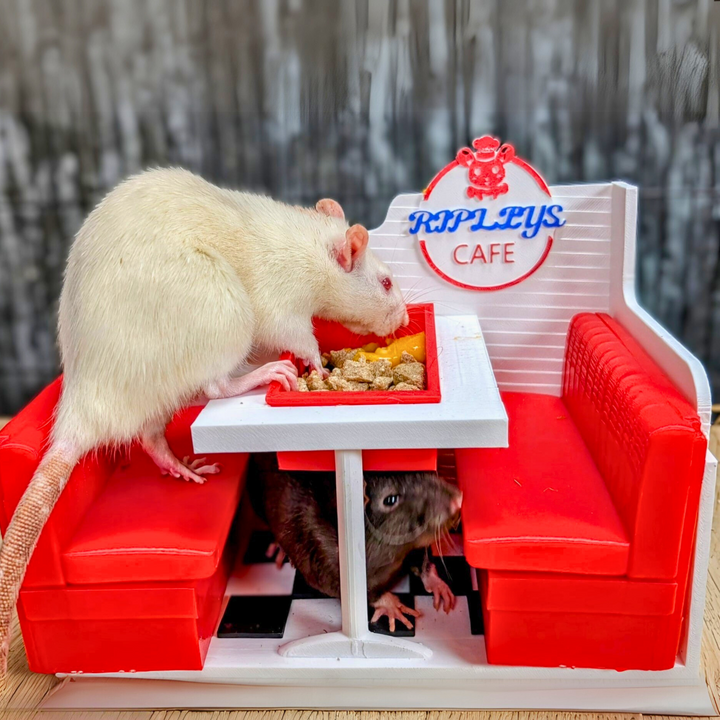
Rat Diner
A more intentional feeding spot for cage layouts built around daily use.
Food point
Rat Diner
A more intentional feeding spot for cage layouts built around daily use.
 Foraging
Mushroom Rat Foraging Toy Cups
A small way to make treats take more time and attention.
Foraging
Mushroom Rat Foraging Toy Cups
A small way to make treats take more time and attention.
 Themed hide
Gothic Skull Rat Hideout & Hanging Nest
A darker themed hide route when the cage has a gothic or spooky setup.
Themed hide
Gothic Skull Rat Hideout & Hanging Nest
A darker themed hide route when the cage has a gothic or spooky setup.
Use a mushroom hide as the sleeping point, shelves as the route, and foraging cups as the daily interest. It feels styled, but every piece still has a job.
Keep the palette tighter and let one darker hide do the visual work. Add a shelf route if the cage needs height, then stop before the corner gets cramped.
A teapot hide and shelf route works well when you want a playful cage corner that is still easy to understand at a glance.
Want the shortest route? Start with the Rat Care hub, then choose the missing job: hide, shelf, feeder or foraging point.
Shop Rat CareStart with a useful hide, then add a climbing route and a clear food or foraging point. Style comes after those jobs are covered.
Yes. The safest approach is to choose decorative pieces that still do a real job in the cage, such as shelter, height, feeding or foraging.
Use the Rat Care hub for current products, or read the rat cage accessories guide if you are planning a first setup.
A good cage idea should still work when you are cleaning, feeding and checking the rats every day. These layouts keep the visual theme useful.
One stable hide, one climb route, one feeding point and one enrichment piece gives you a clear base to build from.
Use shelves and ledges to create several routes, then place hides where the rats naturally pause.
Choose a strong visual centrepiece first, then keep the supporting pieces simpler so the cage does not feel cluttered.
Place food puzzles away from sleeping areas so treats become movement and searching, not mess in the nest.
Not sure your cage is big enough? Use the rat cage size and fit calculator to check it against your group.
New to Ripleys Nest? Join the list for 10% off your first order.
Now £65.88
Was £87.84
From Now £26.88
Was £35.84