Rat Care Guide

The Best Rat Hides for Every Theme: A Complete Buyer's Guide

Rat Care

Rat Care

Quick scan

  • Use the headings to jump between setup, care, behaviour and safety points.
  • Watch for the practical checks before you choose cage accessories or change a routine.
  • Follow the Rat Care links when you are ready to compare products or read the next guide.
Building the cage while you read? Start with the rat care hub, then compare hides, shelves and foraging pieces without losing the guide you came for.

Helpful next step

If this guide is helping you plan a cage or routine, keep the advice open and compare the pieces that make it easier to act on.

Quick read: Quick Summary A rat hide is the most-used item in the cage - rats spend 60-80% of their day resting in short intervals. The right hide needs to be large enough for the wh

See all Rat Care guides

Quick Summary


A rat hide is the most-used item in the cage - rats spend 60-80% of their day resting in short intervals. The right hide needs to be large enough for the whole group to sleep in together, safe in material (no loose fabric threads, appropriate surfaces), and ideally themed to match the cage aesthetic. For groups of 3+ rats, 3+ hides are recommended to reduce territorial stress. Character food-themed hides (strawberry, mushroom, cafe) are the dominant buyer preference with the least commercial competition.

The rat hide is the single most important accessory in any cage setup. Rats spend 60-80% of their day resting in short sleep intervals - meaning the hide is occupied more than any other item in the cage. Getting the hide right is not an aesthetic indulgence; it is the foundation of a well-designed cage. This guide covers everything from sizing and materials to character themes and what the data shows about what rat owners are actually buying.

60-80%
Of a rat’s day spent resting , most-used cage item
3+
Hides recommended for groups of 3+
Size up
Always , rats sleep pressed together

Why the Hide Is the Most Critical Cage Item

Rats are crepuscular animals - naturally most active at dawn and dusk. In a domestic environment with artificial lighting, they adapt somewhat, but they still sleep 12-16 hours per day in multiple short rest periods of 20-90 minutes. The hide provides the secure, dark, enclosed space that makes these rest periods genuine rest rather than anxious vigilance.

A rat that cannot hide is a stressed rat. The absence of secure retreat space is one of the primary stress indicators measured in rat welfare research. This is not about luxury - it is a behavioural need as fundamental as food and water. The RSPCA rat welfare guidance explicitly requires multiple hides as a welfare minimum, not an optional enhancement.

Beyond stress reduction, hides serve several secondary functions: they moderate microclimate (rats can retreat to a cooler or warmer spot depending on season), they reduce social friction in group cages (a low-status rat who can retreat to a private hide avoids constant conflict with dominant animals), and they are the most-used enrichment item in the cage - rats explore and interact with their hides constantly.

The right hide needs to fit the whole group sleeping together. Undersizing is the most common buying mistake , rats will use a cramped hide over an empty one every time.


Sizing: How Big Does a Rat Hide Need to Be?

A hide should comfortably fit the entire rat group with room to turn around and adjust position. This is the critical minimum. A hide that can only fit one or two rats in a group of four forces dominant animals to displace subordinates constantly, creating stress and reducing the hide's welfare value.

Practical sizing guide: for 2 rats, a minimum internal volume of approximately 20cm x 15cm x 12cm (length x width x height). For 3-4 rats, 25cm x 20cm x 15cm minimum. These are minimums - rats prefer more space, and a larger hide will be used more enthusiastically than a tight one. The entrance opening should be large enough for your largest rat to enter easily (most adult rats need a minimum 6-7cm diameter opening).

Errors in sizing are the most common reason owners return or retire hides. Too small means it is never used communally - dominant rats claim it exclusively and others are excluded. This is often misread as the lower-status rats "not liking the hide" when the actual issue is social exclusion from an undersized space.

Material safety checklist

Before buying: check for loose fabric threads (ingestion risk), soft foam (chewing hazard), sharp edges, and gaps 1-3cm (limb entrapment). Hard surfaces , ceramic, sealed resin , are generally lower risk.


Materials: What Is Safe and What to Avoid

The two primary hide material categories in the rat accessories market are fabric and hard materials (plastic, wood, ceramic, concrete).

Fabric hides: Hammock-style hides and fleece pouches are extremely popular because they are soft, lightweight, and easy to hang anywhere in the cage. The welfare risk with fabric is ingestion: rats chew fabric, particularly fleece, and if threads are ingested they can cause intestinal obstruction. Fabric hides should be inspected at every cage clean and replaced when any fraying or thread exposure is visible. This is not an occasional risk; it is a routine maintenance requirement that some owners find burdensome.

Hard material hides (plastic, wood, ceramic, concrete): These cannot be ingested and are therefore lower maintenance from a safety perspective. The main consideration is surface - any painted surface should be verified appropriate, wood should be unsealed or sealed with an appropriate animal-safe finish, and ceramic/concrete surfaces should not have sharp edges that could injure a rat. Hard material hides are also easier to clean thoroughly.

The NFRS care guidance advises caution with fabric hides specifically because of ingestion risk and recommends inspection schedules. Hard material hides are generally considered safer for unsupervised overnight use.

Sizing rule

A hide for 2 rats should fit 4. Rats sleep pressed together and will choose a smaller hide over a large open one , but a hide that genuinely fits the whole group reduces territorial stress. Size up, always.


Character Themes: What the Market Data Shows

The market data for rat hides is unusually clear in identifying what buyers want. The dominant buyer preference, by a significant margin, is character hides with food and nature themes.

The "rat strawberry hide" keyword has 43,000 total Etsy sales with almost no dedicated competition - this is extraordinary for a product subcategory. Strawberry-themed hides are the single best-performing character theme in the rat accessories market, combining the kawaii aesthetic preference with a strong and immediately recognisable design language.

Other food-themed hides that perform strongly: mushroom (crosses kawaii and cottagecore, extremely broad appeal), cafe/coffee cup (consistent demand from owners building domestic or cosy-themed setups), avocado (popular in the 2020-2024 period, still active), and various fruit forms (orange, watermelon).

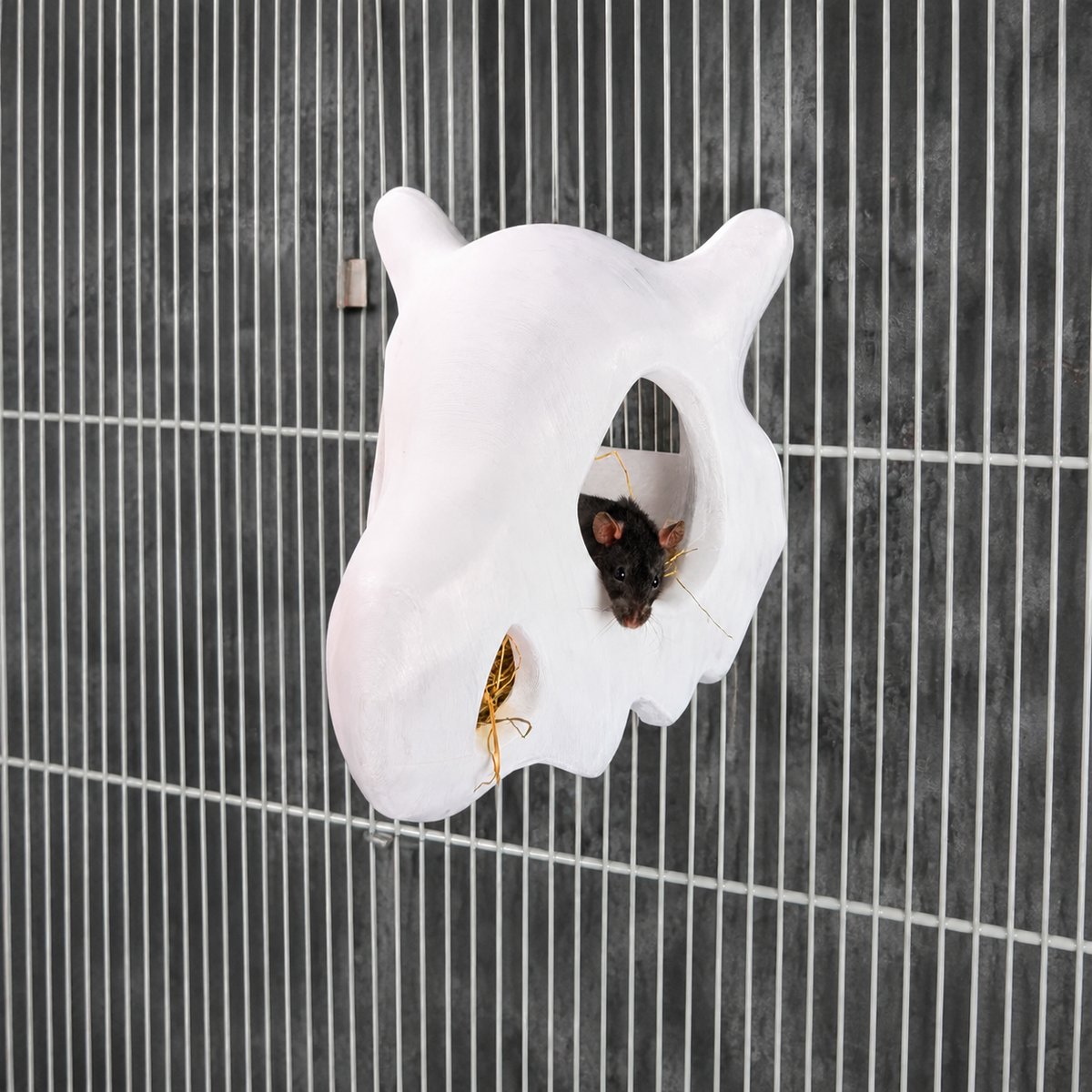
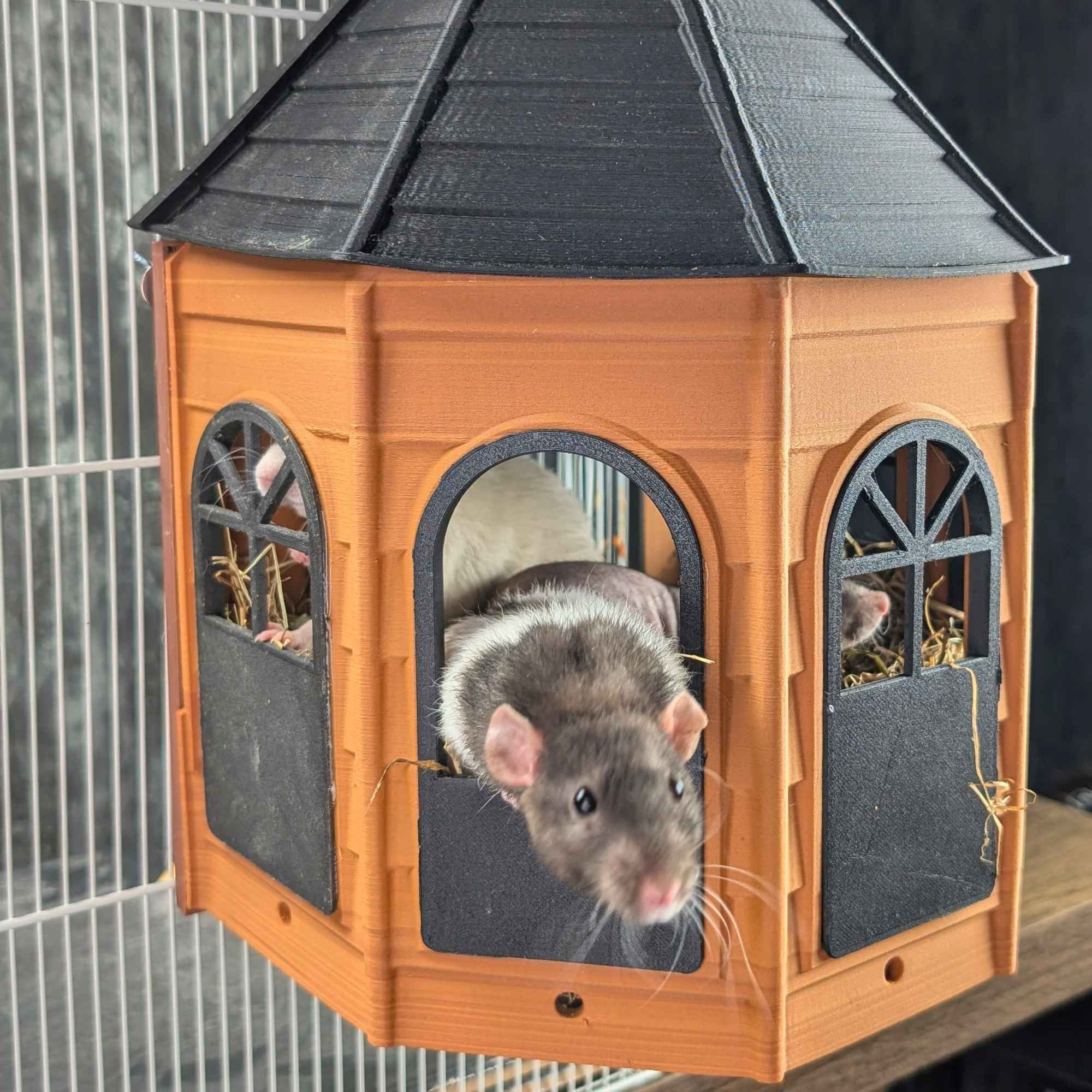
Beyond food themes: skull and gothic variants have a dedicated and underserved audience (the gothic rat community spends significantly on accessories but finds limited supply from mainstream rat sellers). Woodland and forest themes (acorn, cottage, tree stump) perform strongly in the cottagecore segment. Fantasy themes (castle, mushroom house) have a smaller but engaged fanbase.

Theme coordination

Character food-themed hides (strawberry, mushroom, acorn) work across nearly any cage aesthetic. If you're unsure which theme fits your setup, a food hide is the most versatile starting point.


Multiple Hides: The Three-Hide Minimum for Groups

For groups of three or more rats, three hides is the minimum recommended configuration. The reasoning is directly social: rat groups have dominance hierarchies, and the highest-status animals claim the preferred sleeping positions first. With only two hides in a group of four, low-status animals are routinely displaced and may end up sleeping in exposed positions - which is both stressful and in cold conditions can affect their wellbeing.

Three hides with different characteristics - one small and very enclosed (preferred by anxious or submissive rats for private retreat), one communal and large (preferred by bonded groups who sleep in a pile), and one intermediate (medium-sized, used flexibly) - covers most social contingencies in a standard rat group.

The aesthetic advantage of multiple hides: it is the primary way to build visual complexity in a cage setup. Three coordinated character hides at different cage levels, in a consistent theme, create a designed environment rather than a collection of random items. The visual effect of a themed multi-hide setup is what the cage aesthetic community is trying to achieve.


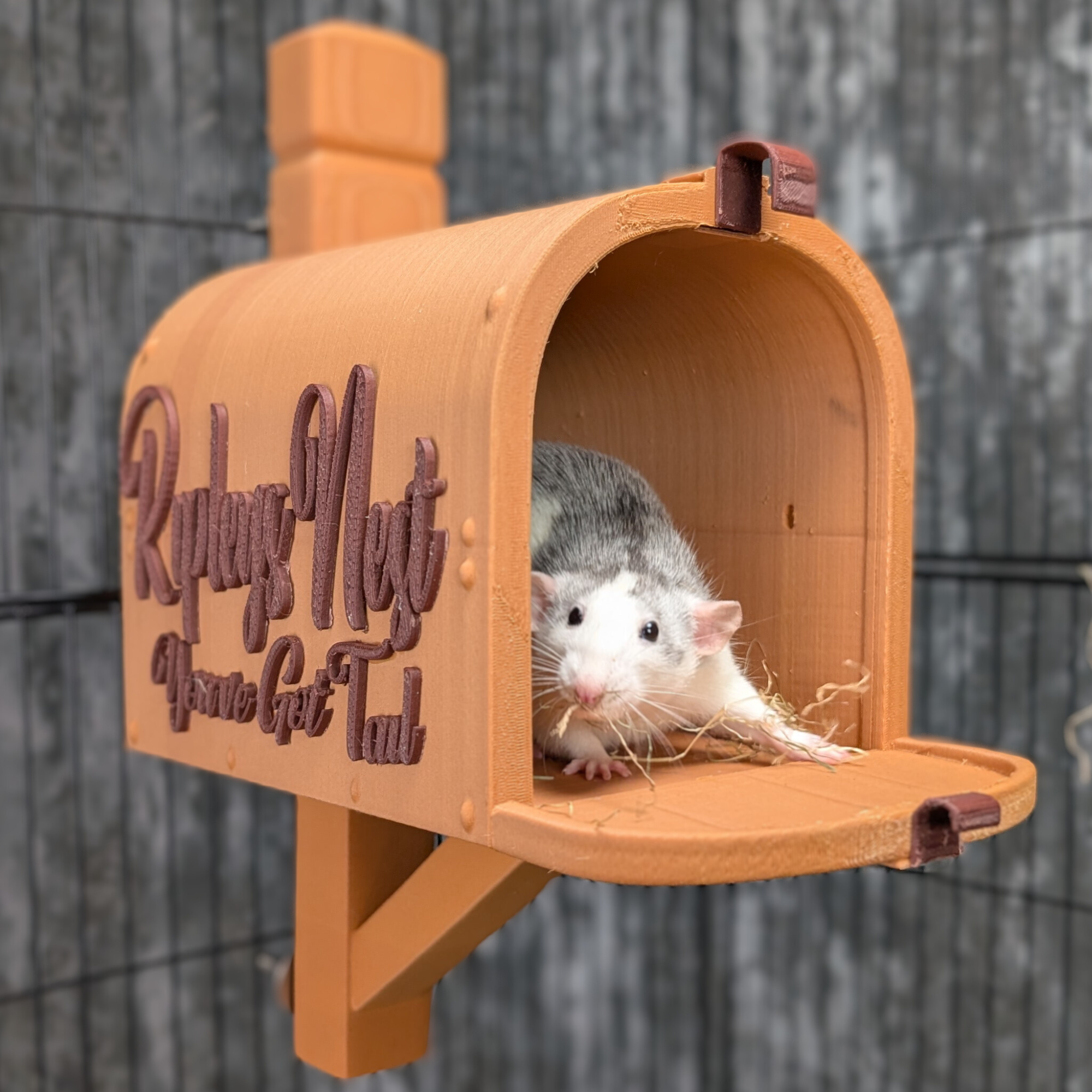
Ripleys Nest Character Hides: What Makes Them Different

Ripleys Nest character hides are hand-cast in Cumbria in a dense concrete-based material - a fundamentally different approach from the custom-printed plastic hides that dominate the market. The material difference is significant for several reasons:

Weight and thermal mass: a concrete hide is heavier than a plastic equivalent, which means it does not tip or shift when rats enter or exit. The thermal mass moderates temperature inside the hide - staying slightly cooler in summer heat and retaining warmth longer in cold conditions. Rats recognise and use these thermal properties instinctively.

Surface texture: cast concrete has a naturally textured surface that rats interact with for grooming and scratching behaviour - behaviours that are natural and beneficial but unsupported by smooth plastic surfaces. The texture also contributes to the aged, character-rich aesthetic that distinguishes a quality piece from a mass-produced accessory.

Visual distinctiveness: no two hand-cast pieces are identical. The natural variation in casting produces pieces with individual character - slight texture differences, tonal variation, minor form variations. In a cage aesthetic context, this variation reads as authenticity. The pieces look like they were made by a person, not manufactured in a factory.


Buying Guide: Questions to Ask Before Purchasing Any Rat Hide

Is it large enough for my entire group? Check internal dimensions, not just external. Does the entrance opening fit my largest rat? Is the material appropriate and safe from an ingestion standpoint? What is the cleaning process - can it be washed thoroughly? Does it fit my cage's aesthetic theme? Is the price appropriate for the quality and material - very cheap hides are often sized incorrectly or use low-quality materials that degrade quickly?

A good rat hide is used every single day for the entire lifespan of your rats - potentially 3-5 years. Buying the right one from the outset is significantly better value than replacing a series of inadequate ones.


How to Size a Rat Hide: Making Sure It Fits

Sizing is the most important practical consideration when buying rat hides, and the one most commonly overlooked. A hide that is too small causes stress rather than reducing it - rats that cannot fit comfortably in their hiding space will show signs of chronic low-level anxiety. A hide that is too large loses its psychological function: the enclosed, snug feeling is what makes a hide feel secure.

The correct size for a rat hide is one where your rats can fit comfortably with a small amount of room to move, but not so much room that the hide feels like open space. Practically: a hide for two standard-sized adult rats should have an internal floor area of approximately 15-20cm x 15-20cm and a ceiling height of 12-15cm. For a group of four, scale up by roughly 50% in floor area. For younger or smaller rats, the lower end of these ranges works well.

Measuring your rats before buying removes the guesswork. An adult rat measures approximately 20-25cm from nose to base of tail. Width across the body is roughly 5-7cm for most adults. A hide with an entrance hole of 6-7cm diameter allows comfortable entry for most adult rats. An entrance smaller than 5cm can cause a rat to get stuck, particularly older or heavier individuals; larger than 8cm and the hide loses its enclosed, secure character.

When buying online, always check the listed dimensions against these guidelines. Product photos can be misleading because they are often styled to look larger than the actual item, or shown with small props that make the hide look proportionally bigger. If dimensions are not listed, ask before buying - a responsible seller will know the measurements of every item they produce.

For hides intended as sleeping spaces for a bonded group (most domestic rats live in groups of 2-6), the calculation changes slightly. Rats that sleep together do so in a compressed pile rather than spread out, so the effective space requirement per rat is less than the individual measurement suggests. A sleeping hide for four bonded rats might need a floor area of only 20x25cm because they will choose to pile on top of each other rather than space out. Watch your rats to understand their actual sleeping behaviour before buying group sleeping hides.


Materials Safety: What to Look For, What to Avoid

Rats investigate and chew everything in their environment. The materials used in hides are therefore as important as the design. Here is a practical framework for assessing material safety when buying.

Wood. The most common and most appropriate material for rat hides. Untreated natural wood - pine, birch, poplar, willow, balsa for lightweight items - is safe for gnawing and provides a satisfying texture for rats that needs to chew. The critical word is untreated: any paint, varnish, stain, or surface finish applied to the wood changes the picture. Many surface treatments use compounds that are not appropriate for persistent gnawing and ingestion. Always confirm with the seller that wood finishes are either absent or safe for use in rat environments.

Pine has a caveat: untreated pine shavings and some aromatic pine products release phenolic compounds that affect respiratory health in small animals. This concern applies primarily to pine shaving bedding in enclosed spaces, not to solid pine items in ventilated cages. Solid pine hides are generally considered appropriate by the majority of rat owners and specialist veterinarians, but if your rats are heavy chewers of their wooden hides, non-aromatic alternatives like birch or poplar are a safer choice.

Ceramic and fired clay. An excellent hide material that rats cannot meaningfully damage through gnawing. Heavy, stable, and thermally neutral - cool in summer, not cold in winter in a cage environment. The main considerations are weight (ceramic hides are heavier than wood, which matters if you are filling a multi-level cage with several heavy items) and the finish. Glazed ceramic surfaces should have food-safe glazes. Unglazed terracotta is entirely appropriate.

Fabric and fleece. Soft hides, hammock hides, and fabric pouches are popular because rats nest in them and find them comfortable. The material concerns here are different from hard hides: loose weave fabrics can catch nails, causing injury if a rat gets tangled. Fabrics that shed fibres can be ingested if rats chew the edges. Polyester fleece is generally considered safe and is the most common fabric used in rat hammocks and soft hides; the fibres are less likely to cause digestive issues if small amounts are ingested than natural wool or loose woven cotton. Tightly woven fleece with no loose edge threads is the safest configuration.

Materials to avoid. Treated, painted, or varnished wood of unknown finish. Aromatic wood (cedar in particular). Metals that can rust or oxidise (rusting iron creates flaking material that can be ingested; unrusted steel and aluminium are fine). Hardboard, MDF, and pressed board products (these contain adhesive binders that release formaldehyde and other compounds - not appropriate for chewing). Any item described as featuring decorative coatings, lacquer, or high-gloss finish without confirmation of safety.


Hide Placement Within the Cage

Where a hide sits in the cage affects how rats use it. Rats in the wild create extensive burrow systems with a main sleeping chamber at the deepest point, secondary resting spots at intermediate depths, and access tunnels leading to the surface. Replicating this spatial logic in a cage setup produces hides that rats actually use rather than ignore.

The main sleeping hide should be at the highest accessible point in the cage, or at a mid-level position that feels most enclosed. Rats are prey animals and they feel safer elevated - a hide on the cage floor in the open is less used than a hide tucked into a corner at mid-level or elevated on a shelf. Position the primary sleeping hide away from the main entrance and against a cage wall or corner, which provides the enclosed feeling on at least two sides.

Secondary hides - smaller resting spots, lookout positions, transit shelters - work at mid and lower cage levels. A hide at the base of a climbing structure gives rats a safe destination to head for when disturbed. A hide on a mid-level shelf gives a resting option without requiring the rats to be fully active.

Enrichment hides that rats are expected to interact with rather than sleep in - forage hides, treat hides, puzzle hides - can go anywhere in the cage that is accessible. Lower levels work well for these because they require active ground-level exploration. Hiding treats in a low-position forage hide encourages the burrowing and nosing behaviours that rats find naturally satisfying.

Avoid placing any hide directly under the water bottle or water dish. Drips will make the bedding damp and create a cold, uncomfortable sleeping environment. In winter, condensation from the cold water source can make nearby surfaces consistently damp. Position water sources away from sleeping areas, and check periodically that no bottle is leaking onto bedding or hide entrances.

Shop character rat hides at Ripleys Nest

Useful follow-up

Save the cage checklist

Get a printable cage check for hides, shelves, foraging and cleaning, with links back to the rat care routes when you need them.

The guide stays open. Use the links below when you are ready; your email is only for useful guide follow-up.

// CH.01 · RAT CARE

Choose the next cage piece

If the guide helped, head to the practical range next. Start with the hub, then compare hides, shelves and foraging pieces by the problem you are trying to solve.

Choose the hide by the job it needs to do

The easiest way to avoid buying the wrong hide is to start with the behaviour you need to support, then choose the style that fits the cage.

Nervous rats

Start with a covered sleeping spot in the quietest part of the cage, then add climbing routes once they are settled.

Themed cages

Pick one main hide first, then repeat the same colour or shape language through shelves, cups and feeding points.

Busy groups

Use more than one resting point so the confident rat does not own the only comfortable corner.

Easy cleaning

Keep food and water routes separate from the main sleeping hide so the cosy space stays easier to manage.

Useful follow-up

Save the cage checklist

Get a printable cage check for hides, shelves, foraging and cleaning, with links back to the rat care routes when you need them.

The guide stays open. Use the links below when you are ready; your email is only for useful guide follow-up.