Guide12 min read
What Should a Rat Cage Have In It? The Complete Accessories Guide
Helpful next step
If this guide is helping you plan a cage or routine, keep the advice open and compare the pieces that make it easier to act on.
Quick read: This guide covers the main types of rat-cage accessories and how to consider them alongside layout, cleaning and enrichment.
Rat cage accessories UK: choose the right setup pieces
If you are comparing rat cage accessories in the UK, use the Rat Cage Accessories UK guide to choose hides, shelves, foraging cups, bowls, and enrichment pieces that suit the cage layout.
Most first-time rat owners focus on cage size. Experienced owners know the contents of the cage matter just as much , a large empty cage is still a boring cage.
Quick Summary
Start with a secure, suitable cage, then plan bedding and nesting material, food and water, places to hide, and room to climb and explore. RSPCA guidance covers the home environment; see our rat cage setup guide for sizing and bar spacing.
Counts and dimensions depend on the cage and rats. Treat themed furnishings as optional extras, not welfare requirements.
The RSPCA advises choosing a large, secure cage where rats can run, stretch upright, climb and explore, with varied places to hide and investigate. Its guidance also covers solid flooring, escape-proof bar spacing, ventilation and safe cage placement. See Creating a good home for rats and our rat cage setup guide for sizing and bar-spacing decisions.
RSPCA housing guidance
The RSPCA recommends a large, secure cage with space to run, stretch upright, climb and explore. It also advises varied places to hide and investigate, a solid floor, escape-proof bar spacing, good ventilation and a safe location. See Creating a good home for rats; use our rat cage setup guide for dimensions and bar-spacing decisions.
Rats need company from other rats. Read the RSPCA guidance on keeping pet rats together.
Essential Cage Items: What Cannot Be Left Out
Once the cage is appropriately sized and multi-levelled, the following items are genuinely essential:
Bedding: Paper-based bedding is the standard. Avoid wood shavings (dusty, can cause respiratory issues), scented bedding (rats have sensitive respiratory systems), and fleece-only bases without absorbent substrate (rats urinate frequently and require substrate that absorbs odour). Paper-based bedding (Carefresh, Back-2-Nature) is absorbent, low-dust, and appropriate for digging behaviour. Provide enough depth - at least 5-8cm of bedding on the main floor level for burrowing.
Food and water: Heavy ceramic bowls are preferable for food - rats cannot tip them over and they are easy to clean. Water can be provided via bottle or bowl; bowls are more natural for rats but require more frequent changing. A locked water bottle attached to the cage bars is the most common and reliable option. Multiple feeding stations in a group cage reduce resource competition.
Hides: A minimum of two hides, more for groups of three or more. Rats cycle between sleeping spots throughout the day - they sleep 12-16 hours in multiple short rest periods. Different hides serve different moods and social dynamics. A smaller resting space and a larger communal shelter (for group sleeping) is the minimum configuration.
Hammock or sleeping platform: Rats love elevated sleeping spots. A fabric hammock hung at upper-level provides a preferred sleeping position for most rats. If using fabric, check it regularly for chew damage - exposed threads should be replaced before they are ingested.
Enrichment: What Rats Actually Need Beyond the Basics
Rats are among the most intelligent small animals kept as pets. They have been shown in laboratory studies to demonstrate problem-solving, empathy, and even basic regret responses. An under-stimulated rat develops stress behaviours including bar-chewing, pacing, and over-grooming. Enrichment is not optional; it is welfare.
The National Fancy Rat Society (NFRS) recommends at least 1 hour of active enrichment per day for rats - this includes supervised free-roaming time outside the cage as well as in-cage enrichment items. In-cage enrichment falls into several categories:
Foraging enrichment: Rats are naturally foraging animals who spend significant time searching for food. Scatter feeding (hiding food in bedding or foraging mats), puzzle feeders, and food hidden in cardboard boxes or tubes keeps the foraging instinct active. A rat that can find all its food in 30 seconds from a static bowl is not being adequately enriched.
Climbing structures: Rope bridges, wooden ladders, cork tubes, and branches provide routes between levels and engage climbing behaviour. Rats rarely take the most direct route between A and B if there are interesting paths available.
Novel textures and objects: Rats explore primarily via scent and touch. New objects in the cage - a piece of wood, a stone, a ceramic item, a new hide - are investigated thoroughly. Regular rotation of objects keeps the environment stimulating without requiring constant new purchases.
The Hide Hierarchy: More Hides Than You Think
For a group of 3-4 rats, 3+ hides of different sizes and styles are recommended. This sounds like a lot until you consider rat social dynamics: rats have dominance hierarchies within groups, and the highest-status animals claim the preferred sleeping spots first. If there are only two hides and four rats, the lower-status animals will be persistently displaced, creating stress.
Hide variety also serves different behavioural needs. A very small, dark, enclosed hide provides security for anxious rats or post-conflict retreat. A larger, more open sleeping platform provides a communal space. A hide with multiple entrances allows escape from unwanted social attention. This range - small/enclosed, medium/communal, open/platform - covers most social contingencies in a group cage.
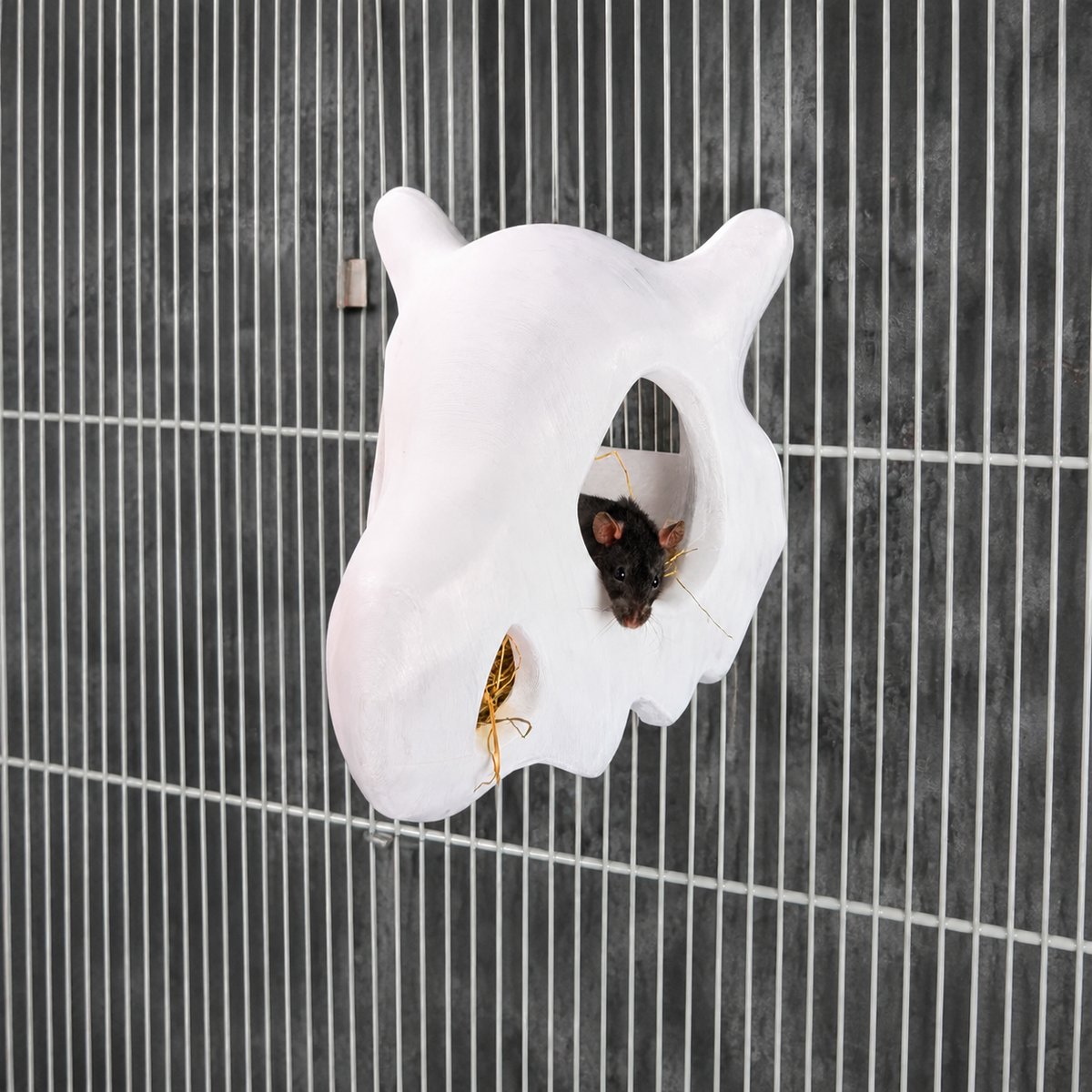
Use a character hide as the centrepiece only after the basics are covered: bedding, water, food, multiple hide options, cleaning access and clear sight lines for daily checks. Choose pieces that are stable, easy to inspect, and sized for the rats using them. If a hide is decorative, it should still be simple to lift, clean around, and remove if the group dynamic changes.
Cage Aesthetic: The Community That Takes Setup Seriously
Rat cage aesthetics matter because many cages live in shared rooms, but the setup still has to work for the rats first. Treat the look as the final layer over a practical structure: safe bedding, good ventilation, multiple resting places, enrichment, and clear access for cleaning and health checks.
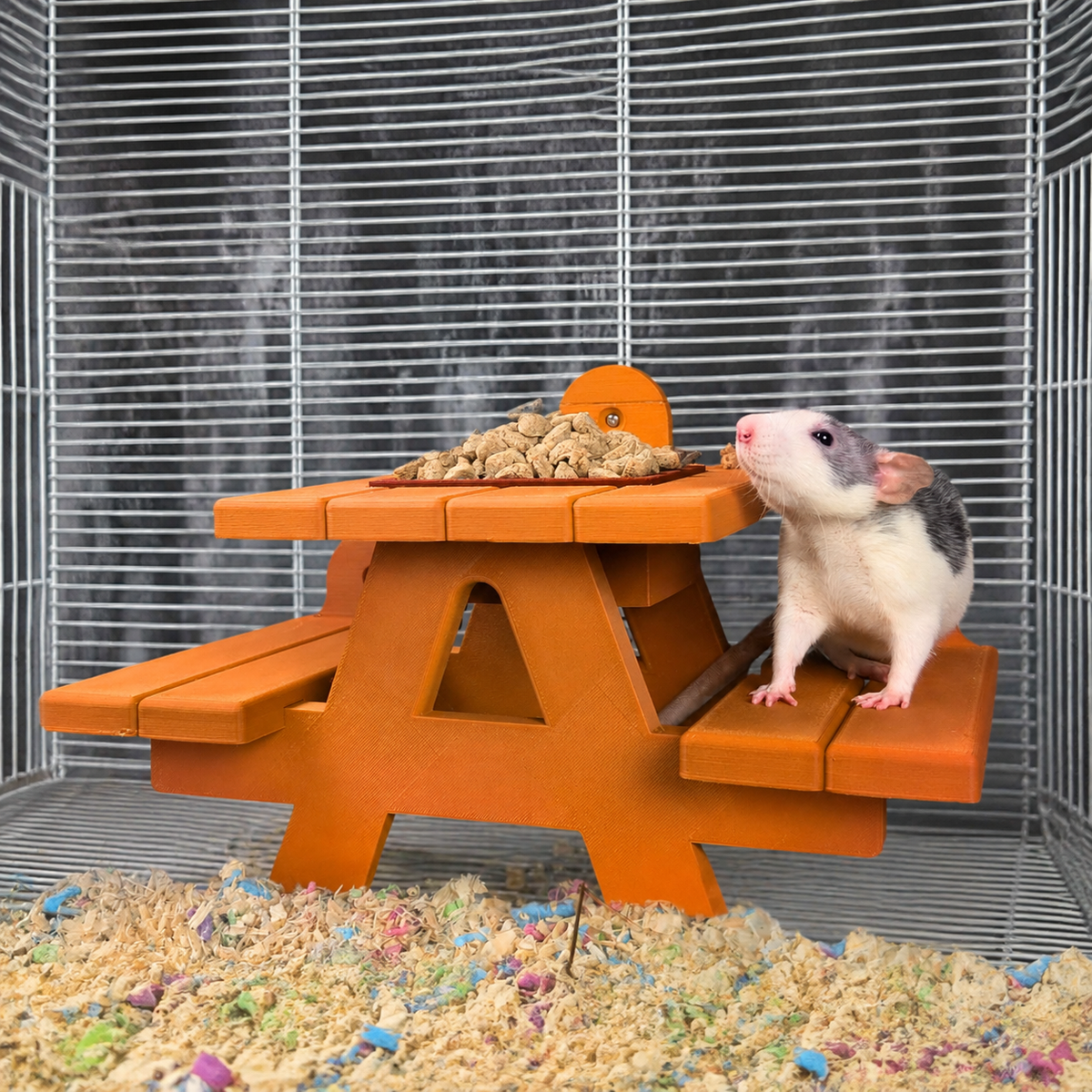
Common aesthetic themes include cottagecore (natural textures, earthy tones, wicker and wood), kawaii (pastel colours, cute character hides), gothic or witchy (dark tones, mushroom hides, skull motifs), and gaming or geek themes (pixel-art items, franchise-themed accessories). Experienced owners select accessories across a consistent theme - it is not enough to have a good hide if it clashes with everything else in the cage.
What to Buy First: Priority Order
For a new cage setup, the priority order is:
1. Cage (meets size minimum, multiple levels, bar spacing under 1.5cm for adult rats to prevent escape and injury). 2. Bedding (paper-based, 5-8cm depth on main floor level). 3. Water and food stations. 4. Minimum 2 hides - one small/enclosed, one communal. 5. Hammock or sleeping platform at upper level. 6. Basic enrichment (foraging mat, climbing rope, cardboard for chewing). 7. Character or themed accessories to build aesthetic coherence over time.
Do not delay getting the welfare basics right in pursuit of a perfect aesthetic setup. The aesthetic can be built incrementally - the hides, bedding, and enrichment structure should be in place from day one.
Budgeting for Rat Cage Accessories: Entry Level to Full Setup
Knowing what things cost is one of the most useful pieces of information a new rat owner can have. The variation in cage setup cost is enormous - from a basic welfare-minimum setup to a fully-themed, aesthetically developed cage - and understanding where the money goes helps prioritise spending.
Entry level (welfare minimum, no aesthetic consideration). A basic setup for two rats covers the cage itself, a simple hanging hammock or fleece rest, a food bowl, a water bottle, a plain wooden hide, and a bag of paper-based bedding. Expect to spend in the range of 60-100 on accessories beyond the cage, sourced from general pet retailers. This is adequate for rat welfare but provides no enrichment variety and will not suit rats for longer than a few weeks before boredom behaviours appear.
Mid-range (good welfare, some enrichment variety). Adding multiple hides of different sizes and materials, a selection of wooden chews, a hanging rope or two, a foraging scatter mat, a second hammock for sleeping variation, and enough bedding depth for burrowing. At this level you are meeting welfare requirements comfortably and providing genuine enrichment. Budget approximately 150-200 for accessories beyond the cage, with ongoing monthly costs for bedding and fresh enrichment materials of around 15-30 per month.
Full setup (enrichment-focused, aesthetically considered). A fully-developed cage setup with a clear theme, multiple hides including character pieces, a foraging station, multiple hammock levels, a dig box, enrichment toys, seasonal rotation items, and branded bedding. At this level the cage is a display as well as a habitat. Initial setup cost beyond the cage is typically 200-350. Ongoing monthly costs are similar to mid-range - the higher initial spend is driven by quality and character items rather than consumables.
The most cost-effective approach for most rat owners is to start at mid-range and invest in quality items that last, particularly hides and hammock hardware. A well-made wooden hide will last the lifetime of multiple rat pairs; cheap cardboard alternatives need constant replacement and cost more over time than the original investment in quality.
Enrichment Rotation: Keeping Rats Stimulated Over Time
Rats are highly intelligent animals and they habituate quickly. An enrichment item that provides novelty and stimulation in the first week becomes background furniture within a month. Experienced rat owners learn to rotate the cage contents rather than simply adding more items.
The principle of enrichment rotation is simple: keep a supply of items that are not always in the cage, and swap them in and out on a regular schedule. A hide that has been out of the cage for two weeks becomes interesting again when it returns - the scent has faded, the visual context has shifted, and the rats investigate it as they would a new item. This extends the functional life of every item in your collection and keeps the cage environment stimulating without requiring constant purchasing.
A practical rotation schedule for a well-equipped cage: maintain a core set of essential items (one main sleeping hide, water, food station, bedding) as permanent fixtures. Rotate a pool of enrichment hides, climbing toys, hanging items, and dig box content on a weekly or fortnightly basis. Keep 6-10 rotation items to provide enough variation. This means the cage changes every week and the rats experience variety without the owner spending more money.
Seasonal enrichment adds another layer. In winter, rats appreciate more bedding material and enclosed sleeping spaces. In summer, foraging items and puzzle feeders that provide more active engagement suit the longer light hours. Changing the bedding type occasionally - from fine paper to longer fibre - also provides novel burrowing experiences.
Character hides are particularly well-suited to rotation because their novelty comes from the object itself - a themed skull hide or a castle tower has a visual character that re-engages rats even after several cycles. Plain cardboard boxes lose their interest once explored; a well-made character hide remains interesting because the form itself is stimulating.
Cage-Proofing Materials: What Is and Is Not Appropriate
Rats chew everything. Any material placed in a rat cage will be investigated, gnawed, and possibly consumed. Understanding which materials are appropriate for rat environments helps both with safety and with buying decisions.
Appropriate materials. Untreated natural wood (pine, birch, willow, poplar) is the gold standard for rat enrichment. It satisfies the natural gnawing behaviour, provides dental wear, and breaks down safely. Organic cotton rope and natural sisal rope are appropriate for climbing structures and hanging toys. Organic fabric without synthetic coating is appropriate for hammocks and pouches. Compressed paper products (hideaway rolls, dig boxes) are appropriate and break down safely. Ceramic and fired clay items are safe for contact and can be used for food bowls, water dishes, and heavy hides that rats cannot move.
Materials to use with caution. Softwood that has been treated with any surface finish, varnish, or preservative should not go into a rat cage. Check with suppliers that wood items are unfinished or finished only with rat-appropriate materials. Synthetic fabrics can be used for hammocks but should have tightly woven surfaces - loose weaves and fleece with long fibres can catch nails and cause injury. Metal items are generally fine but sharp edges or rust are concerns; smooth stainless steel or coated metal is appropriate, rusting metal is not.
Materials to avoid. Treated or painted wood of unknown finish. Aromatic woods including cedar and eucalyptus produce volatile compounds that affect respiratory health in small enclosed spaces. Pine shavings (as opposed to paper-based bedding) release phenols that have the same effect. Glass items are unsafe due to breakage risk. Any item with small detachable parts that could be swallowed.
Specialist rat suppliers should make material and suitability information easy to check. Before adding any accessory, look for smooth edges, stable weight, suitable openings, cleanable surfaces, and a shape you can inspect quickly during daily checks.
Shop rat cage accessories at Ripleys Nest
Not sure your cage is big enough? Use the rat cage size and fit calculator to check it against your group.
New to Ripleys Nest? Join the list for 10% off your first order.
What is the best hide material for rats?
Rats use several hide types well. Common choices include untreated wood, cardboard, fabric hammocks, ceramic hides, and well-finished decorative hides. Prioritise stable pieces with smooth edges, suitable openings, and easy cleaning access. Avoid anything with sharp edges, loose parts, or surfaces you cannot inspect.
Do I need a litter tray?
Highly recommended. Rats instinctively choose a corner for toileting. A litter tray in that corner makes cleaning dramatically faster and reduces ammonia buildup across the whole cage.
How often should cage contents be rotated?
At minimum, swap one or two items per week. Full novelty resets happen when you reintroduce an item after 2+ weeks away. Rotation keeps the cage interesting without requiring constant new purchases.
RAT CARE
Choose the next cage piece
If the guide helped, head to the practical range next. Start with the hub, then compare hides, shelves and foraging pieces by the problem you are trying to solve.