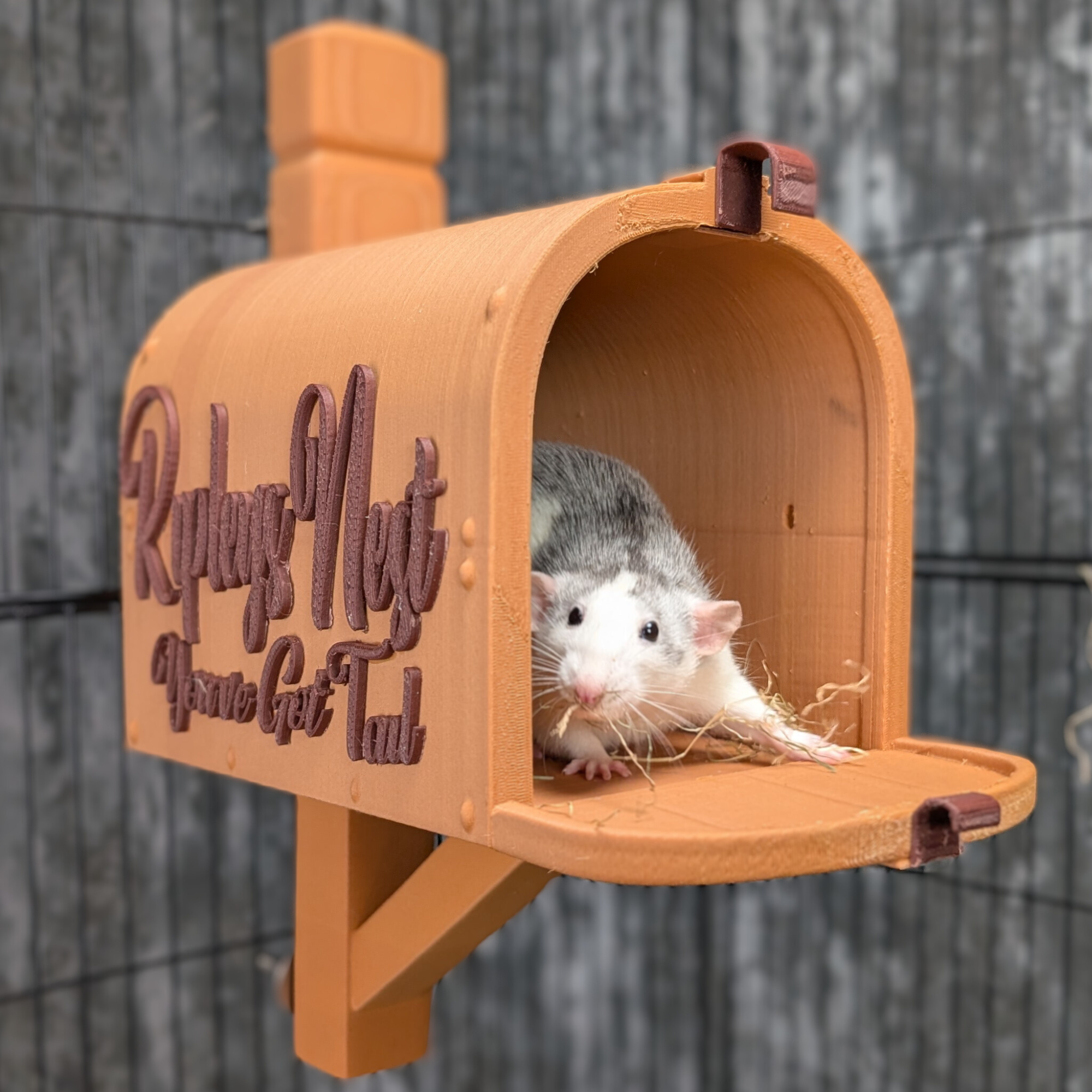
Cardboard and Longer-Term Rat Hides: Choosing and Care
A cardboard box makes a good temporary hide and something to shred, forage through and rearrange, but it is disposable. Keep it dry, clean and stable, take off tape, staples and loose pieces, and replace it when it gets wet, heavily soiled, collapsed or damaged. For a hide that lasts, choose one you can inspect and clean by its own care instructions.
At a glance
- Use plain, clean cardboard with no tape, staples, labels or loose plastic.
- Check it whenever you refresh the bedding.
- Replace it once it is wet, soft, sharp-edged or collapsing.
- Offer more than one hide, so each rat has a choice.
What rats need from a hide
Rats use covered spaces to rest, retreat and watch. A useful hide has a clear entrance, enough room inside for the rats using it to turn round and leave, and a position they can reach without an awkward climb.
Different rats choose different amounts of cover. A cage works better with several choices than with one object every rat has to share.
Give cardboard a useful job
Plain, clean cardboard works well as a temporary box, a tunnel or material to shred. Before you add it, remove staples, tape, labels and loose plastic, and check for damp patches, sharp edges or unknown residue. Place it where it cannot fall across a route, block a water point or trap bedding against a wet surface.
- Choose a box with more than one way through, if the shape allows, so a rat can choose how to come and go.
- Fill a folded parcel or tube with part of the usual daily food, and place it where your rat can reach it and work at it.
- Mix shredded card with plain paper or nesting material. Watch for long strips or pieces carried into a narrow space.
Keep it easy to reach and easy to see. If your rat ignores it, move it to a quieter route or try a different texture another day. Do not add extra food just to make it look busy.
When to replace cardboard
Cardboard is meant to be used up. Check it when you refresh the bedding, and whenever you notice chewing, damp or a new smell. Replace it when:
- the entrance becomes sharp or too open
- the walls no longer hold their shape
- the surface stays wet
- it is hard to remove or clean around
Swap a familiar box for another plain box or a washable hide. Keeping a known retreat nearby can make the change easier.
Choosing a longer-term hide
Look at the material, finish, fittings and care instructions together. Whatever it is made of, take a hide out of the cage if it has loose coating, rough edges, cracks, frayed threads or shifted fittings, until it is sorted.
| Material | What to check | Cleaning |
|---|---|---|
| Hard surfaces | Edges and joins | Wipe or wash only as the product instructions allow, then dry fully before it goes back in |
| Wood | Areas that get chewed or damp; check them more often | Follow the stated finish and care instructions |
| Fabric | Seams, loops and edge threads | Remove it once it frays or loosens |
If you want a themed hide, compare our Fairy Mushroom Rat Hide and D20 Dice Rat Hide. Check each product page for its size, material and care.
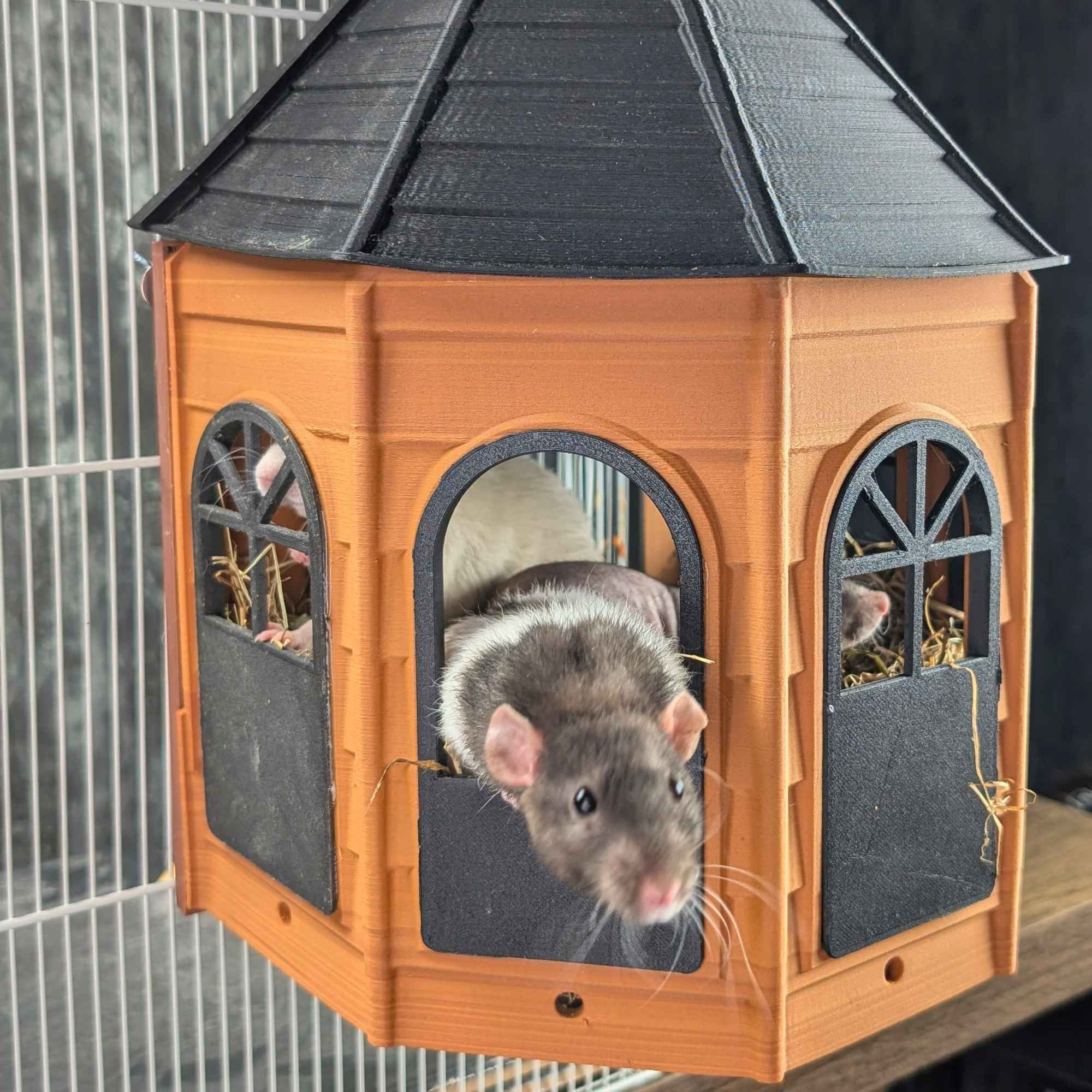
For a house shape, our Rat Mansion Hideaway is a house-shaped hide. Check its dimensions against your floor space before choosing it.
Where to put any hide
Choose a stable spot with a clear entrance and a route that does not depend on a risky jump. Keep food and water from wetting the opening, and leave room for you to clear bedding and check underneath.
After you rearrange, watch whether every rat can reach a retreat, leave it and come back without another rat blocking the only comfortable route. Move a piece if it gets in the way, creates a fall risk or stays hard to keep clean.
Questions
Is a cardboard box enough for a rat to hide in?
As a temporary hide, yes, if it is clean, dry and stable. It wears out quickly, so replace it when it gets wet, soiled or misshapen, and offer more than one hide so each rat has a choice.
How often should I replace a cardboard hide?
Whenever it is wet, heavily soiled, collapsed or sharp-edged. Check it each time you refresh the bedding.
Sources
Related guides
Compare hides and cabins or foraging toys, or see all rat care guides.
Compare rat hides and houses

Fairy Mushroom Rat Hide
About 25 cm high × 23 cm wide × 18 cm deep
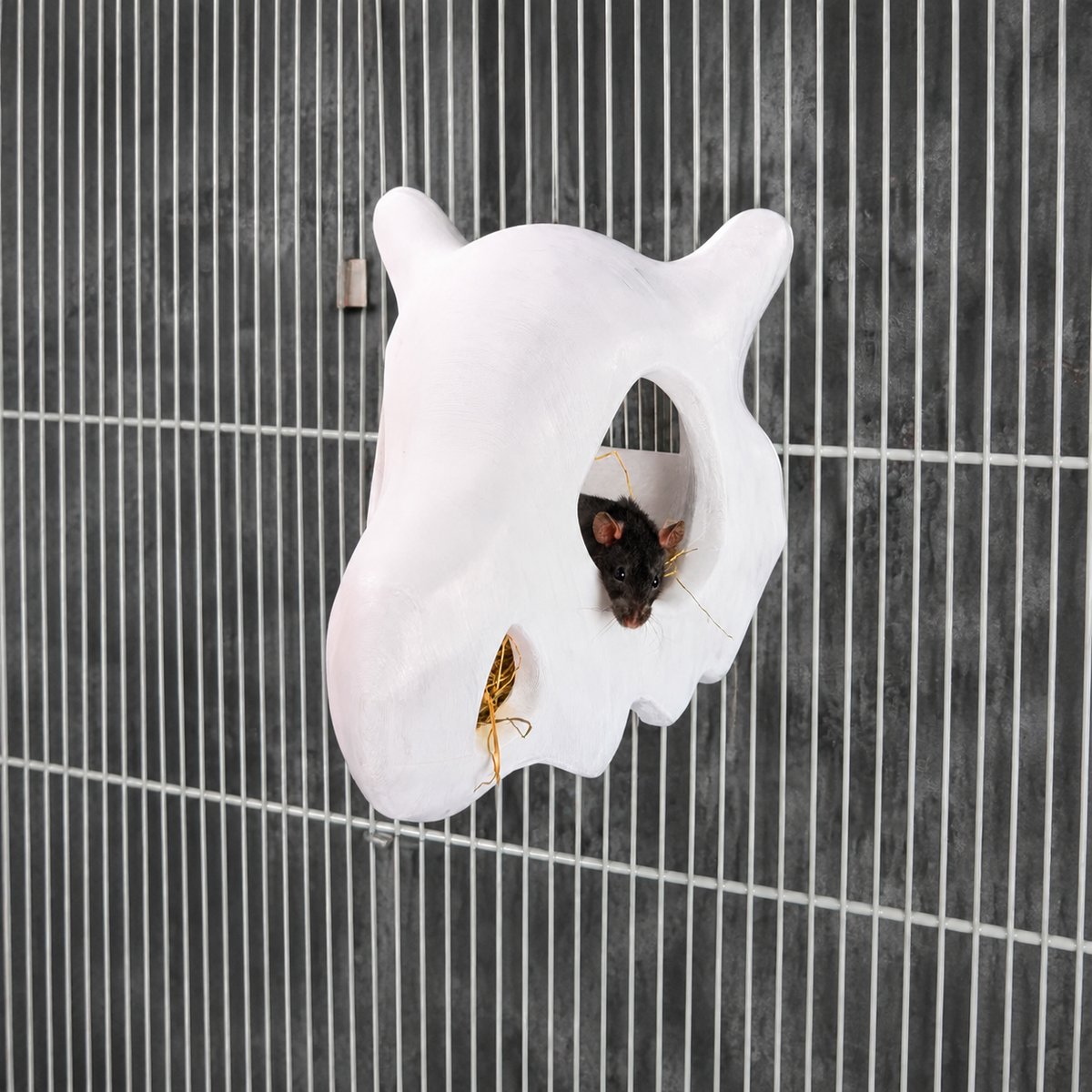
Gothic Skull Rat Hide & Hanging Nest
About 25 cm high × 22 cm wide

Strawberry Rat Hide
About 26 cm high × 26 cm wide

Hot Air Balloon Rat Hide – Hanging Cage Basket
Balloon about 23 cm across and 25 cm tall
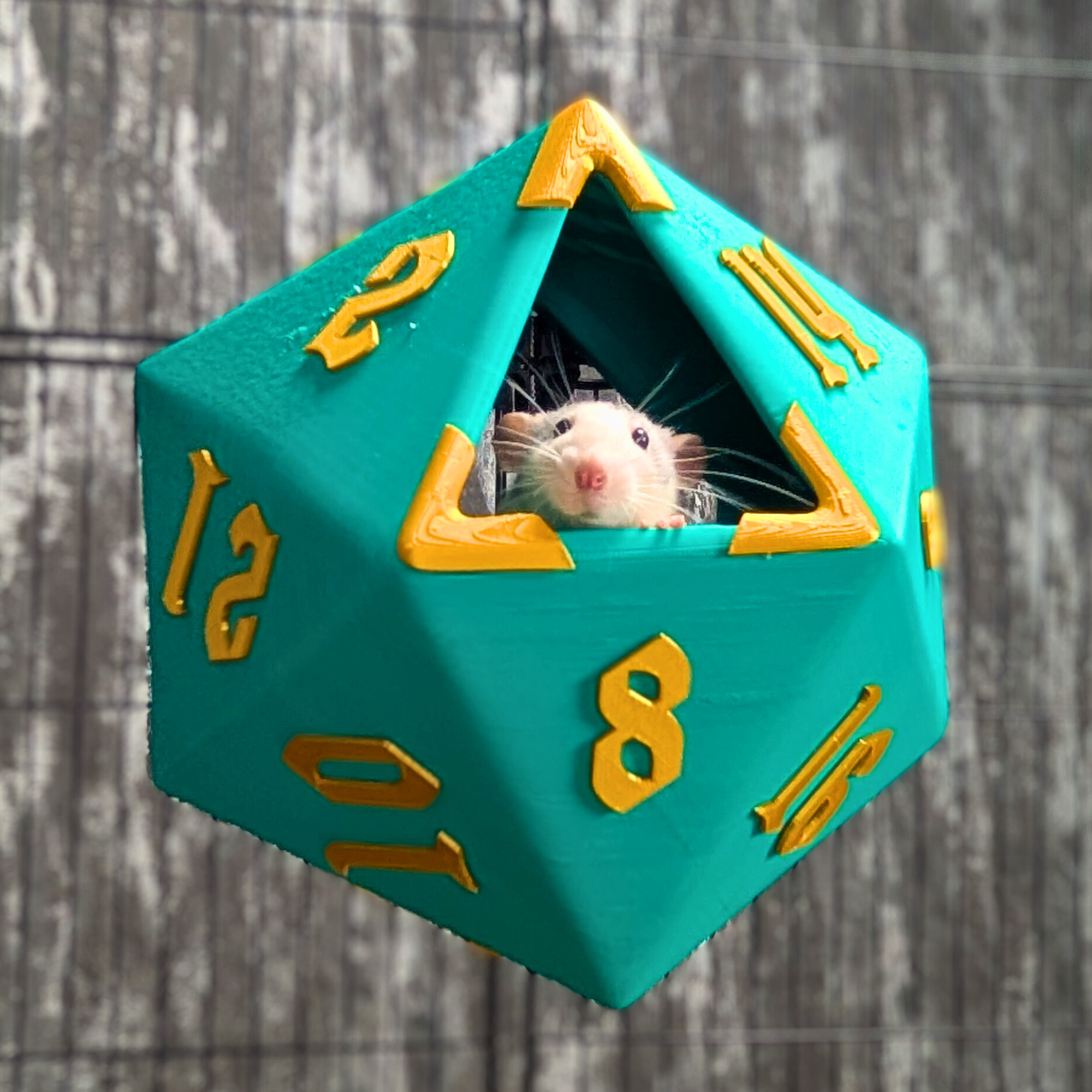
D20 Dice Rat Hide
About 25 cm wide × 25 cm high × 20 cm deep

Pink Gummy Bear Rat Hide
About 25 cm high × 19 cm wide × 15 cm deep