Journal9 min read
Your Garden as a Sanctuary: The Wellness Case for Ornaments and Focal Points

Helpful next step
If this guide is helping you choose or care for an outdoor piece, compare the garden routes that fit the spot you have in mind.
Quick Summary
Start with somewhere comfortable to sit, then choose a focal point, planting and textures that suit the light and space. Cast stone can add structure throughout the year. Use the ideas below as starting points and keep what works for you.
Last updated: September 2026
A sanctuary space needs one clear focal point. A sculpture keeps its shape through winter, while planting changes with the seasons. Choose the balance you prefer.
In this guide:
- Start with how you use the garden
- Using focal points
- Stone, water, and plants
- Designing a meditation corner
- Year-round engagement: the seasonal garden
- Putting it together: a practical plan
Start with how you use the garden
Choose a place you already like spending time in. Notice its light, shelter and view from the seat before adding anything. A single focal piece or a change in planting may be enough; try one change and see how it works through the day.
Using focal points
Key takeaway: A focal point gives your eye somewhere to rest. Choose something you enjoy looking at and leave enough space around it to read clearly.
Walk into a garden with no focal point and your eye drifts. There is nothing to anchor your attention. You scan, you process, you move on. The garden may be pleasant, but it does not hold you.
Add a single focal point, a sculptural piece, a water feature, a specimen plant, and the dynamic changes. Your eye settles. Your attention narrows softly. You stop scanning and start observing. A focal point gives the eye a place to settle; whether that feels restful is personal.
What makes a good focal point:
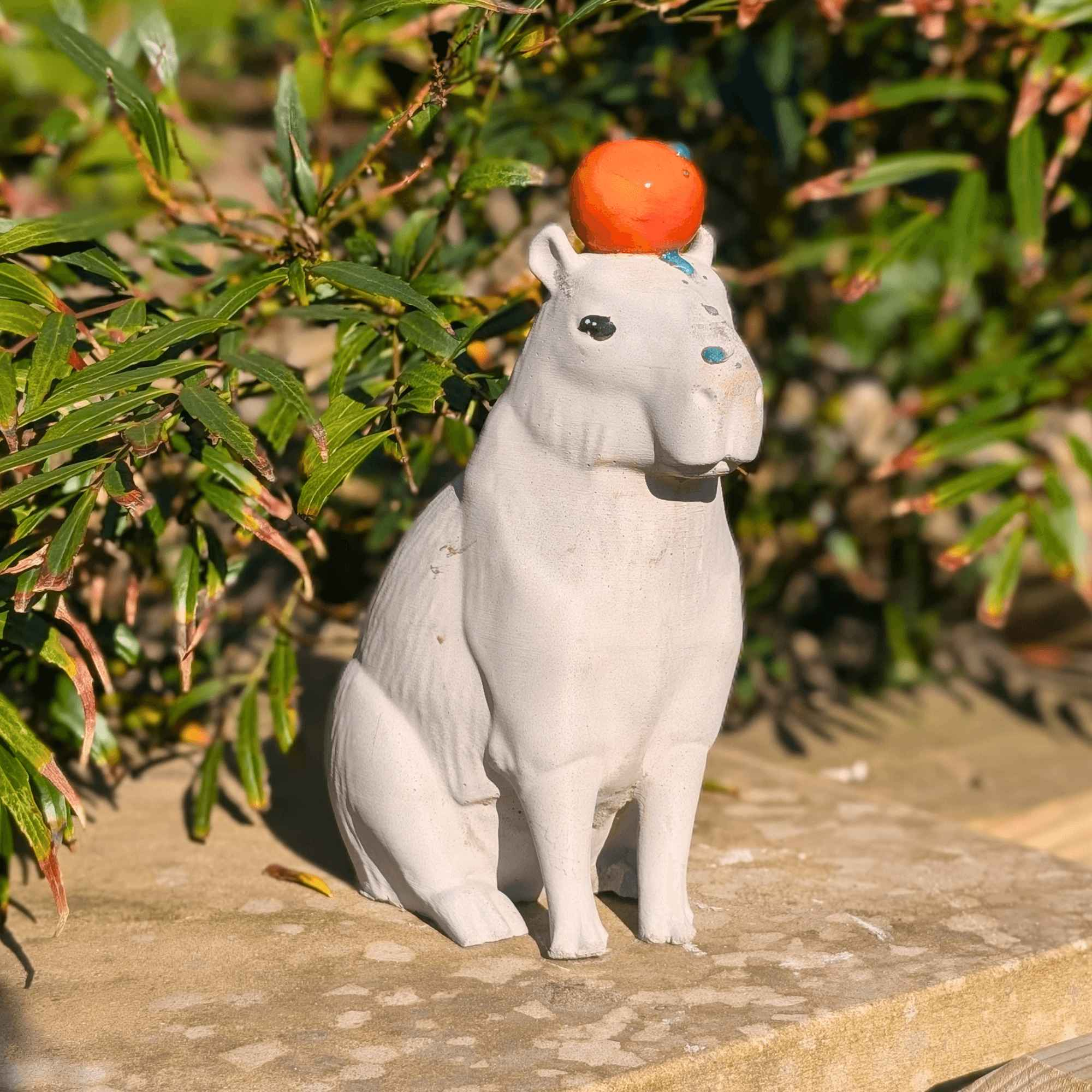
- Contrast with surroundings. A stone ornament against green foliage works because the textures and colours are different enough to draw the eye naturally
- Appropriate scale. The focal point should be visible from your main sitting area but not dominate the space. In a small garden, this might be a 30cm bust on a plinth. In a larger space, a 60cm planter or a standing figure
- Visual interest at close range. A good focal point rewards attention. Texture, patina, the play of light across a surface. These details hold the gaze in a way that smooth, featureless objects do not
- Placement at a natural resting point. End of a path, centre of a bed, visible from a bench. The eye should find it without searching
Cast stone is particularly effective as a focal material because of its texture. The surface is complex without being busy. It catches light differently depending on the angle and time of day. And it changes over time as moss, lichen, and weathering develop. There is always something new to notice.
Cast stone provides year-round tactile presence , its surface texture can contrast with the surrounding planting.
Avoid overstimulation , sanctuary spaces use restraint. Too many competing focal points or textures produce sensory noise rather than calm.
Stone, water, and plants
Key takeaway: A balanced garden can combine hard materials, water and living plants. Each contributes a different texture, sound or visual layer to the space.
Stone: permanence and texture
Stone (and cast stone) anchors a garden. It provides weight, permanence, and visual grounding. In a world of screens and notifications, something that sits heavy and changes only with the seasons offers a different kind of engagement.
Visual enclosure does not require high walls , a single planted screen or a level change is enough to signal separation and make the boundary feel more defined.
How to use stone for calm:
- Pathways. Stepping stones define a route through the planting
- Ornaments as resting points. A cast stone planter or sculpture at the end of a path gives the walk a destination
- Seating surrounds. Stone or cast stone near a bench signals "this is a place to sit"
- Ageing stone. Weathered stone can give a new planting scheme an established appearance
Water: the reset button
Water adds movement or sound for people who enjoy it; a still bowl can also work as a reflective focal point.
Practical options for small UK gardens:
- Self-contained water feature. Requires a pump and a power source but fits in any corner. No plumbing needed
- Bird bath. Still water reflects light and attracts wildlife. Refresh the water and clean the bowl regularly
- Stone trough or bowl. A cast stone bowl filled with water and a few pebbles creates a simple reflecting pool. No electricity needed
You do not need a pond. You do not need a waterfall. A small, still body of water can introduce reflections without a pump; use a vessel intended to hold water.
Plants: movement and life
Plants provide the living, breathing element that stone and water cannot. They move in the wind, change with the seasons, attract insects and birds, and engage the senses of smell and touch as well as sight.
Plant choices for UK gardens:
- Lavender. A fragrant, well-drained option for a sunny spot; choose plants that suit the conditions and your care routine.
- Ornamental grasses. Movement in the breeze creates gentle visual rhythm. Stipa tenuissima and Miscanthus are excellent UK choices
- Ferns. Soft, green, shade-tolerant. Perfect for shaded sanctuary corners
- Climbing roses or jasmine. Scent, structure, and seasonal interest. Train along a fence or wall near your sitting area
- Moss and ground cover. Around the base of stone ornaments, ground cover plants soften the transition between hard and soft elements
Designing a meditation corner
Key takeaway: A meditation corner does not require spiritual commitment or a specific practice. It is simply a designed space for quiet sitting. Some people enjoy having one.
You need three things: somewhere to sit, something to look at, and a degree of enclosure.
Step 1: Choose the location. Pick the quietest corner of your garden. Away from the road if possible. Ideally with a backdrop of fence, wall, or hedge that creates a sense of containment without claustrophobia.
Step 2: Seating. A bench, a chair, a flat stone. It needs to be comfortable for 15-20 minutes. Weather resistance matters because spontaneous use (walking out on a calm evening) is when these spaces work best.
Step 3: Focal point. Place one visually interesting object within comfortable viewing distance (2-4 metres from the seat). A cast stone planter with trailing plants, a sculptural bust, a simple birdbath. This gives the eye somewhere to land without demanding interpretation.
Step 4: Softening. Plant around the edges. Lavender near the seat for scent. Ferns or grasses for movement. Ground cover around the base of any hard elements. The transition between hard and soft matters more than the individual plants.
Step 5: Sound. If you can add water (even a small solar-powered bubbler in a stone bowl), do it. If not, plants that attract birds (berry-producing shrubs, seed heads left over winter) provide natural ambient sound.
What to avoid:
- Bright colours or busy patterns (they can make the space feel busier)
- High-maintenance plants that make care harder
- A layout that feels too formal or too loose for your own preference
- Anything that needs electricity you do not already have outdoors
Tip: The best meditation corners look slightly unfinished. A perfect, manicured space creates pressure to maintain it. A slightly wild, naturalistic space invites sitting without obligation.
Year-round engagement: the seasonal garden
Key takeaway: A garden can stay useful across the seasons when its layout and planting are easy to maintain. A garden that only works in summer provides four months of value. Design for twelve.
| Season | What Keeps You Engaged | Stone's Role |
|---|---|---|
| Spring | New growth, birdsong, longer evenings | New growth changes the backdrop around the stone, while weathering changes its surface |
| Summer | Full bloom, evening sitting, outdoor dining | Shadows across textured stone change through the day. Choose a sitting position with the amount of sun or shade you prefer |
| Autumn | Colour, harvest, crisp air, slowing down | Fallen leaves around stone bases create natural arrangements. The garden feels established and settled |
| Winter | Frost patterns, structural interest, quiet | Cast stone comes into its own. When plants die back, stone provides the garden's visual structure. Frost on textured surfaces is genuinely beautiful |
Winter is where most gardens fail. When the plants are dormant, what remains? If the answer is "bare soil and a fence," the garden offers nothing for five months. Cast stone ornaments, evergreen structure planting, and winter-interest species (hellebores, snowdrops, winter-flowering jasmine) keep the space visually active through the cold months.
Putting it together: a practical plan
Key takeaway: You do not need a redesign. You need one or two deliberate additions to an existing space.
For a small garden (under 30 sq m):
- One cast stone focal piece, positioned at the furthest visible point from your back door
- Lavender or rosemary along the path to the sitting area
- A simple water element (stone bowl with pebbles, or a small birdbath)
- One comfortable seat facing the focal point
For a medium garden (30-100 sq m):
- A defined meditation corner in the quietest area
- Two or three cast stone pieces creating a visual journey (near, mid, far)
- Mixed planting for year-round interest
- A water feature with moving water (solar pump in a stone vessel)
Budget: Start with the seat, planting or ornament that would make the biggest difference to how you use the space. Check current prices and build up the rest over time. Gardens are never finished. That is part of their appeal.
Where to go from here
A sanctuary garden develops over seasons, not weekends. Start with the focal point and the seating. Add water and planting as budget allows. The most important step is the first one: deciding that your outdoor space is for your wellbeing, not just for looking at.
Related guides:
- How to age cast stone ornaments: five methods tested
- How to photograph garden ornaments
- Cottage garden in a weekend
Shop: Browse the full garden collection
New to Ripleys Nest? Join the list for 10% off your first order.
Planting guidance
For plant selection and care, see the RHS guides to growing lavender and cottage garden plants. Match plants to the light, soil and space available.
GARDEN
Choose the outdoor piece
Use the guide to decide what belongs in the space, then compare cast-stone pieces by size, weight, finish and where they will sit.