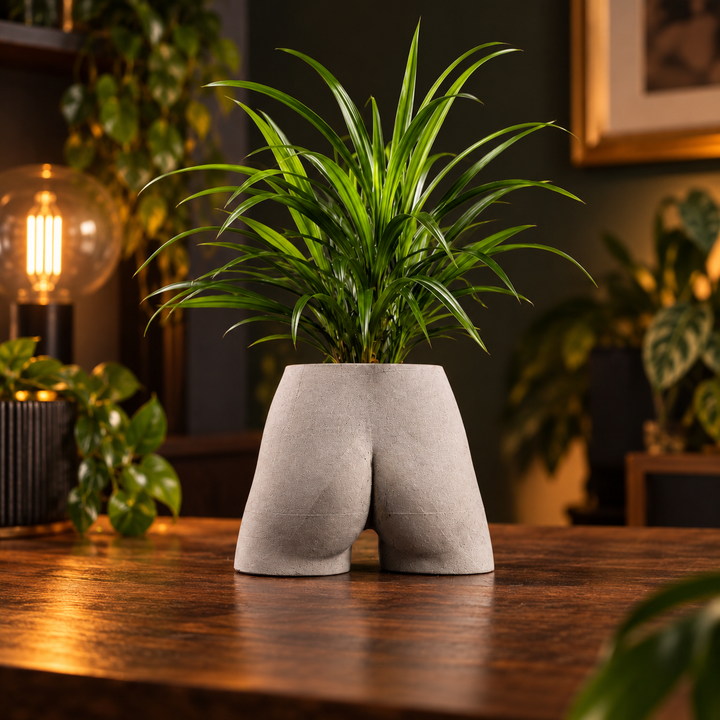
Planters & Home Decor Guide

Cement Planter vs Cast Stone Planter: What Is Actually the Difference?

Planters & Home Decor

Planters & Home Decor

Quick scan

  • Start with the room, plant type and statement level you want.
  • Use the styling sections to compare scale, finish, grouping and placement.
  • Follow the Planters & Home Decor links when you are ready to shop the look.
Choosing a sculptural planter? Use the guide to compare face planters, goddess planters and sculptural home pieces in one route.

Helpful next step

If this guide is helping you choose a room piece, compare sculptural planters by placement, plant choice and visual weight.

Quick read: Quick Summary "Cement planter" and "concrete planter" are used interchangeably by consumers and retailers, but technically they are different things. Cement is the bindin

See all Planters & Home Decor guides


Quick Summary


"Cement planter" and "concrete planter" are used interchangeably by consumers and retailers, but technically they are different things. Cement is the binding powder ingredient; concrete is cement plus aggregate (sand, gravel) plus water. Commercially sold planters described as either term are almost always concrete. The practical differences that matter are in the mix - dense poured concrete is more durable than DIY hypertufa mixes.

Choosing a planter after the material check

If you are comparing materials before buying, start with the current head planter guide or the sculptural head planter chooser To browse product families, compare African head planters, sculptural planters, and the wider planters and home decor collection

Concrete Planter
  • Cement + aggregate + sand + water
  • Dense, durable, frost-resistant
  • Needs leaching before first use
  • Commercial outdoor standard
Cement-only Mix
  • Cement + water only (no aggregate)
  • Brittle , cracks easily
  • Not suitable for outdoor use
  • Only correct for thin renders
1:2:3
cement:sand:aggregate ratio
28 days
full cure time
pH 12
fresh concrete alkalinity
6wk+
leach before planting

The difference between a cement planter and a concrete planter is mostly a matter of terminology. In practice, when you search for either on Etsy, at a garden centre, or on a homeware site, you are looking at the same product category: dense, heavy, porous stone-like pots. The technical distinction is worth understanding if you are comparing products or buying for the first time.


The Technical Definition: Cement vs Concrete

Cement is a binding agent - specifically, Portland cement is a fine powder made by heating limestone and clay to extremely high temperatures, producing a material that hardens when mixed with water through a chemical reaction called hydration. Cement alone has almost no structural strength; it is the glue, not the building material.

Concrete is cement plus aggregate plus water. The aggregate - typically sand, gravel, crushed stone, or specialist materials - gives concrete its bulk, its weight, and most of its compressive strength. The cement paste fills the gaps between aggregate particles and binds everything together as it cures. The result is a stone-like composite material with high compressive strength and good durability.

A "cement planter" in the strict technical sense would be a planter made of pure cement paste with no aggregate - which would be extremely weak, prone to cracking, and would shrink badly as it cures. Almost no commercially sold planters are made this way. When someone uses the term "cement planter," they almost invariably mean a concrete planter.


Why the Terms Are Used Interchangeably

The confusion is understandable. Cement is the most visible ingredient in the mix - it is the grey powder you see in bags at builders' merchants, it is what gives the finished product its colour, and it is the ingredient that triggers the curing reaction. When people describe a grey, heavy, stone-like pot, "cement" is the intuitive word.

Retailers often use "cement planter" because it performs better in consumer search. The term sounds more accessible and domestic than "concrete," which has industrial connotations. Neither term is wrong in commercial context - both clearly communicate "dense, hand-cast, stone-effect pot." The technical inaccuracy in "cement planter" is not deceptive; it is simply the word the market has settled on.

For buyers, the practical takeaway is simple: treat "cement planter" and "concrete planter" as synonyms when shopping. What actually matters is the quality of the mix used to make it.


Poured Concrete vs Hypertufa: The Mix Difference That Actually Matters

Within the "concrete planter" category, there is a genuinely important distinction that most buyers miss: the difference between poured concrete and hypertufa.

Hypertufa Note

Hypertufa (perlite/peat/cement mix) is lighter but less durable than poured concrete , suitable for troughs but not for detailed cast ornaments.

Hypertufa is a DIY-friendly mix made from cement, perlite (or vermiculite), and peat moss or coir. It is much lighter than concrete, extremely porous, and easy to shape by hand without form. It is popular in gardening communities precisely because it can be made at home without specialist equipment. The porosity of hypertufa makes it excellent for alpine plants that need sharp drainage.

Poured concrete - the kind used by studio makers including Ripleys Nest - is a denser, harder material. The mix is controlled to achieve low porosity, good compressive strength, and resistance to freeze-thaw cycling. The result is a heavier, more durable planter that holds up better outdoors over many years. The surface is smoother and takes detail better from form.

A hypertufa planter and a poured concrete planter will both be described as "concrete planters" in a shop listing. The difference is in weight, durability, and surface quality. Poured concrete is denser and more durable; hypertufa is lighter and better draining but less weather-resistant over time.


How Concrete Planters Interact With Plant Roots and Moisture

Concrete planters are naturally porous to a degree - they absorb water from the soil and release it gradually, which creates a moisture buffering effect around the root zone. This is beneficial for many plants, particularly those that prefer evenly moist but not waterlogged conditions.

The alkalinity of concrete is worth noting. Fresh concrete leaches calcium hydroxide as it cures, raising the pH of the immediate soil environment. For acid-loving plants (blueberries, azaleas, rhododendrons), this can be an issue in the first months after planting. The effect diminishes over time as the concrete carbonates and the leaching slows. For most houseplants and general garden plants, the alkalinity effect is negligible and resolves naturally.

Leaching

New concrete is highly alkaline (pH 12+). Leave outside for 4-6 weeks and water repeatedly, or soak in diluted white vinegar for 48 hours before first planting.

Avoid

Do not plant directly into new concrete , the alkalinity will damage or kill roots. Wait at least 4-6 weeks and leach thoroughly, or use a plastic liner for the first season.

The RHS guidance on soil pH covers this in detail - if you are planting acid-lovers in a new concrete planter, flushing it with dilute acidic water for a few weeks before planting will neutralise the surface leaching. After the first season, this is no longer needed.


Weight Differences and What They Mean in Practice

The weight of a concrete planter is both its most obvious feature and the most frequently underestimated one at point of purchase. A mid-sized concrete planter (30cm diameter) might weigh 4-8kg empty, and considerably more once filled with potting mix and a plant. Large outdoor concrete planters can exceed 25kg.

This weight is not a defect. For outdoor use, it provides excellent stability - a heavy concrete planter will not blow over, cannot be knocked over easily, and does not migrate around the terrace in wind. For indoor use, it means thinking about where the planter will live before it arrives - moving a large filled concrete planter is a two-person job.

If weight is a genuine constraint - say, on a balcony with load limits, or for someone who rearranges rooms frequently - a resin or fibreglass planter may be more practical. For permanent placements, the weight of concrete is almost always an advantage.


Drainage in Concrete Planters

Most concrete planters are sold without drainage holes, or with a single hole. The porous nature of concrete provides some natural drainage, but for most plants, a drainage hole is important to prevent waterlogging. If you are buying a sealed concrete planter with no hole, drilling one with a masonry bit is straightforward.

The porosity of the concrete itself means the walls wick moisture outward - this is actually beneficial for managing root zone moisture in the UK's damp climate, where overwatering is a more common problem than underwatering for houseplants.


Choosing Between "Cement" and "Concrete" Planters in Practice

The search term you use matters less than the questions you ask about the product. When evaluating any concrete/cement planter, the relevant questions are: Is this poured concrete or a hypertufa mix? Does it have a drainage hole or can one be added? What is the approximate weight? Was it made in a workshop with controlled mix ratios, or mass-produced with high water ratios for ease of working?

Ripleys Nest indoor concrete planters use a dense poured mix developed in a Cumbrian studio - the same conditions where the pots will ultimately live outdoors, or in the humidity-variable environment of a UK home. Each piece is hand-cast individually, not mass-produced. The density and weight are the result of how the material is mixed, not incidental.


Hypertufa: The DIY Cement-and-Perlite Mix

Hypertufa is a DIY casting medium that falls between cement planter and concrete planter in the naming debate. The name comes from tufa, a naturally porous volcanic stone used historically for garden features. Hypertufa replicates tufa's lightweight, highly porous character using ordinary materials: Portland cement, perlite (an expanded volcanic glass used in horticulture), and peat or coir fibre. Some recipes add sand or vermiculite for additional texture.

The practical result is a planter that is significantly lighter than cast concrete - roughly 40-60% less weight for an equivalent volume - with a rough, organic texture that ages to look genuinely stone-like within a season or two. Moss colonises hypertufa exceptionally quickly because its high porosity retains surface moisture even when the central mass is dry.

The trade-offs are real. Hypertufa is weaker than dense concrete - it chips and cracks more readily, and in severe frosts (below -15C) the high porosity that makes it look so good also makes it more vulnerable to freeze-thaw damage than a well-cast low-porosity concrete mix. For most UK gardens, hypertufa performs well; for exposed Cumbrian or Scottish highland gardens that see the severest British frosts, dense cast concrete is more reliable for permanent features.

For gardeners who want to make their own planters, hypertufa is an accessible starting point that requires no specialist equipment - just form (plastic containers work well), a dry mixing area, and patience during the 4-6 week curing time. For buyers who want the aesthetic of aged stone with proven durability, hand-cast studio concrete is the more reliable long-term choice.


What to Look For When Buying a Quality Concrete Planter

The planter market uses the terms cement and concrete interchangeably, which makes it harder to distinguish quality. Here are the practical markers that separate a well-made concrete planter from a poor one.

"Cement planter" and "concrete planter" are used interchangeably by retailers , in practice, both terms describe the same thing: a poured concrete product.

Drainage. This is non-negotiable. Any planter intended for outdoor permanent use must have at least one drainage hole, ideally two for larger vessels. Without drainage, compost becomes waterlogged during UK winters, roots suffocate, and in frosts, the saturated compost expands and can crack the planter from the inside. If a concrete planter lacks drainage, it is either a decorative vessel or a poorly designed product. Do not purchase a concrete planter for outdoor planting without drainage.

Wall thickness. Thin-walled concrete planters are vulnerable to impact damage and thermal stress. A quality planter will have walls of at least 15-20mm thickness throughout. You can assess this by looking at the drainage hole - the depth of the hole relative to the base tells you how thick the base is. Tap the sides gently; thin walls produce a hollow, high-pitched sound; thick, dense walls produce a dull thud.

Surface consistency. Run your hand across the surface. Quality hand-cast concrete has a slightly textured, even surface with no voids, no hollow sections, and no loose aggregate. Loose aggregate on the surface (particles that crumble off with light pressure) indicates either under-mixed concrete or removing the planter from its form before the mix had cured sufficiently. Either way it suggests reduced surface durability.

Curing status. Concrete continues to cure and gain strength for up to a year after casting. A planter that is very new may have a greenish or slightly damp appearance - this is the surface carbonation still completing. It is not a defect. New concrete is mildly alkaline on its surface, which raises an important consideration for plants: see below.

Weight. A quality concrete planter is heavy. A 25cm diameter planter should weigh several kilograms. If it feels light, either the mix is very porous (less durable) or it contains lightweight aggregate substitutes. Weight is generally your best proxy for density and durability when you cannot see the mix composition.


Concrete and Soil pH: What Every Planter Owner Should Know

Concrete is naturally alkaline. Fresh concrete leaches calcium hydroxide as it cures, which raises the pH of any growing medium in direct contact with the planter walls and base. This is a practical consideration for plant selection, particularly in the first 12 months of a new concrete planter's life.

The effect is most significant in the first few weeks after casting, when surface pH can be considerably elevated. Over time, as the concrete carbonates and the surface reacts with CO2 in the air, the leaching rate decreases substantially and stabilises. Most gardeners find that after the first growing season, their concrete planters behave similarly to terracotta in terms of plant performance.

For gardeners who want to use acid-loving plants - blueberries, azaleas, heathers, rhododendrons - in a new concrete planter, one practical step is to soak the planter thoroughly several times before planting, allowing the lime to leach into the soaking water rather than the compost. Filling with ericaceous compost and leaving for a few weeks before planting also helps establish the pH before the plants go in.

Neutral and alkaline-tolerant plants - lavender, rosemary, thyme, most succulents, many trailing annuals - are happy in a new concrete planter without any pre-treatment. Vegetables are generally tolerant. Ferns and woodland plants that prefer acidic conditions benefit from the leaching-out period described above.

After the first year, the alkalinity concern largely disappears for most plants. The concrete surface is now carbonated, leaching has reduced to negligible levels, and the established compost has its own buffering capacity. Long-lived concrete planters become excellent containers for almost any plant over time.

Shop concrete indoor planters at Ripleys Nest

Useful follow-up

Save the seasonal care reminder

Get a simple outdoor care note for cleaning, frost checks and choosing a cast-stone piece for the right spot.

The guide stays open. Use the links below when you are ready; your email is only for useful guide follow-up.

// CH.03 · GARDEN

Choose the outdoor piece

Use the guide to decide what belongs in the space, then compare cast-stone pieces by size, weight, finish and where they will sit.

Useful follow-up

Save the planter decision checklist

Get a quick way to compare size, plant, finish and placement before you choose a sculptural planter.

The guide stays open. Use the links below when you are ready; your email is only for useful guide follow-up.