Planters & Home Decor Guide
The Ultimate Guide to Cast Stone Planters UK: Care, Frost Protection, and What to Buy
Planters & Home Decor
Quick scan
- Start with the room, plant type and statement level you want.
- Use the styling sections to compare scale, finish, grouping and placement.
- Follow the Planters & Home Decor links when you are ready to shop the look.
Quick read: Head planter UK: choose the right sculptural planter If you are comparing head planters, bust planters, or sculptural face plant pots, use the Head Planter UK guide to ch
Head planter UK: choose the right sculptural planter
If you are comparing head planters, bust planters, or sculptural face plant pots, use the Head Planter UK guide to choose by size, weight, drainage, plant choice, and placement.
Quick Summary
Concrete planters outlast every alternative - 25 to 100+ years versus 5-15 for plastic and 5-25 for terracotta. They are porous, heavy, and frost-resistant when sealed properly. The trade-offs are weight, lime leaching, and permanence. For most UK gardens, those trade-offs are advantages.
- Seal in September - one coat of silane/siloxane sealant prevents 90% of frost damage
- Cure new planters by soaking in water for 3 days before planting
- Succulents, herbs, and lavender thrive in concrete's alkaline, well-drained environment
- GFRC (glass fibre reinforced concrete) is 75% lighter - the solution for balconies
Concrete planters are one of the few garden purchases that will genuinely outlast you. A well-made concrete planter bought today will still be standing in your garden in 50 years - long after the plastic pots have cracked, faded, and ended up in landfill. But longevity alone does not make something the right choice. This guide covers everything you actually need to know before buying: material comparisons, frost protection, plant compatibility, care, cost, and the environmental argument that most guides gloss over.
Why Concrete Outlasts Everything Else
The lifespan gap between concrete and other planter materials is not marginal - it is generational. A concrete planter lasts 25 to 100+ years. Terracotta lasts 5-25 years and shatters in frost. Glazed ceramic lasts 10-50 years but cracks under repeated freeze-thaw cycles. Plastic lasts 5-15 years before UV degradation makes it brittle and discoloured.
Concrete gains strength over time as the cement continues to hydrate - a process called curing that technically never fully stops. A concrete planter is stronger at 10 years old than it was on the day it was made.
Plastic degrades from the moment it is manufactured. Terracotta is fired clay with no structural reinforcement, which is why a single hard frost can destroy a pot that cost you 40 GBP.
| Material | Lifespan | Frost Resistance | Weight | Breathability |
|---|---|---|---|---|
| Concrete | 25-100+ years | Good (when sealed) | Very heavy | Porous |
| Terracotta | 5-25 years | Poor | Heavy | Very porous |
| Ceramic (glazed) | 10-50 years | Moderate | Very heavy | Non-porous |
| Resin | 10-25 years | Good | Light | Non-porous |
| Plastic | 5-15 years | Moderate | Lightest | Non-porous |
For a deeper dive on concrete versus resin specifically, we have written a full comparison here And if you have ever wondered whether cement and concrete are actually different things (they are), our cement vs concrete guide explains the distinction.
Frost Protection - The One Thing Most Guides Get Wrong
The biggest threat to any outdoor planter in the UK is not rain, wind, or sun. It is freeze-thaw cycling - the repeated process of water entering porous material, freezing, expanding by 9%, thawing, and repeating. The UK gets more freeze-thaw cycles than most people realise:
- Scotland and Northern England: 60-80 cycles per year
- Midlands and Wales: 30-50 cycles
- South and Southeast: 15-30 cycles
- Coastal areas: 10-20 cycles
- Exposed hilltop positions: 40-60 cycles
One coat of silane/siloxane breathable sealant applied in September prevents 90% of frost damage. This is not an expensive or difficult job - it takes 20 minutes and costs under 15 GBP for enough sealant to treat every planter in your garden.
The critical word is breathable. Never use varnish, polyurethane, or any non-breathable sealant on concrete. These trap moisture inside the concrete, which makes frost damage worse, not better. Silane/siloxane sealants block external water from entering while allowing internal moisture to escape.
Never cover planters with plastic sheeting - this traps condensation and accelerates frost damage. Use breathable horticultural fleece instead.
Three other frost protection essentials:
- Raise planters off the ground - even 10mm, using pot feet or slate pieces. Ground moisture wicking through the base is where most cracking begins.
- Ensure drainage - waterlogged compost freezes solid and expands with serious force. Even the most frost-proof planter will crack if the soil inside it freezes as a saturated block.
- Seal before October - temperature must be above 10C with 48 hours dry weather for the sealant to cure. September is ideal in most UK regions.
For the full seasonal care breakdown including winter preparation, see our winter care guide And if you are wondering whether you need to seal your concrete pieces at all, our sealing guide gives the definitive answer.

Lime Leaching - What It Is and Why It Matters
Fresh concrete contains calcium carbonate from the limestone in cement. When water passes through new concrete, it dissolves some of this calcium and carries it into the soil - a process called lime leaching. This raises soil pH from the normal plant-healthy range of 5.5-6.5 up to 7.5-8.0 or higher.
At high pH, plants cannot access nutrients even if those nutrients are present in the soil. Iron, manganese, and phosphorus all become less soluble in alkaline conditions, leading to yellowing leaves and stunted growth.
Cure your planter before planting. Soak a new concrete planter in water for a minimum of 3 days, changing the water daily. This draws alkalinity out through the pores. Alternatively, leave the planter outside in the rain for a week or two before adding soil. After curing, seal the interior with two coats of food-safe acrylic sealant to prevent ongoing leaching.
Planters bought from established sellers have often already been through a partial leaching process during storage and delivery. The longer a concrete planter has existed, the less lime it will leach.
Which Plants Thrive in Concrete Planters
Concrete's alkaline tendency and excellent drainage make it the ideal material for specific plant types - and a poor choice for others.
- Succulents and cacti - prefer alkaline soil, need excellent drainage
- Herbs - basil, thyme, oregano, chives, lavender
- Mediterranean plants - rosemary, sage, ornamental grasses
- Aloe Vera - low maintenance, stores its own water
- Acid-loving plants - azaleas, rhododendrons, blueberries, camellias
- Moisture-loving plants - ferns and tropical plants need consistently moist soil
- Blue hydrangeas - need acidic soil below pH 6.0
If you want to grow acid-loving plants in concrete, seal the interior thoroughly and add sphagnum moss or iron sulphate to the soil mix to counteract any residual alkalinity.
Types of Concrete Planters - Not All Concrete Is the Same
The word "concrete" covers a wide range of products with very different properties. Understanding the differences helps you buy the right planter for your situation.
Traditional hand-cast concrete is cast, cured, and released from forms. Wall thickness is typically around 75mm for structural integrity. These are the heaviest planters but also the most characterful - hand-cast pieces have unique surface variations, air bubbles, and textures that make every piece different. This is what most UK artisan makers produce.
GFRC (glass fibre reinforced concrete) is concrete reinforced with alkali-resistant glass fibres. Wall thickness drops by 60% and weight drops by approximately 75% compared to traditional cast. A GFRC planter looks identical to solid concrete but weighs a fraction of it. This is the solution for balconies, rooftops, and anywhere weight is a concern.
Hypertufa is a lightweight blend of Portland cement, peat moss, and perlite. It looks like natural stone and is popular for alpine and rock garden plantings. Lifespan is shorter (10-20 years) and frost resistance is lower, but the rustic, weathered appearance is distinctive.
Polished concrete has a ground, smooth finish that can look almost ceramic. Sealed and less porous than raw concrete, it suits contemporary interiors.
Raw concrete is left unfinished after deforming - showing natural texture, air bubbles, and imperfections. This is the industrial/brutalist aesthetic that develops a natural patina of moss and weathering over time.

Head Planters and Sculpted Concrete - The Category Everyone Is Searching For
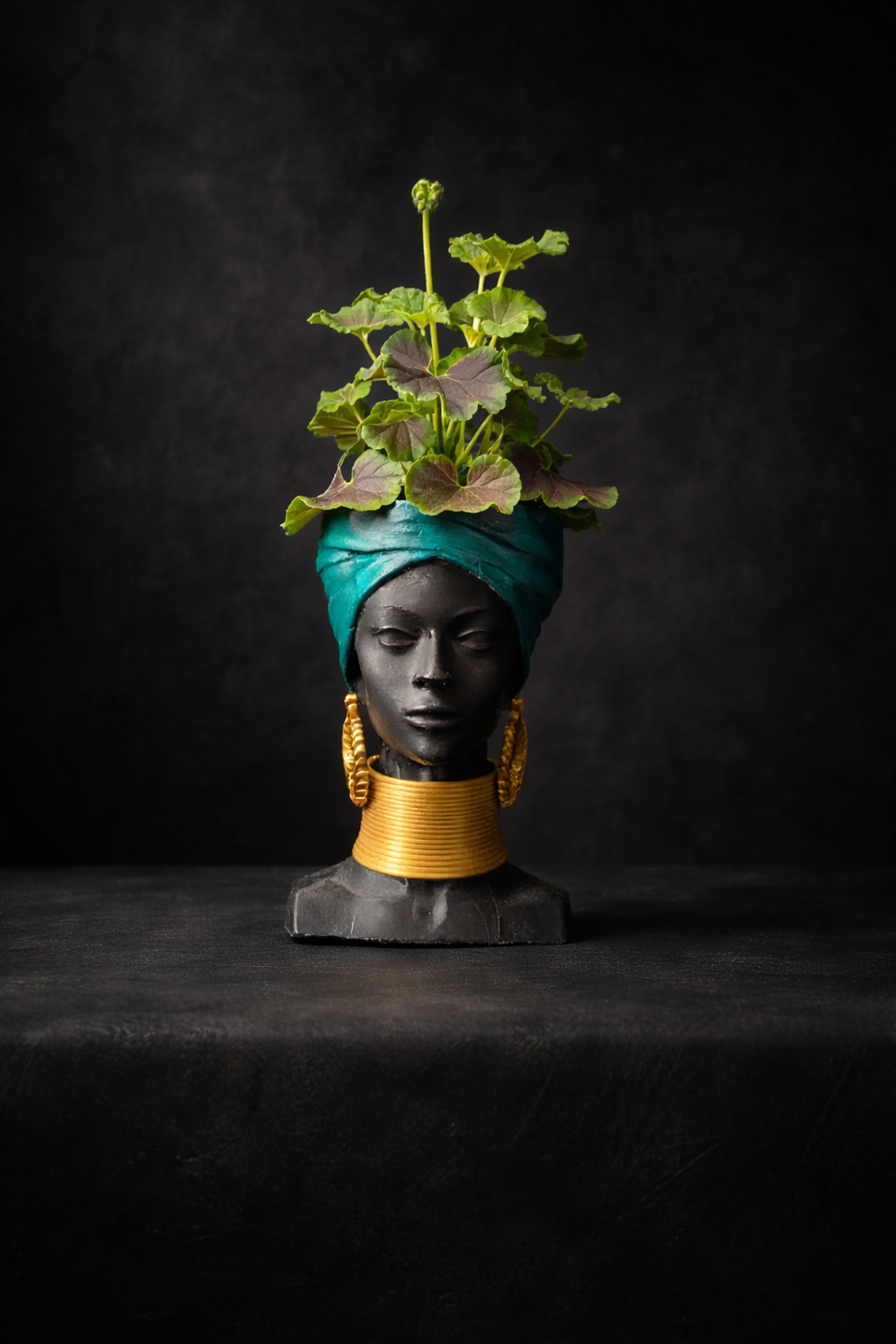
Head planters are one of the fastest-growing categories in UK garden and homeware. The concept is simple - a planter shaped as a head or bust, where the plant becomes the "hair." The creative potential is enormous: trailing plants like string of pearls create flowing locks, fishbone ferns produce an afro effect, and succulents like hens and chicks form a textured crown.
A hand-cast concrete head planter has genuine heft - it will not blow over in wind or tip when a trailing plant gets heavy. The surface has the raw, slightly imperfect texture of real stone rather than the smooth uniformity of a factory form.
The styling options go well beyond simple bust shapes. Classical Greek and Roman goddess designs, contemporary minimalist faces, cultural pieces like Easter Island moai heads, and expressive character busts all work as statement planters. Grouping multiple head planters together - mixing sizes, with one large statement piece and smaller companions - creates a display that looks curated rather than cluttered.
For a full guide to styling these pieces, see our head planter styling guide And for ideas on how to group sculptural planters effectively, our rule of three guide covers the principles.
Indoor Concrete Planters - What You Need to Know
Concrete planters work indoors but require more care than outdoor use. The main issue is moisture - concrete is porous, so water seeps through the walls and evaporates from the outer surface. Outdoors, this is fine. Indoors, it means a wet ring on your shelf, table, or windowsill.
Always use a waterproof saucer underneath. Add cork or felt pads between the planter and the surface. Seal the exterior to reduce moisture transfer, or use a plastic liner inside the concrete pot. For valuable surfaces, add a waterproof membrane - even sealed concrete can weep moisture in humid rooms.
Weight is the other consideration. A large concrete planter filled with soil and water can easily exceed 100kg. Know your shelf and floor load limits. For upper floors, balconies, and lightweight furniture, consider GFRC - visually identical to solid concrete at 75% less weight.
The Environmental Argument - Honest Version
Sustainability claims around planters are often misleading in both directions. Concrete production is genuinely carbon-intensive - global cement production accounts for approximately 8% of total CO2 emissions, with 900kg of CO2 emitted per tonne of cement produced. That is a real environmental cost that should not be dismissed.
But the durability argument changes the maths entirely. A single concrete planter lasting 50 years replaces 5-10 plastic pots over the same period. Each of those plastic pots requires manufacturing, delivery, and disposal - and plastic is petroleum-based, non-biodegradable, and sheds microplastics as it degrades.
A planter that lasts generations amortises its carbon cost in a way that disposable alternatives cannot.
Small-batch, hand-cast concrete also has a very different footprint to industrial concrete production. A small UK workshop using locally sourced aggregates is not comparable to a cement factory. The concrete in a handmade planter is measured in kilograms, not tonnes.
What to Look for When Buying
Whether buying from a garden centre, an online retailer, or directly from a maker, these questions help you distinguish quality from filler:
- Is it actually concrete? Many "concrete-look" planters are resin or fibrestone with a concrete-effect finish. If it feels surprisingly light, it probably is not concrete.
- Hand-cast or mass-produced? Hand-cast planters have unique surface variations - small air bubbles, slight texture differences, minor asymmetries. These are signs of quality, not defects.
- Is it sealed? Quality makers seal their planters before sale. If unsealed, you will need to do this yourself before planting and before winter.
- Does it have drainage? Essential for plant health. Drainage holes should be present - if not, you will need to drill them with a masonry bit.
- Where is it made? UK-made concrete planters have lower delivery emissions and support local makers.

UK Price Guide
Sculpted and head planters from specialist UK makers sit in the premium range - hand-cast pieces with genuine artistic detail rather than factory forms. Commission and bespoke pieces from individual makers can reach 100-300 GBP.
A 60 GBP concrete planter lasting 50 years costs 1.20 GBP per year. A 15 GBP plastic pot lasting 5 years costs 3 GBP per year - and you buy 10 of them over the same period.
How Long Do Concrete Planters Actually Last?
We have written an entire article on this with real data - see how long do concrete garden ornaments last The short version: with basic care (annual sealing, raised off ground, good drainage), a concrete planter will outlast you. The concrete structures built by the Romans are still standing after 2,000 years. Your garden planter does not need to last that long, but it gives you an idea of the material's ceiling.
Frequently Asked Questions
Do concrete planters crack in frost?
Unsealed concrete can crack in frost because water enters the pores, freezes, and expands by 9%. A single coat of breathable silane/siloxane sealant applied before winter prevents 90% of frost damage. Sealed concrete planters are highly frost-resistant. The UK experiences 15-80 freeze-thaw cycles per year depending on region - sealing is essential, not optional.
Are concrete planters safe for plants?
Yes, with one caveat. New concrete leaches lime, which raises soil pH above 7.5. This is fine for succulents, herbs, and Mediterranean plants that prefer alkaline conditions. For acid-loving plants like azaleas and blueberries, cure the planter first (soak in water for 3 days, changing daily) and seal the interior.
How heavy is a concrete planter?
A 600mm concrete cube planter weighs 30-50kg empty and 80-120kg when filled with soil and water. For balconies or upper floors, GFRC (glass fibre reinforced concrete) offers the same look at 75% less weight. Always place heavy planters close to the building wall - the strongest structural point.
What is the difference between concrete and cement planters?
Cement is an ingredient in concrete - it is the powder that binds sand and aggregate together. A "cement planter" and a "concrete planter" are usually the same thing. We have a full explanation here
Can you leave concrete planters outside all year in the UK?
Yes, if sealed and raised off the ground. Concrete handles UK weather far better than terracotta or ceramic. Seal before winter (September is ideal - temperature must be above 10C with 48 hours dry weather for curing). Raise off the ground by at least 10mm to prevent moisture wicking through the base.
How do you clean concrete planters?
Scrub with a stiff brush and mild soapy water. For algae or moss, use diluted white vinegar or a specialist concrete cleaner. White mineral deposits (efflorescence) can be brushed off when dry. Power washing is possible but use low pressure to avoid surface damage.
Further reading: Artsy Pretty Plants - Are Concrete Planters Safe for Plants? | UK Frost Protection Guide | MIT Climate - Concrete and emissions | Concrete Countertop Institute - GFRC Guide
// CH.03 · GARDEN
Choose the outdoor piece
Use the guide to decide what belongs in the space, then compare cast-stone pieces by size, weight, finish and where they will sit.


Save the planter decision checklist
Get a quick way to compare size, plant, finish and placement before you choose a sculptural planter.
The guide stays open. Use the links below when you are ready; your email is only for useful guide follow-up.